The Gambia : a presidential election amid social tension and in Jammeh's shadow Spécial
 © TDR
© TDR
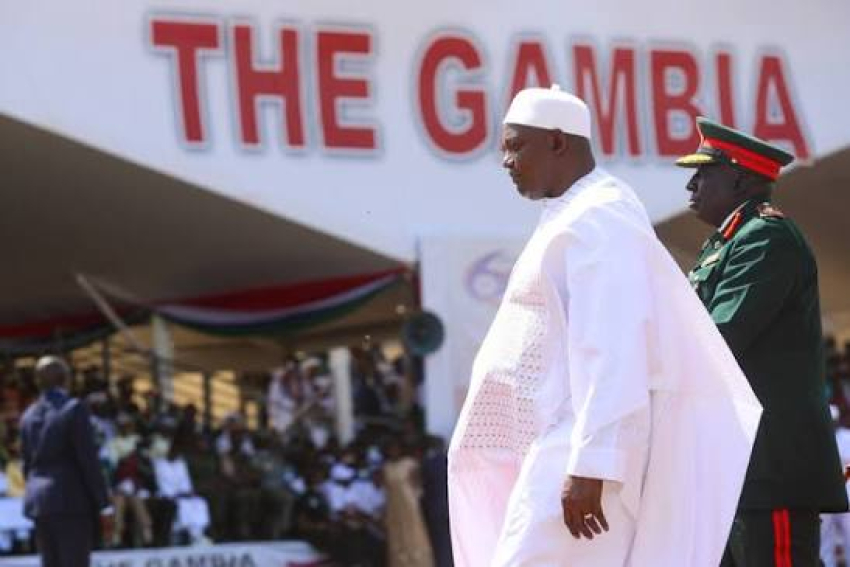
In The Gambia, a few weeks before the presidential election of 5 December, the campaign is heating up amid social tensions. After the September protests against power cuts, it is now students at the University of The Gambia who have mobilised to denounce the deterioration of their living and learning conditions. The election is also attracting growing attention: following the announcement of a European Union observation mission, civil society is setting up its own network of citizen observers. Nearly ten years after his departure, former President Yahya Jammeh remains at the heart of the debate, with several candidates promising to organise his return from exile. President Adama Barrow, for his part, is highlighting his achievements, with the inauguration of 91 kilometres of road in the Lower River region. The country also shows an encouraging ranking in the fight against corruption, although weaknesses persist in the protection of fundamental rights.
After the protests over power cuts in September, this time it was young people who mobilised on 26 October on the University of The Gambia campus in Kanifing to denounce deteriorating living and learning conditions. Students are calling for improved catering and transport services. They also denounce the unreliable water supply and difficulties in accessing the Internet, while regretting the university administration's lack of consideration for them. Present on site, the Minister of Higher Education acknowledged the difficulties faced by students and promised to work with the university management and student representatives to identify corrective measures.
Civil society takes up the issue of electoral transparency
Following the announcement of a European Union observation mission and Washington's calls for transparency, Gambian civil society is now mobilising in turn. The Center for Research and Policy Development (CRPD), a Banjul-based research organisation, launched on 27 October a call for volunteers to build a network of citizen observers to be deployed in polling stations on 5 December. Applicants must be registered voters, at least 18 years old and not belong to any political party. As volunteers, they will receive free training and be accredited by the Independent Electoral Commission. This initiative reflects civil society's determination to guarantee, on its own, the impartiality and credibility of the presidential election.
Jammeh's return raised
The leader of the National Democratic Party (NDP), Lamin Jatta, pledged to facilitate the return of Yahya Jammeh and to grant him all the honours due to a former Head of State if he wins on 5 December. This pledge echoes that of the No to Alliance movement, whose candidate, chosen by Jammeh himself, had promised the previous week to organise the former president's return from exile. Nearly ten years after his departure, Jammeh remains a central issue in the election campaign.
The Gambia makes progress in the fight against corruption
The World Justice Project (WJP) 2024 Rule of Law Index ranked The Gambia 67th out of 142 countries worldwide for absence of corruption. This places the country 6th in Sub-Saharan Africa and 2nd among the 16 low-income countries. In the overall Rule of Law ranking, The Gambia is 87th worldwide, with an improvement in its score of less than 1%. The index also highlights a relative stability in the mechanisms constraining executive power, but the results point to a deterioration in fundamental rights, where The Gambia ranks 81st. These results thus paint a mixed picture of the institutional reforms undertaken since the end of the Jammeh era, with measured progress in the fight against corruption but persistent weaknesses in the protection of fundamental rights.
The President inaugurates 91 kilometres of road in the Lower River region
On 24 October, President Adama Barrow inaugurated a road network linking the Kiang Kabada area to the rest of the country. Entirely financed by the Gambian State to the tune of 1.9 billion dalasis (around 15 billion CFA francs), the project connects 29 communities to the national road network, notably to the Trans-Gambia Highway. This new infrastructure aims to end the region's isolation and facilitate access to health facilities and schools, reduce transport costs and improve the delivery of agricultural produce. In the midst of the election campaign, the President presented this inauguration as an illustration of the government's infrastructure development policy.
Dernier de Timbuktu Institute
- Burkina Faso: Mass Returns, Persistent Insecurity, and Restrictions on Information
- Burkina Faso : rapatriements massifs, insécurité persistante et opacité de l'information
- Gambie : une présidentielle sous tension sociale et dans l’ombre de Jammeh
- Guinée : Conakry mise sur Simandou 2040 et la diversification de ses partenaires
- Guinea: Conakry bets on Simandou 2040 and the diversification of its partners