Burkina Faso: Mass Returns, Persistent Insecurity, and Restrictions on Information Spécial
 © TDR
© TDR
In Burkina Faso, the return of tens of thousands of artisanal gold miners expelled from Guinea presents major challenges for reception and economic reintegration, in a context where insecurity has already disrupted the livelihoods of many families. Meanwhile, recent analyses highlight the risks associated with rivalry between jihadist groups, as tightening restrictions on the press complicate independent assessments of the security situation.
Repatriations from Guinea: From Humanitarian Emergency to Economic Reintegration
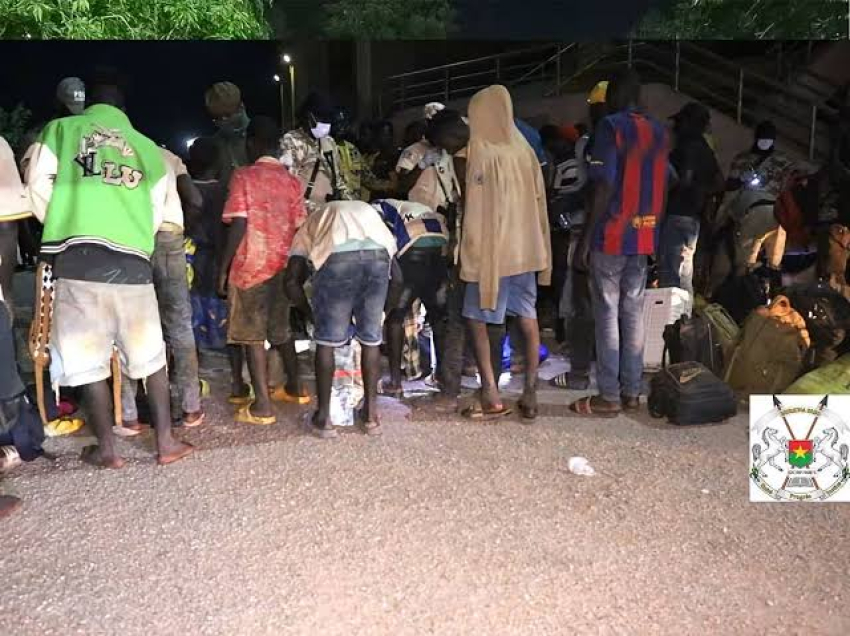
On November 11, the National Council for Emergency Relief and Rehabilitation (CONASUR) announced that it had received and registered 37,136 people returning from Guinea, including 36,087 Burkinabe nationals and 1,049 nationals of other countries. Among them were 7,988 children. These returns followed the expulsion of foreign artisanal gold miners by Guinean authorities, particularly in the gold-producing region of Siguiri. Most of those affected transited through Mali before reaching Burkina Faso.
Burkinabe and Malian authorities coordinated transportation and assistance operations, including reception arrangements in Bobo-Dioulasso. However, testimonies collected by Deutsche Welle on November 12 describe the precarious circumstances of workers still in Bamako after losing their jobs and incomes.
The crisis has also taken on a diplomatic dimension. At an extraordinary meeting held in Ouagadougou on November 11–12, ministers of the Confederation of Sahel States (AES) expressed concern over the mass, uncoordinated nature of the expulsions while commending Mali's assistance to those affected.
The scale of these returns reveals the importance of cross-border artisanal gold mining to Burkinabe household livelihood strategies. Some workers had left the country in search of income, while others were supporting families displaced by conflict. Deutsche Welle, for example, recounts the experience of a young Burkinabe man who went to work in Siguiri to help his parents, who had been driven from their village in eastern Burkina Faso in 2020. His experience illustrates how insecurity can fuel economic migration, without suggesting that all returnees have followed the same path.
Forced returns could therefore deprive families of income on which they depend, while increasing the need for assistance in receiving communities. Authorities have discussed training and opportunities to transition into agriculture, livestock raising, and technical trades, but their implementation remains to be demonstrated. The central challenge will be to create viable economic opportunities for a large population, some of whom cannot resume their previous livelihoods because of insecurity.
Persistent Insecurity and Growing Restrictions on Information
An Al Jazeera report published on November 13 examines intensifying clashes between the Group for the Support of Islam and Muslims (JNIM) and the Islamic State in the Sahel in northern Burkina Faso. The fighting described took place mainly in September and October, and the casualty figures claimed by armed groups have not been independently verified. This rivalry could alter the balance of power in border areas, but it offers no guarantee of improved civilian protection. On the contrary, it could trigger further clashes and intensify pressures on communities living in contested areas.
The ACLED bulletin published on November 11, covering October 31–November 6, also reported JNIM pressure on commercial centers and transport corridors in the Centre-Est region, as well as Islamic State threats against the Essakane mine. These reports concern events preceding the week under review, but they underscore continuing risks to economic activity and population movements.
The lack of sufficient independent information about attacks occurring specifically between November 7 and 13 must, however, be understood in the context of severe restrictions on the press. The new Penal Code adopted on October 20 reintroduces prison sentences for press offenses and provides for penalties of up to 30 years' imprisonment for certain offenses related to the “glorification of terrorism.” This reform adds to earlier restrictions on reporting military information and pressure by the regime against critical journalists, including arrests, abductions, and media suspensions.
These measures encourage self-censorship and reduce opportunities to document violence, casualties, and the difficulties faced by security forces. Limited media visibility of incidents cannot therefore be interpreted as an improvement in the security situation. It also constrains the ability of observers and citizens to assess the actual results of the military strategy and the evolution of threats.
Other Developments
On November 11, President Ibrahim Traoré launched a nationwide enrollment campaign for a unique electronic identifier, intended to improve the reliability of administrative records and access to public benefits. Its impact will depend in part on reaching displaced populations and residents of hard-to-access areas, as well as on safeguards for protecting biometric data.
Mass returns from Guinea could create new forms of hardship if returnees cannot find sustainable livelihoods. Some may be compelled to resume migrant labor or mining activities in areas exposed to insecurity, while others may place additional pressure on resources and services in host communities. Meanwhile, jihadist rivalries and restrictions on information complicate assessments of security risks and the state's capacity to respond. Returnees' actual access to economic opportunities, security conditions along major routes, and the availability of independent reporting will help determine whether these vulnerabilities diminish or develop into a new cycle of displacement and livelihood insecurity.
Dernier de Timbuktu Institute
- Burkina Faso : rapatriements massifs, insécurité persistante et opacité de l'information
- The Gambia : a presidential election amid social tension and in Jammeh's shadow
- Gambie : une présidentielle sous tension sociale et dans l’ombre de Jammeh
- Guinée : Conakry mise sur Simandou 2040 et la diversification de ses partenaires
- Guinea: Conakry bets on Simandou 2040 and the diversification of its partners