Togo : Lomé Positions Itself as a Strategic Partner of the AES in the Face of the Terrorist Threat Spécial
 ©TDR
©TDR
Timbuktu Institute - Week 4 September 2026
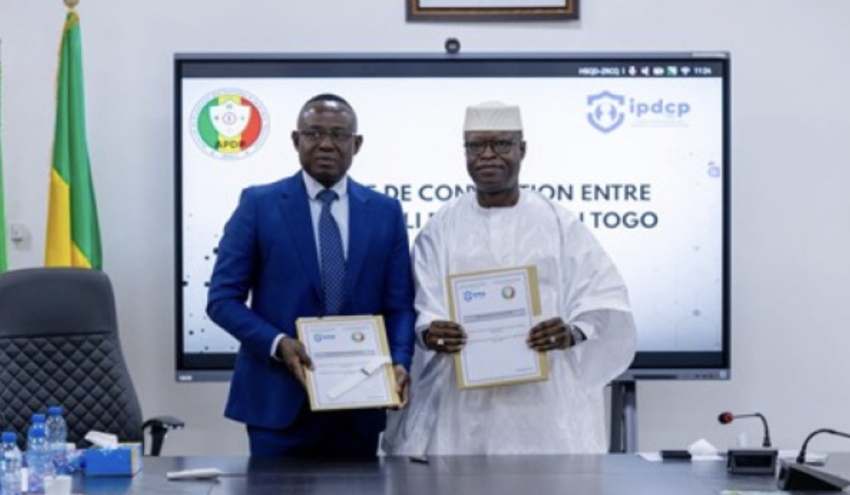
On 23 September, Togo and Mali took a significant step in strengthening their cooperation on personal data protection. That day, Togo’s Personal Data Protection Authority (IPDCP) and its Malian counterpart, the Personal Data Protection Authority (APDP), signed a protocol aimed at framing their relations and fostering the sharing of experience.
Togo–Mali: Digital Sovereignty at the Heart of Security Cooperation
The agreement will cover several areas, including cross-border data transfers, cybersecurity, artificial intelligence and digital sovereignty, in order to enable better cooperation in handling complaints and compliance checks, as well as in building the capacities of the staff of both institutions. The two countries seem to understand that data occupies a central place in the new form of the fight against terrorism, particularly in cyberspace. Their rapprochement in this area is part of a regional policy in favour of digital development.
Togo–AES: Lomé Asserts Its Role as a Strategic Partner in the Face of the Terrorist Threat
At the same time, on the diplomatic front, Togo continues to position itself as a “strategic ally” of the Sahel states. Once again, this approach was underlined in an interview with the Togolese Minister of Foreign Affairs, who calls for support for the AES states, the security “dyke” of West African states. In his view, “Togo’s choice is to help Mali, Burkina Faso and Niger… The security of these countries also depends on ours.” For Lomé, the crisis affecting Burkina Faso, Mali and Niger is not a purely external matter, but also concerns West Africa as a whole. Borders between countries do not systematically make it possible to counter the terrorist threat. For several years, armed groups from Sahelian countries have been advancing towards coastal countries. Bakary Sambe, president of the Timbuktu Institute, believes that “states such as Benin, Togo and even Ghana are already aware of the growing scale of terrorism, which has already crossed their borders”. It should be recalled that the north of the country, notably the Savanes region, is directly exposed to the terrorist risk. Lomé is determined to work with the AES countries to combat this phenomenon together.
When Lomé Denies the Presence of Russian Mercenaries and Clarifies Cooperation with Foreign Trainers
In the same interview, the head of Togolese diplomacy took the opportunity to clarify the presence of Russian elements in the country. He was keen to deny this information, widely circulated by the opposition last July. Answering the journalist’s question, Robert Dussey stated: “We do not have Russian mercenaries.” In New York to attend the UN General Assembly, he acknowledged the presence of “foreign trainers” on the ground to train the Togolese armed forces, notably in the use of new equipment.