Niger : between accusations against Chad and Algerian security anchoring Spécial
 © DR
© TDR
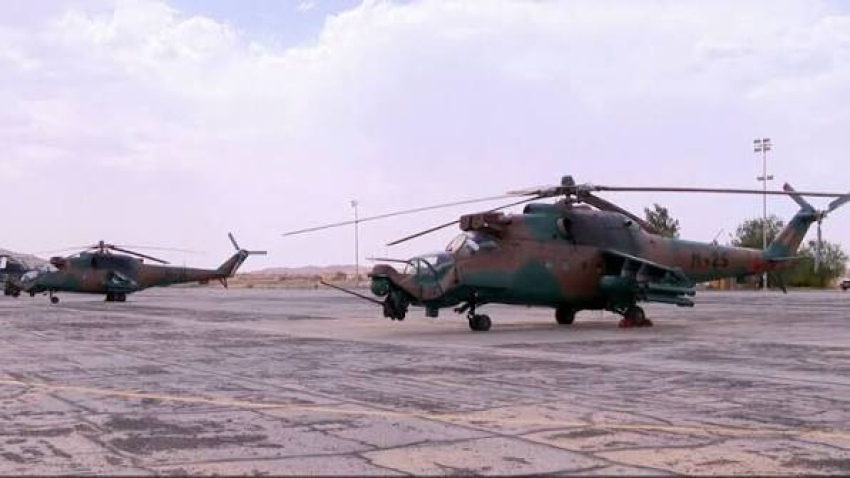
In Niger, recent developments have been marked by a sharp rise in tension with Chad. Niamey accuses N'Djamena of having carried out, with the alleged support of France, a deadly drone strike in the Emi Lulu area, near the Algerian and Libyan borders, and has summoned the Chadian ambassador. At the same time, General Tiani's regime continues to build up its defence and security forces, taking delivery of new equipment financed from the national budget. Above all, the announced deployment of Algerian military units on Nigerien soil marks a strategic turning point: it confirms the rapprochement between Niamey and Algiers, at a time when relations with N'Djamena are deteriorating.
Chad and France accused of an attempted mutiny
The Nigerien authorities accuse Chad of having carried out, on Saturday 25 October 2026, a drone strike on the Emi Lulu area, located at the Salvador Pass in the isolated mining region near the Algerian and Libyan borders. The reported toll is two civilians killed, others injured and vehicles damaged. Niger describes the act as “aggression” and a “flagrant violation” of its sovereignty, and further claims that it was orchestrated with the support of a foreign power, namely France, holding Chad responsible. In response, Niger summoned the Chadian ambassador and demanded an end to hostile actions and compensation for the victims and their families. This incident comes amid palpable tensions between the two neighbouring countries, with Niger having accused Chad and France of mutiny in September 2026.
These accusations are a clear example of the deterioration in relations between Niamey and N'Djamena. The Salvador Pass, an area of smuggling and militant transit, is a sensitive point. France's alleged involvement could fit into the anti-Western narrative of President Tiani's regime. The incident risks deepening regional divisions at a time when Niger is moving closer to Algeria.
On 26 October 2026, the Director General of Resources at Niger's Ministry of the Interior took delivery of 120 4x4 vehicles for the National Guard and 100 motorcycles for the traffic police, equipment acquired entirely with the State's own funds. The authorities present this acquisition as support for the Defence and Security Forces in protecting people and property and defending territorial integrity. In a statement, President Abdourahamane Tiani and the Minister of the Interior praised the commitment of General Mohamed Toumba.
This delivery, purely domestic and financed by the national budget, is part of the “build-up” of the Defence and Security Forces (FDS) that the Refoundation regime is seeking to showcase. It aims in particular to strengthen the operational capabilities of the National Guard and the traffic police, two key bodies for territorial control and internal security, amid persistent insecurity and border tensions.
Algerian army deployment in Niger
Algeria has decided to deploy military units in Niger. This decision marks a shift in Algerian doctrine, from a purely border-based defence logic to securing its immediate regional environment. The stated motivations are security-related, in terms of combating cross-border threats, smuggling, armed groups and the Libyan border, and economic, above all the protection of common interests, notably the Nigeria-Niger-Algeria Trans-Saharan Gas Pipeline (TSGP), Sonatrach and Sonelgaz investments, and transport and telecommunications infrastructure. The broader objective is to secure a future Algeria-Niger-Nigeria-Chad economic corridor within the framework of the AfCFTA.
Contrary to more critical analyses, the Algerian deployment is presented in a positive and strategic light. It is a matter of major economic stakes. For Algiers, securing the Sahel is becoming a condition for regional economic development. For Niamey, it strengthens a partnership already formalised by a defence protocol, while raising the question of military dependence.
Dernier de Timbuktu Institute
- Benin: the return of Sèmè oil and the broadening of partnerships
- Bénin : le retour du pétrole de Sèmè et l’élargissement des partenariats
- Niger : entre accusations contre le Tchad et ancrage sécuritaire algérien
- Senegal: from a budget of discord to a political “divorce” now final
- Sénégal : Du budget de la discorde au divorce politique « consommé »