 French
 Arabic
 English
 Portuguese
 Spanish
 Swahili


Sacré-Coeur 3 – BP 15177 CP 10700 Dakar Fann – SENEGAL.
+221 33 827 34 91 / +221 77 637 73 15
contact@timbuktu-institute.org

En l’absence de revendication, les sources sécuritaires privilégient la piste de l’enlèvement par une cellule terroriste après la disparition de deux touristes français depuis mercredi dernier alors qu’ils réalisaient un safari dans le nord du Bénin. Dans une vidéo du 29 avril attribuée à Abou Bakr al-Baghdadi, le chef de l’Etat islamique appelle les « franchises » malienne et burkinabé de Daech à intensifier les frappes contre la « France croisée » et ses alliés africains.
Une semaine après avoir quitté leur hôtel de la réserve de la Pendjari pour un safari dans un 4x4 Toyota blanc, deux touristes français sont toujours portés disparus. Leur guide béninois a été retrouvé mort. Certaines sources sécuritaires estiment que les Français sont désormais des otages déjà au Mali ou en voie de transfert vers ce pays. La réserve animalière de 4 700 km2 au nord Bénin, où ils auraient été enlevés, touche les parcs de l’Arly et du W à cheval sur le Burkina Faso et le Niger. Le groupe djihadiste de l’Etat islamique au Grand Sahara (EGIS) est actif dans cette région, plus souvent du côté burkinabé. Il a noué des alliances avec des locaux ayant fait leurs classes religieuses au Mali.
Le Bénin avait été jusqu’alors épargné par les attaques terroristes. Mais cette menace s’est rapprochée des pays côtiers depuis deux ans. Le président togolais Faure Gnassingbé a annoncé fin avril le démantèlement de plusieurs cellules terroristes au nord de son territoire. Deux mois avant, quatre douaniers burkinabés et un prêtre espagnol ont été assassinés au Burkina Faso peu après avoir traversé la frontière togolaise. Ils revenaient d’une réunion à Lomé. Les forces de sécurité de la région vivent dans la crainte. Elles ont multiplié les réunions avec leurs voisins afin d’éviter les attaques à grande échelle comme à Grand Bassam, non loin d’Abidjan, en 2016. Les services de renseignement maliens ont arrêté, début décembre, quatre jihadistes soupçonnés de préparer des attentats en Côte d’Ivoire, au Burkina Faso et au Mali.
Depuis l’année dernière, de nouvelles cellules terroristes se sont implantées au sud-est du Burkina, contraignant les autorités a déclaré l’état d’urgence
Le 8 novembre dernier, le terroriste touareg malien Iyad Ag Ghali, l’Algérien Djamel Okacha et le prédicateur radical peul Amadou Koufa ont appelé à « poursuivre le jihad » dans plusieurs pays (Sénégal, Mali, Niger, Bénin, Côte d’Ivoire, Burkina Faso, Nigeria, Ghana et Cameroun). « Cette vidéo fait écho à l’extension des groupes jihadistes actifs au Burkina Faso à de nouveaux espaces, à la menace croissante qu’ils exercent sur les pays du golfe de Guinée », explique Antonin Tisseron, chercheur associé à l’Institut Thomas More, dans une note récente sur la menace djihadiste dans cette région.
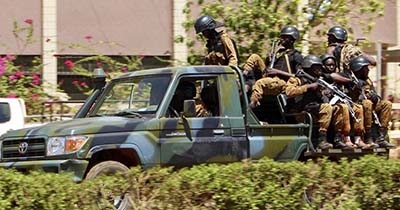
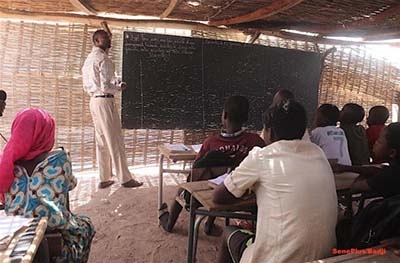
Présents à l’origine au nord du Mali, les groupes jihadistes, sous pression des soldats français de Barkhane, ont progressivement migré vers le centre du pays, devenu le principal théâtre des violences. Ils ont ensuite établi de nouvelles antennes à l’ouest et au nord du Burkina, notamment dans la région des trois frontières (Mali, Burkina, Niger), en surfant sur les frustrations de la jeunesse peule et rimaïbé. Les premières attaques remontent à 2015 et 2016, année où Ibrahim Malam Dicko a fondé le groupe Ansaroul islam. Depuis l’année dernière, de nouvelles cellules terroristes se sont implantées au sud-est du Burkina, contraignant les autorités a déclaré l’état d’urgence, en janvier 2019, dans 14 provinces frontalières et a fermé de nombreuses écoles publiques.
Plusieurs opérations, auxquelles les forces françaises ont participé dans les régions frontalières du Mali et du Niger, n’ont pas permis d’éradiquer complètement ces cellules. En mars dernier, l’opération Otapuanu de l’armée burkinabé a toutefois neutralisé un nombre important de combattants de la région de l’Est dont leur chef, Omarou Diallo, alias Diaw Oumarou. « C’est une grosse prise, explique un diplomate français. Il s’est mis à table et a balancé les recruteurs, les logisticiens, des complices et des chefs de cellules affiliés à des groupes terroristes de l’EIGS, du Front de libération du Macina, d’Ansaroul islam. » A la suite de cet interrogatoire, le ministère de la Sécurité a publié une liste de 247 personnes recherchées.
« Les groupes terroristes coopèrent étroitement sur le terrain au moment où la communauté internationale se disperse avec une multiplication des stratégies et des acteurs »
. « Les terroristes veulent casser le verrou burkinabé qui est la dernière barrière pour accéder aux pays côtiers », explique Bakary Sambe, directeur du Timbuktu Institute. Le chercheur voit la main d’Adnane Abou Walid al-Sahraoui, chef de l’EIGS, derrière le dernier enlèvement des Français. « Depuis l’opération Serval en 2013, al-Sahraoui a changé de doctrine en ne menant plus d’actions frontales mais en multipliant les zones d’instabilité confiées à des commandements très décentralisés, précise-t-il. Les autres groupes ont une action plus locale. »
Les premiers agissements des groupes jihadistes dans les pays côtiers datent du milieu des années 2010. « Dans le parc transfrontalier du W, des combattants originaires du Mali auraient mené en 2014-2015 une reconnaissance en poussant jusqu’au Bénin, souligne Antonin Tisseron. De même, en 2015, plusieurs membres actifs d’une cellule du Groupe de soutien à l’islam et aux musulmans (JNIM, filiale d’Aqmi) dans la forêt de Sama, à la frontière entre la Côte d’Ivoire et le Mali, étaient arrêtés, sans pour autant que les survivants cessent leurs activités. Ce sont d’ailleurs des membres de cette unité qui seraient à l’origine de l’enlèvement d’une none colombienne dans la région de Sikasso au Mali en février 2017, et qui ont été arrêtés à côté de Koutiala le 6 décembre 2018. »
Les Etats du golfe de Guinée présentent certaines fragilités propices à l’installation des groupes djihadistes à l’approche d’échéances électorales cruciales qui devraient mobiliser l’attention des dirigeants sur les enjeux politiques : tensions partisanes, communautaires, religieuses ; conflits entre éleveurs et agriculteurs ; violences des forces armées ; frustration des jeunes à l’égard d’aînés et des autorités traditionnelles qui monopolisent le pouvoir ; inégalités socio-économiques ; montée du christianisme évangélique et du salafisme... Le port du voile se généralise au nord Bénin, dans des villes comme Djougou. Au Ghana, une étude récente s’inquiète de la légitimation des activités jihadistes par les populations dans le quartier de Madina, à Accra. « On assiste aussi à une radicalisation dans certaines mosquées ivoiriennes », confie un expert de l’Union africaine.
« Les groupes terroristes coopèrent étroitement sur le terrain au moment où la communauté internationale se disperse avec une multiplication des stratégies et des acteurs, conclut Bakary Sambe. Les pays côtiers doivent absolument valoriser les stratégies de résilience communautaire, accentuer le travail de prévention, renforcer la coopération entre leurs services de sécurité, faire de la prospective et rompre avec la culture du déni où le terrorisme est vu comme un phénomène importé. » Ces pays doivent aussi sortir de la logique du tout-sécuritaire, ne pas miser que sur la sociabilité des confréries religieuses soufies pour apaiser les tensions et, pire, déléguer la gestion de la sécurité à des milices locales qui, dans la pratique, perpètrent de nombreuses exactions et appliquent une justice expéditive.
Qui sommes nous ?
Un Groupe de Réflexion sur l’Education au Sénégal (GRES) composé de personnalités et d’expertises diverses issues de l’Université Cheikh Anta Diop et de l’Université Gaston Berger de Saint Louis, de la société civile, du monde diplomatique. :
QUEL EST NOTRE OBJECTIF ?
L’objectif du Groupe dans le contexte de crise généralisée de l’Education est de donner à la réflexion sur ce secteur une dimension prospective (sur le moyen et long terme), plus profonde que la recherche de solutions segmentées et cloisonnées aux manifestations de cette crise que sont les grèves, contestations et revendications intermittentes de l’élémentaire au supérieur, de l’enseignement classique aux daaras.
Une analyse sans complaisance par une approche systémique de l’Education au Sénégal
Après une analyse approfondie à partir d’introductions et de présentations d’articles et de travaux des différents collègues, le GRES a établi plusieurs idées fortes qui doivent structurer toute réflexion stratégique et prospective sur la question.
QUEL EST L’ETAT DES LIEUX ?
L’école sénégalaise en crise de modèle, de contenu et de finalité
L’école sénégalaise dans sa globalité ne se donne pas d’orientations stratégiques répondant à un modèle partagé par la société sénégalaise et les acteurs qui l’animent. Plus de 30 ans après les Etats généraux de l’éducation, il n’en reste pas grand-chose en termes de choix réalisé, tenu et évalué.
Aujourd’hui, le passage à une éducation de masse pour atteindre les Objectifs du Millénaire pour le Développement provenant des injonctions et paradigmes des institutions multilatérales et dépendant de leurs financements dans un contexte de crise économique et de manque de moyens a suscité plus d’interrogations que de résultats.
Les interrogations
♣️ Quel est finalement le modèle d’éducation sénégalais et son fil conducteur?
♣️ Quels sont ses objectifs ?
♣️ Quels sont les continuités à entretenir et les ruptures justifiées à faire ?
♣️ Quelles normes minimales de qualité au-delà des chiffres maquillés ou pas ?
♣️ Faut-il préserver la possibilité de former une élite et comment ?
L’école sénégalaise reste également marquée par l’extrême dispersion et la coexistence de différents modèles d’école (de plus en plus nombreux) sans sens commun, ni principe directeur.
Les différents modèles d’école au Sénégal
♣️ école dite « française »
♣️ école dite « franco-arabe », privée et publique
♣️ école coranique (elle-même de différents types)
- daara tarbiyya
- daaras modernes
- daaras qui se prétendent tels, sans contrôle
♣️ écoles communautaires de base
♣️ écoles privées confessionnelles catholiques
♣️ réseaux, croissant, d’écoles étrangères
♣️ cases des tout petits
♣️ maisons de l’outil
♣️ Enseignement technique et professionnel
Par ailleurs, une grande partie de la population reste réticente à l’école dite française et les réponses sont encore incomplètes et peu satisfaisantes. Plus globalement, l’école incarne beaucoup moins qu’avant les valeurs sociales et citoyennes et les Sénégalais ont perdu foi dans le sens de l’école comme ascenseur social.
Si les chiffres sont avancés positivement quant à l’atteinte d’objectifs quantitatifs, le consensus est général concernant la baisse grave de la qualité et l’inadaptation des curricula.
L’inversement de l’image de l’école publique porteuse de qualité devant l’école privée désormais sans grève et garantissant les standards et les minimas de quantum horaire est désormais une réalité. Dans ce contexte, les initiatives privées se multiplient de la maternelle à l’université, de l’école laïque, catholique, franco arabe, bilingue, turc (yavuz selim), iranienne (IMI), aux écoles musulmanes moyen-orientales, etc. Se mettent ainsi en place parallèlement plusieurs systèmes d’éducation forgés de l’extérieur, avec des conceptions différentes.
S’y ajoute le vaste secteur dit informel qui compte des milliers d’écoles coraniques allant des daaras structurés permanents aux daaras où la mendicité prime sur l’enseignement.
Toutes ces écoles rendent compte de l’inégale prise en charge par l’Etat et la perte de contrôle sur le domaine le plus stratégique de l’avenir de notre nation. Au demeurant, l’école continue à discriminer les enfants (classes pléthoriques ou moyennement remplies, répartition inégale de la formation informatique, des enseignants de qualité, privés contre public, enseignement laic contre enseignement religieux, médersas musulmanes contre daaras, etc.) et est paradoxalement une fabrique d’injustice et d’inégalités dans les chances de réussite entre Sénégalais.
De manière générale, les réformes qui sont faites dans le sens d’intégrer l’arabe, le religieux et les langues nationales pour répondre à la demande d’une école plus « sénégalaise » constituent des tactiques pour gagner de nouveaux publics et non des choix stratégiques d’enseignement et d’éducation adossés à un projet de société global. L’école d’aujourd’hui marquée par une dispersion extrême reflète et renforce une désintégration des référentiels traditionnels endogènes, sur le fondem.
De l’historicité et de l’ancrage de l’éducation religieuse au Sénégal
Le Sénégal est un pays à plus de 95% de musulmans et à presque 100% de croyants. Les ordres d’enseignement chrétiens sont proportionnellement bien représentés dans l’espace de l’offre éducationnelle avec une image saine et ouverte, malgré quelques insuffisances et leur dynamisme n’est plus à démontrer.
L'éducation islamique qui est une constante dans les sociétés musulmanes sénégalaises a a contrario, un déficit de reconnaissance, de respect et de structuration. Pourtant l'instruction est une obligation et l'accomplissement du rituel est fortement lié à un ensemble de règles que le musulman doit respecter, en collectivités ou en intimité.
Pr Abdoul Aziz Kébé
Pr Penda Mbow
Dr Fatou Kiné Camara
Dr Cheikh Guèye
Dr Bakary Samb
Dr Souleymane Gomis
Source: www.seneplus.com
Au Sénégal, l’annonce de l’interdiction du voile par une école chrétienne a suscité de vives réactions, menaçant la cohésion interreligieuse. Spécialistes de religions au Sénégal, Penda Mbow et Bakary Sambe examinent pour Sputnik les enjeux de cette affaire dans un pays où elles sont vécues comme un ciment social et un rempart contre l’extrémisme.
Il n’y a pas qu’en France que les débats sur le voile islamique cristallisent des tensions identitaires et religieuses. Le Sénégal connaît une nouvelle affaire en la matière, alors que le pays est souvent cité comme l’un des modèles les plus réussis dans le monde de coexistence religieuse pacifique.
Selon des estimations officielles, il compterait entre 94% et 95% de musulmans et plus de 4% de chrétiens, le reste étant adeptes de religions traditionnelles. Dans la plupart des familles, les membres appartiennent à des confessions, confréries ou courants religieux différents.
Face à la virulence de certains propos, «je suis peinée par mon pays, qui était un modèle de coexistence religieuse pacifique, à telle enseigne que le premier Président de la République [Léopold Sédar Senghor, ndlr] fut un chrétien soutenu par des chefs religieux musulmans. On ne pouvait pas rêver mieux en ce qui concerne la laïcité d’un État», a affirmé à Sputnik Mme Mbow, elle-même musulmane.
«L’affaire du voile» a commencé à défrayer la chronique au début du mois de mai 2019 à travers des posts sur les réseaux sociaux. Dans la nuit du 1er mai, une internaute sénégalaise partage sur Twitter la photo d’un e-mail transmis, selon elle, à sa mère par l’Institution Sainte Jeanne d’Arc (ISJA), une école privée catholique sous tutelle de la Congrégation des Sœurs de Saint-Joseph de Cluny.
Cette congrégation «a décidé de statuer sur la tenue autorisée pour les élèves de l’ISJA; celle-ci se composera à partir de la rentrée de septembre 2019 de l’uniforme habituel, avec une tête découverte, aussi bien pour les filles que pour les garçons», peut-on lire dans ce courrier, signé de Rayanna Tall, la directrice de l’établissement.
Commentaire de l’internaute cocotte @binetou__ accompagnant la photo: «C’est juste scandaleux. Les sœurs n’ont qu’à retirer leur voile, elles aussi». Elle précise y avoir étudié et avoir porté le foulard pendant l’année de son baccalauréat.
Depuis, la polémique s’est installée. Les opinions s’expriment sur les réseaux sociaux, dans les médias, les discussions entre collègues, les transports en commun. Certains soutiennent l’ISJA, d’autres dénoncent sa décision, estimant qu’elle porte atteinte à la liberté des musulmans qui remplissent largement ses classes, dans un pays où ils sont par ailleurs largement majoritaires. D’autres encore énoncent des positions plus nuancées, mais semblent moins nombreux.
Pour Penda Mbow, cette polémique pose la question de la laïcité, «un enjeu extrêmement important pour les minorités et les femmes au Sénégal».
Cette affaire «nous remet dans le débat: la laïcité de l’école qui, de plus en plus, est remise en question; la neutralité de l’école comme espace d’instruction et d’éducation; et le fait aussi que, petit à petit, le modèle islamiste sur le plan politique est en train de gagner du terrain» au Sénégal, affirme Mme Mbow, précisant: «Que des adultes se voilent, c’est leur choix, mais il faut soustraire les enfants à ces combats d’adultes!».
Pour cette universitaire qui apparaît toujours en public la tête ceinte d’un foulard, l’école est le lieu de la neutralité, où tout le monde est citoyen.
«Il n’y a pas de différence de race, de sexe, de religion; on est là pour étudier, connaître, être instruit. Malheureusement, aujourd’hui, l’école est devenue aussi un champ de lutte des identités», insiste-t-elle.
La controverse a pris de l’ampleur avec un communiqué signé de Mamadou Talla, le ministre de l’Éducation nationale, daté du 3 mai.
«Le ministère de l’Éducation nationale constate, depuis quelques années, que des actes discriminatoires d’ordre socioculturel se manifestent de plus en plus dans l’espace scolaire», écrit M. Talla. «Cette situation n’est pas conforme à la Constitution du Sénégal» qui déclare la laïcité de la République et prône le respect de «toutes les croyances», estime-t-il, évoquant d’autres textes légaux, mais sans citer une seule fois nommément l’ISJA.
Source : fr.sputniknews.com
Les dernières attaques au Niger contre la prison de haute sécurité de Koutoukalé et l’embuscade de Tongo Tongo, dans l’ouest du Niger, seraient le signe d’une « réelle volonté d’implantation à long terme au Sahel de l’État islamique au Grand Sahara ». Telle est l’analyse du Dr. Bakary Sambe qui pense qu’Al-Sahraoui s’y préparait depuis la fin de l’opération Serval bien avant même la défaite de Daech sur les fronts syrien et irakien.
« Les cibles ont une valeur symbolique et le choix de Tongo Tongo n’est pas neutre, qui est comme une piqûre de rappel au même endroit où quatre soldats américains et cinq militaires nigériens étaient déjà tombés dans une embuscade en 2017 », souligne le Dr. Bakary Sambe.
Pour lui, « Abul Walid avait donné le ton depuis la fin de l’opération Serval et semble jouer actuellement sur deux tableaux : créer des zones d’instabilité en attisant les heurts inter communautaires et garder le flambeau du djihadisme qui semblait perdre de sa vigueur face à la mutation des conflits au Sahel suite au transfert de la violence sur les conflits locaux et à dimension communautaire », explique toujours le directeur de Timbuktu Institute.
Malgré les différentes positions des experts sur un « Sud libyen sanctuaire du djihadisme », selon Bakary Sambe, « la défection de Daech en Syrie et en Irak impose incontestablement un redéploiement et de nouvelles zones de convergence des groupes».
Soutenant que « pour l’heure, il est tout à fait exclu toute idée un repli dans le Sud algérien, territoire bien marqué des hommes de Belmokhtar », le spécialiste des réseaux transnationaux dans le Sahel est d’avis que « le Sahel à partir du Kawar nigérien avec ses grandes étendues difficilement maîtrisables, est comme le nouvel espace visé par Abul Walid Al-Sahraoui ».
Solon le directeur de Timbuktu Institute, ces attaques ont lieu à un moment assez « critique » où « les stratégies de la communauté internationale en matière de lutte contre le terrorisme semblent battre de l’aile et installer le doute surtout chez les populations locales des zones frontalières qui subissent les contrecoups des mesures sécuritaires draconiennes tout en vivant dans l’insécurité ».
« Au moment où les attaques au Burkina Faso restent souvent sans revendication, celles de Koutoukalé et de Tongo Tongo au Niger ont été vite brandies comme un signal fort de l’EIGS d’un retour vers les actions de grande envergure », explique Bakary Sambe.
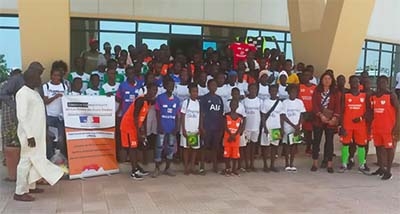
Timbuktu Institute a procédé à la cérémonie de clôture du Programme intitulé : « OSC et
associations sportives du Sénégal pour une culture de la paix et contre la violence » qui était
appuyé par l’Ambassade de France dans le cadre du dispositif PISCCA, le vendredi 31 mai à 9h à
la Maison de la Presse.
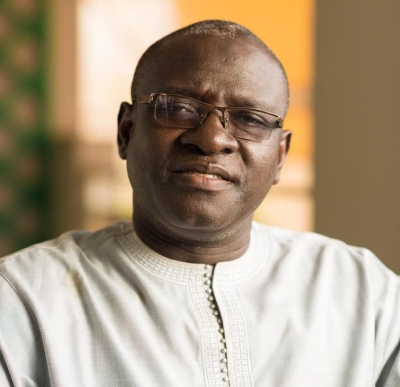
Dr Bakary Sambe, Directeur de l’Institut qui présidait la cérémonie a rappelé l’importance de ce
projet face à une jeunesse en proie à la violence dans les milieux sportifs. « Les 8 supporters
morts lors de la finale de la coupe de la ligue du Sénégal, le 15 juillet 2017, au stade Demba Diop
en sont une preuve tangible, » affirme t’il. Il en a aussi profité pour faire le bilan du projet qui est
satisfaisant vu les différentes activités qui ont été menées avec les populations et l’implication des
autorités impliquées. Pour rappel, l’objectif du projet était de faire coopérer les ASC et OSC afin
de mobiliser leurs cités pour la lutte contre la violence des jeunes et la promotion des valeurs
citoyennes dans plusieurs villes du Sénégal à savoir Mbour, Saint Louis, Thiès et Kaolack. Dr
Sambe a poursuivi en remerciant l’Ambassade de France au Sénégal représentée par Monsieur
Luc Briard, sans laquelle le projet n’aurait pas eu lieu.
Monsieur Briard a, dans son discours, déclaré que le projet intitulé « OSC et associations
sportives du Sénégal pour une culture de la paix et contre la violence » entrait en droite ligne avec
les objectifs des Projets Innovants des Sociétés Civiles et Coalitions d’Acteurs (PISCCA 2018)
financés par l’Ambassade de France.
Le représentant de l’Ambassade de France a aussi salué le choix d’une équipe de football
féminine parmi les bénéficiers du projet, car, dira t-il, les femmes sont sous-représentées dans le
football. Il en a profité pour inviter les jeunes filles de l’école de football présente à assister
prochainement, à la projection de la Coupe du monde de football féminin à l’institut français de
Dakar. Le représentant du CEDEPS Monsieur Alioune Badara Sarr a trouvé que le projet était
une belle opportunité pour « aider les jeunes à bouter la violence hors des stades ».
Le Directeur de Timbuktu Institute a, par la suite, présenté la Plateforme numérique « Non à la
Violence dans le Sport » qui dit-il sera fonctionnel au-delà du projet. Une étude sur la violence
dans le Sport, réalisée par Timbuktu Institute a aussi été dévoilée par Yague Samb, Responsable
du pôle Gestion des conflits de l’institut. Cette enquête révèle que la violence est beaucoup plus
présente dans les Navétanes que dans les autres sports. De même, Le nombre de victimes de
violence verbale est plus élevé que le nombre de victimes de violence physique. Une des
conclusions a été d’établir que les sportifs eux-mêmes n’étaient pas ceux qui pratiquaient la
violence mais des intrus et autres jeunes en dehors des équipes.
Khadidiatou Ngom, représentante des jeunes de Saint-Louis a lu « l’Appel des jeunes » qui se
voulait un manifeste contre la violence des jeunes et un dispositif à mettre en place par l’Etat
mais aussi une meilleure coopération entre les partenaires du Sénégal et la population pour que
cesse la violence dans le sport. Un jeune récipiendaire d’une école de football de Mbour a,
déclamé un poème sur la non-violence dans le sport, composé par la poétesse Mame Famew
Camara. La cérémonie s’est terminée par une distribution de jeux de maillots et de bandes
dessinées aux jeunes des écoles de football venus y prendre part. Pour rappel, cette bande
dessinée est l’une des réalisations du projet PISCCA avec le soutien financier de l’Ambassade de
France à Dakar.
La Croix Africa : Comment analysez-vous les attaques terroristes dans les églises au Burkina Faso ?
Bakary Sambe : La stratégie des groupes terroristes, après l’opération Serval (1) a été d’actionner et d’intensifier des conflits intercommunautaires pour ensuite s’y greffer mais également d’attirer l’attention de la communauté internationale et éventuellement des interventions en multipliant les zones d’instabilité. Cela a très bien été théorisé par Abou Walid al-Sahraoui un terroriste qui sévit actuellement dans la région. Il est vrai que le Burkina Faso était, jusque-là, exemplaire en matière de cohésion sociale et religieuse. Il était aussi un pays phare en matière de dialogue interreligieux, les chrétiens étaient invités à des fêtes et célébrations musulmanes et vice versa.
Mais il y a eu une fracture au moment de la transition politique (2) avec, notamment la montée de certaines Églises évangéliques qui étaient très proches des cercles du pouvoir. Cette montée a fait que certaines catégories de la population, notamment les musulmans (majoritaires à près de 60 %) se sont sentis marginalisés dans la gestion du pouvoir de même que certains catholiques qui se plaignaient des avantages octroyés à ces Églises évangéliques proches des cercles du pouvoir durant cette transition.
Fin décembre 2018-début janvier 2019, une attaque terroriste à Yirgou, dans le nord du Burkina Faso, a provoqué des affrontements intercommunautaires. Faut-il craindre qu’un pareil schéma se reproduise dans la sous-région ?
Bakary Sambe : Il est vrai que les attaques de Yirgou, dans la commune de Barsalogho, dans le centre-nord du Burkina Faso, ont marqué un tournant décisif. Durant les funérailles des victimes, on s’est rendu compte que des opérations de vengeance ont été organisées avec un bilan de 13 morts. Si l’on sait que ce qui se passe actuellement dans la région, notamment dans le centre du Mali, ne sera pas sans conséquence dans les pays voisins, on peut bien craindre que les représailles continuent ainsi que les opérations de vengeance. D’ailleurs, l’on peut noter que le Burkina Faso est entré dans un cycle de violences. Celles-ci sont attisées par des conflits intercommunautaires qui, au début, n’avaient rien de religieux. Ils avaient plutôt une dimension silvo-agro-pastorale mais ont été attisés et aggravés par les groupes terroristes qui veulent se greffer sur ces tensions intercommunautaires afin de déstabiliser les pays de la région, notamment le Burkina Faso qui est considéré comme le verrou vers l’Afrique côtière.
Les tensions intercommunautaires seraient donc sensiblement identiques à celles entre bergers fulani et paysans sédentaires au Nigeria ?
Bakary Sambe : Si pour le Nigeria, notamment dans l’État du Plateau, ce sont les bergers fulanis (Peuls) qui sont accusés de s’attaquer aux paysans Béroms, dans le cas du Burkina Faso et du Mali, ce sont les paysans sédentaires qui s’affrontent souvent avec Peuls nomades. Mais comme déjà dit, aujourd’hui, le terrorisme va parasiter tous les conflits pour attiser les tensions et faciliter l’installation de l’État islamique au Grand Sahara, notamment au Burkina Faso qui est une zone charnière entre l’Afrique côtière et le Sahel. C’est en partie, l’explication des vives tensions dans des zones comme Gorom Gorom et Markoye, dans la province de l’Oudalan.
Comment analysez-vous la situation au Niger avec les attaques récurrentes contre les militaires ?
Bakary Sambe : Le Niger fait partie des pays qui sont sous pression sécuritaire. Il doit faire face au terrorisme sur au moins deux fronts : dans le Sud avec Boko Haram et au nord avec les Mujao et autres groupes venant du Mali tout en craignant, à tout moment, un débordement du front sud libyen. Avec la défaite de l’État islamique en Syrie et en Irak, tous les regards se tournent, en effet, vers le sud libyen qui devient un refuge pour les terroristes. Le groupe d’Abou Walid al-Sahraoui cherche à s’étendre. Ne pouvant pas déborder vers le sud algérien – qui est le territoire de Belmokhtar ou de ses hommes – il tente d’étendre ses tentacules vers le Niger. Ce pays est, en effet, une zone de passage et de circulation des armes à partir du canal libyen vers les pays sahéliens.
On se rend compte que ces pays ciblés par des attaques sont, pour la plupart, membres du G5 Sahel. Cela prouve-t-il son inefficacité ?
Bakary Sambe : Le G5 Sahel en soi, est une bonne initiative mais qui a besoin de soutien et donc de l’appui de la communauté internationale. Il faut l’appuyer mais aussi crédibiliser la lutte contre le terrorisme. Aujourd’hui, alors que le terrorisme tend à s’étendre et à s’unifier, les partenaires internationaux sont en train de se disperser avec une multiplicité d’acteurs même au sein des Européens. Cela donne, malheureusement, aux populations l’impression qu’il y aurait d’autres agendas voire une compétition occidentale autour des ressources, ce qui décrédibilise de plus en plus la lutte contre le terrorisme. Il y a aujourd’hui un véritable dilemme sahélien ; entre la nécessité de gérer les urgences sécuritaires et la projection vers des solutions plus durables que le tout-militaire. La communauté internationale doit opérer une rupture paradigmatique : les groupes terroristes ont déjà réussi à transférer les hostilités dans les heurts intercommunautaires qui leur permettront de déstabiliser nos États. Ils sont déjà comme dans une situation de post-djihadisme alors que continuons à raisonner en termes de radicalisation du type religieux. le religieux n’est plus qu’un vernis, mais capable de mobiliser du sens et des symboles pour saper le vivre-ensemble.
Quelles solutions proposeriez-vous contre la menace terroriste dans le Sahel ?
Bakary Sambe : Pour une lutte efficace contre le terrorisme, il faut s’appuyer, certes, sur des solutions mais il ne faudrait pas négliger des alliés de taille : les populations locales dont la résilience doit être renforcée et les stratégies endogènes mises en valeur. Or les populations souffrent de plus en plus des contraintes et difficultés liées aux mesures sécuritaires draconiennes tout vivant de manière permanente en insécurité. Il faudrait donc d’une part une aide de la communauté internationale et d’autre part, la mise en place d’une politique sécuritaire inclusive mettant la population au cœur de la stratégie. L’on a malheureusement, jusque-là, privilégié le militaire détriment de la prévention. Et les alertes et restrictions sécuritaires des pays occidentaux font planer sur les États de la région la menace d’être catégorisés « pays pas sûr ». Hélas, cela les pousse à une politique du déni alors qu’ils pouvaient développer et assumer des politiques de prévention ; s’attaquer aux racines du problème au lieu de concentrer tous les efforts sur le militaire qui ne traite que des symptômes d’un mal beaucoup plus profond.
Pourquoi le Sahel est-il particulièrement visé par les attaques ?
Bakary Sambe : Au regard des vastes étendues territoriales et des frontières poreuses comme celles Mali, celles du Niger et du Burkina Faso et aussi l’échec des terroristes en Irak et en Syrie, le Sahel risque d’être, pour les années à venir, une véritable base arrière des groupes terroristes. Malheureusement les attaques au Burkina Faso nous renseignent sur l’avenir du terrorisme qui tend à atteindre les pays côtiers.
Avec l’enlèvement de Français et le meurtre d’un guide béninois dans le parc de Pendjari au Bénin, faut-il craindre la percée des terroristes dans des zones jusque-là épargnées ?
Bakary Sambe : Le Sahel constitue une bonne partie de l’Afrique de l’Ouest où il y a une forte influence française. Plusieurs groupes ont proféré des menaces contre la France et ses alliés faisant d’elle une cible. Tout cela combiné explique l’acharnement de ces groupes qui en veulent également à la France et qui considèrent ces pays – notamment ceux du G5 Sahel – comme très liés à leur ancienne puissance coloniale.
Par ailleurs, on a vu dans le passé, des attaques dans d’autres pays loin de l’espace sahélo-saharien comme celles de Grand-Bassam… De fait, si le verrou burkinabè cédait, l’Afrique côtière serait menacée et là aussi, les groupes joueraient sur les conflits intercommunautaires et instrumentalisation de toute forme d’instabilité politique. Cela qui serait un risque énorme pour la région.
(1) Offensive militaire lancée au Mali par l’armée française en janvier 2013 avec pour objectif de soutenir les troupes maliennes conte une offensive des groupes armés islamistes qui avaient pris le contrôle de l’Azawad, la partie nord du pays.
(2) Après la chute de l’ancien président Blaise Compaoré en octobre 2014, le Burkina Faso avait entamé une période de transition avec comme président Michel Kafando. Des élections présidentielles et législatives étaient prévues le 11 octobre 2015 mais le 16 septembre, des putschistes menés par le général Diendéré ont annoncé la destitution du président et la dissolution des instances de transition avant, finalement, de redonner le pouvoir à Michel Kafando. Après cette période d’instabilité, l’élection présidentielle a finalement eu lieu le 29 novembre 2015, dans un climat apaisé.
«Nous devons rester vigilants» et raffermir les liens entre les différentes confréries qui constituent un ciment social dans ce pays qui ne connaît pas des différends religieux. Bacary Samb, directeur de Timbuktu institute, se dit néanmoins «rassuré», car les ressorts sont là pour juguler cette menace. «Je suis très rassuré. Quand je vois des personnalités religieuses, des jeunes très investis dans le domaine comme Cheikh Tidiane Sy Al Amine, Serigne Abdou Aziz Mbacké, cela me rassure», a expliqué M. Samb, membre du Comité scientifique du colloque plaidoyer pour le dialogue interreligieux qui s’est ouvert hier à Dakar. «Ce sont des gens mal intentionnés qui veulent semer la zizanie entre les confréries qui font cela. Je pense que dans la pensée de Cheikh Ahmadou Bamba et dans celle de Elhadji Malick Sy, tous appellent à une concordance, une convergence de vues», a-t-il ajouté lors de ce colloque qui a pour thème «Religion et développement économique». Samba Sy, ministre du Travail, du dialogue social et des relations avec les institutions, analyse cette nouvelle tendance à l’aune de changements de la société. Il dit : «Nous sommes dans un monde qui est en train de changer radicalement de base. Il est important que nous parlions en tant que Sénégalais, mais aussi citoyens du monde pour essayer d’explorer les hypothèses les meilleures, afin que les progrès qui s’annoncent à l’horizon le soient dans le plein sens du terme.»
Le ministre du Travail, du dialogue social et des relations avec les institutions met en garde contre les menaces : «Autour de la question religieuse et celles économiques, il y a un cercle de feu qui est en train de se rétrécir. Et il est important que nous nous mettons dans la tête que nous ne vivons pas sur une sorte de planète isolée du reste de la sphère de l’univers.» Selon lui, «nous sommes concernés par ce qui se joue et se trame un peu partout. Et une initiative de cette nature a le mérite de mettre ensemble des chercheurs, des hommes religieux, des agents économiques pour leur dire : réfléchissons ensemble, essayons de tirer le meilleur parti de l’humanité». Quid de l’apport des religieux dans le développement économique ? M. Sy estime que la religion, «si elle est entendue au sens véritable qui est le sien, elle ne peut qu’être profitable». Mieux, il poursuit : «Une religion bien entendue et bien comprise peut aider au développement et contribuer à renforcer les performances économiques.»
Pour Thomas Volk, représentant résident de la Fondation Konrad Adenauer, le Sénégal est un modèle dans la sous-région et même à travers le monde pour sa cohabitation religieuse et sa cohésion sociale. C’est cette raison même qui les a poussés à inviter des représentants de la société civile, des religions différentes et des structures étatiques pour discuter des défis du développement.
Source : lequotidien.sn
Sacré-Coeur 3 – BP 15177 CP 10700 Dakar Fann – SENEGAL.
+221 33 827 34 91 / +221 77 637 73 15
contact@timbuktu-institute.org