 French
 Arabic
 English
 Portuguese
 Spanish
 Swahili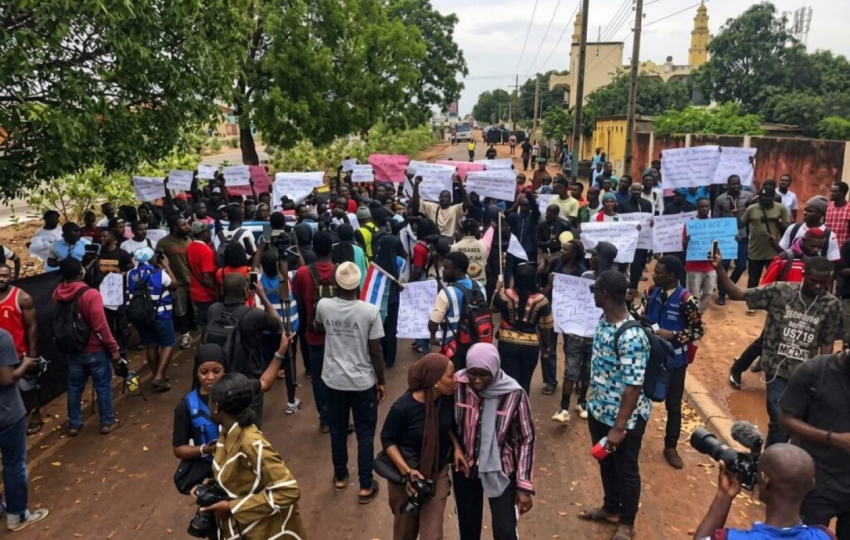



Sacré-Coeur 3 – BP 15177 CP 10700 Dakar Fann – SENEGAL.
+221 33 827 34 91 / +221 77 637 73 15
contact@timbuktu-institute.org

 © TDR
© TDR
Timbuktu Institute - Week 3 September 2026
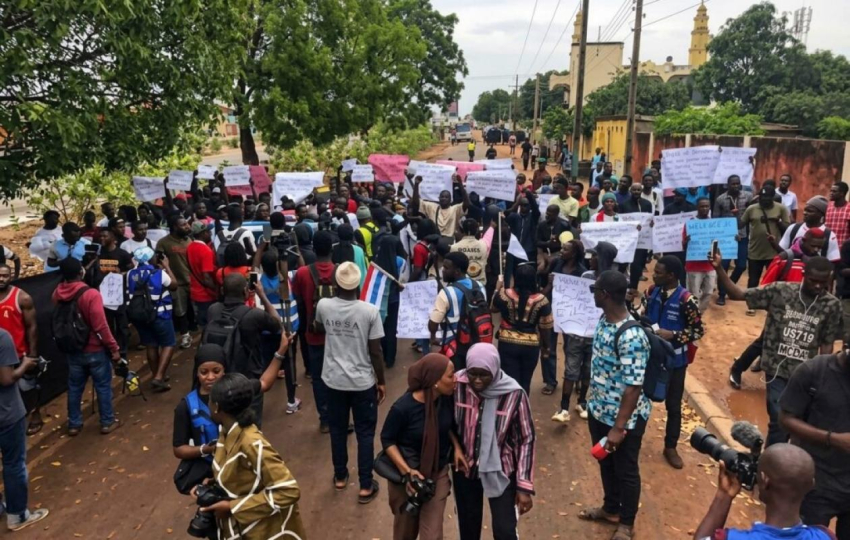
Since June, The Gambia has been going through an energy crisis marked by recurrent power cuts lasting up to two days. Because of their impact on economic activity and Gambians’ daily lives, protests broke out on the night of 7 to 8 September and the following days in several towns across the country, including the capital Banjul. Barricades were erected in the streets and a police station was even set on fire in Tujereng.
The energy crisis crystallises underlying political and social tensions
But the anger quickly took on a political dimension, with some protesters demanding the president’s departurewhile his bid for a third term is being contested. After nearly ten years in power, Adama Barrow could indeed run again in the December elections, as a two-term limit was ultimately not included in the Constitution. In response to the protests, the authorities banned gatherings without prior authorisation and arrested eleven people allegedly involved in acts of vandalism.
While the security situation has stabilised following these measures, the protests have highlighted the weaknesses of the Gambian energy model. Sixteen months ago, the National Water and Electricity Company (NAWEC) did not renew its contract with the Turkish operator Karpowership. The question of a possible return of the group was revived in public debate by the outgoing Turkish ambassador on 10 September, before being ruled out the very next day by NAWEC’s director. From February 2018 to May 2025, Karpowership supplied around 30 MW to The Gambia at a cumulative cost exceeding 200 million dollars. NAWEC had then opted for cheaper regional imports via the Gambia River Basin Development Organisation (OMVG). However, this substitution strategy ran up against the drought that recently hit Guinea and reduced the availability of hydroelectricity transmitted through the OMVG.
Adama Barrow has promised an improvement in supply by the end of October by boosting domestic generation. The crisis may, however, reflect a deeper malaise within Gambian society, going beyond the energy issue alone. According to Talib Ahmed Bensouda, mayor of Kanifing and presidential candidate, the frustration of young Gambians stems rather from a broader lack of opportunities, fuelling irregular migration to Europe.
Washington strengthens the resources of Gambian transitional justice
The United States Embassy in The Gambia announced that it is funding a programme worth 930,000 dollarsaimed at strengthening the capacity of the Gambian judiciary to handle crimes committed under Yahya Jammeh’s regime. The programme will build on the findings of the Truth, Reconciliation and Reparations Commission (TRRC) on enforced disappearances and extrajudicial executions committed between 1994 and 2017.
Sacré-Coeur 3 – BP 15177 CP 10700 Dakar Fann – SENEGAL.
+221 33 827 34 91 / +221 77 637 73 15
contact@timbuktu-institute.org