 French
 Arabic
 English
 Portuguese
 Spanish
 Swahili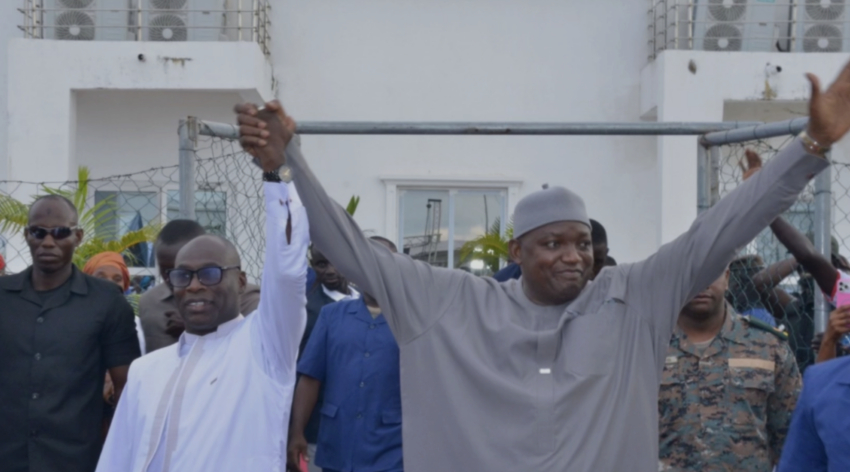


Sacré-Coeur 3 – BP 15177 CP 10700 Dakar Fann – SENEGAL.
+221 33 827 34 91 / +221 77 637 73 15
contact@timbuktu-institute.org

 © TDR
© TDR
Timbuktu Institute October 2026 - Week 1
Just over two months before the 5 December presidential election, Adama Barrow is consolidating his camp. After Mamma Kandeh, it is now Essa Faal who has joined the incumbent president, going so far as to declare the election “dead and buried”. But these endorsements come at a cost: internal dissent within APP-Sobeyaa and defections of NPP officials to a new party. Facing him, the opposition remains split between two competing coalitions, led respectively by Ousainou Darboe and Talib Bensouda, whose rapprochement is stalled over the question of a joint candidate.
An official endorsement of the incumbent president
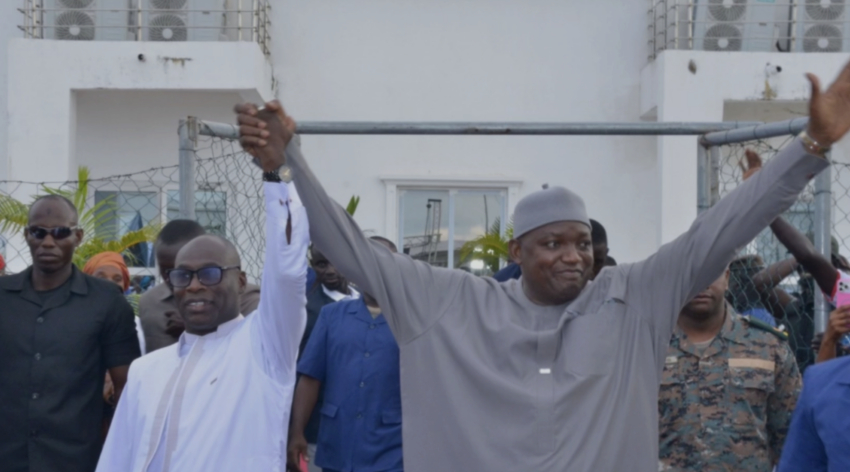
The leader of APP-Sobeyaa, Essa Faal, made official his alliance with President Adama Barrow and the National People’s Party (NPP) at a ceremony held at the presidential palace in Banjul. A video of the eventshows the two men hand in hand, arms raised, to the cheers of their supporters. A former opposition figure, Essa Faal went as far as to say that the December election was “dead and buried” and that “Barrow has already won”. During the ceremony, Adama Barrow highlighted the arithmetic of this alliance. Added to his own 2021 votes, those of Essa Faal and of Mamma Kandeh, who joined the NPP at the end of July, would make his re-election a foregone conclusion. This choice is, however, contested within APP-Sobeyaa, where several founding members and officials disapprove of an alliance that leads their leader to give up running in the 5 December vote. Essa Faal also denied having received money or sought a post in exchange for his support.
The presidential party faces a wave of defections
At the very moment it was celebrating Essa Faal’s endorsement, the NPP saw some twenty of its officials join the National Democratic Party (NDP), founded by Kebba Madi Bojang, former youth president of the ruling party. Youth coordinators, women’s wing leaders and members of constituency executives, the defectors from several regions of the country say they had only been active in the NPP because of Kebba Madi Bojang, whom they have now “decided to follow”. Although these departures remain limited in number, they affect the grassroots activist apparatus of the ruling party just over two months before the presidential election.
Divided, the opposition debates a rapprochement between Ousainou Darboe and Talib Bensouda
Faced with this strategy of endorsements, the opposition is going into the election in disarray. Two coalitions are competing: Gambia First, built around Ousainou Darboe’s United Democratic Party (UDP), and Coalition 2026, led by the Mayor of Kanifing, Talib Ahmed Bensouda, and his Unite movement. On social media, a UK-based Unite supporter revived the debate by calling on the two men to “find a path of convergence”. “Politics is the art of the possible. Yesterday’s differences must not become tomorrow’s obstacles,” he argued, recalling that rivals of the president, such as Mamma Kandeh and Essa Faal, had managed to find common ground with the NPP. The appeal drew mixed reactions. While several users urged the two leaders to “put the national interest above personal differences”, others pointed to the practical obstacles to such a rapprochement, starting with the question of who would lead the coalition as its candidate.
For his part, Ousainou Darboe opted for a firm stance. Addressing the UDP diaspora convention in London on 27 September, he praised three decades of loyalty from party members abroad, before lashing out at politicians willing to abandon their principles for personal or political gain, a criticism that sounds like an allusion to the recent defections to the presidential camp. “The truth has no expiry date,” he said. Ousainou Darboe stated that his party remains open to working with other movements that share the UDP’s values and named Adama Barrow as the only opponent in this election.
Sacré-Coeur 3 – BP 15177 CP 10700 Dakar Fann – SENEGAL.
+221 33 827 34 91 / +221 77 637 73 15
contact@timbuktu-institute.org