 French
 Arabic
 English
 Portuguese
 Spanish
 Swahili







Sacré-Coeur 3 – BP 15177 CP 10700 Dakar Fann – SENEGAL.
+221 33 827 34 91 / +221 77 637 73 15
contact@timbuktu-institute.org

Timbuktu Institute July 2026
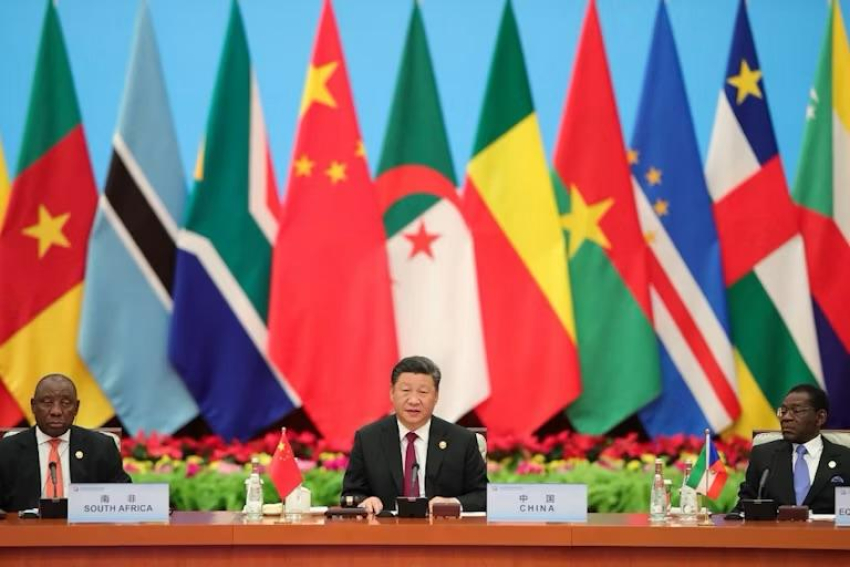
Since May 1, 2026, Beijing has been applying a 0% customs tariff to all products imported from 53 African countries. This trade decision, unprecedented in its scope, immediately sparked intense debate across the continent. Far from unanimous, African reactions paint a complex picture: the enthusiasm of the media and exporters, who hail a “historic turning point,” the more nuanced assessment of certain academics who see it as a test of the continent’s ability to transform itself; the caution of some economists who point out that the trade imbalance with China cannot be resolved with the stroke of a pen; and the geopolitical interpretation of a measure that is part of the reshaping of international relations. This overview of African reactions—featuring media coverage, the voices of experts and entrepreneurs, the reservations of critical economists, the geopolitical implications, and the first quantitative indicators of a dynamic already at work—outlines the contours of a historic opportunity that is as real as it is demanding: whether Africa will truly be able to transform its opening to the outside world into a lever of economic power.
To understand the full scope of the impact, one must first assess what this decision truly represents within the landscape of global economic relations—a decision that, beyond its commercial nature, has structural implications. Indeed, the complete elimination of tariffs on 100% of products originating from 53 African countries is not merely a tariff adjustment. It represents a break with the logic of reciprocity that typically structures international trade agreements: China is unilaterally granting full preferential access to its market without requiring symmetrical treatment in return. The measure is part of a gradual process. It had already been in place since December 2024 for the 33 African countries classified as least developed. Its extension as of May 1, 2026, now makes it a continental policy, affecting for the first time significantly more industrialized economies such as South Africa, Egypt, Nigeria, Algeria, and Kenya. The defined timeframe—until April 30, 2028—gives it both an experimental and strategic character. However, many analysts also point out that reducing tariffs alone is not enough to meet Africa’s needs for economic restructuring and infrastructure development. Structural constraints such as limited industrial capacity, weak logistics infrastructure, and dependence on raw material exports persist. It is within this context that the debate has unfolded.
Media Landscape: Two Narratives in Constant Tension
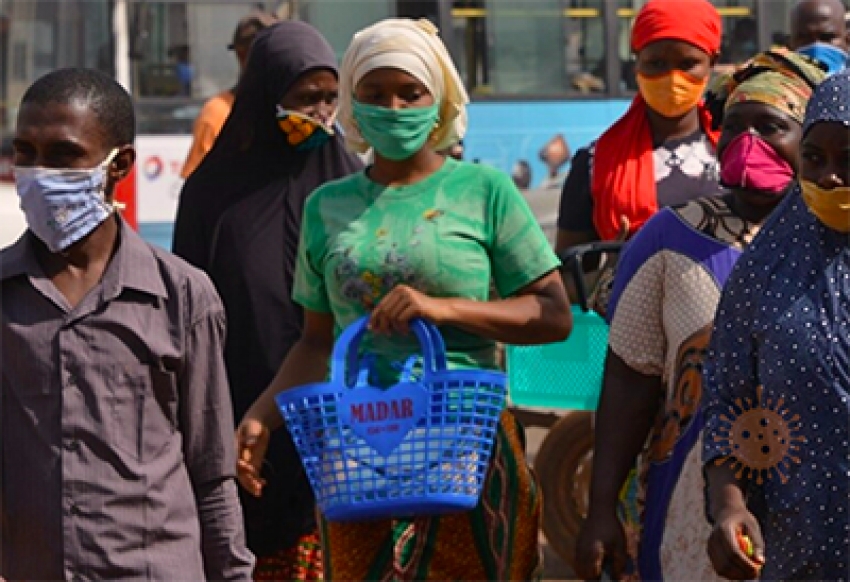
An analysis of African media coverage and social media reveals a structure comprising two major narratives, which coexist without canceling each other out. The first narrative is one of positive change and a major opportunity. Superlatives abound: “historic turning point,” “new lease on life,” “trade revolution.” They reflect heightened expectations in the face of tariff barriers that had previously penalized African exports to a market of 1.4 billion consumers. Stephen Kamanzi, a journalist at KT Press Rwanda, believes that “this tariff decision marks a decisive turning point toward trade liberalization” and that Beijing “is positioning itself as an alternative economic hub for a continent that is increasingly wary of Western protectionism.” For countries like Rwanda—landlocked and with few natural resources—access to the vast Chinese market represents both an opportunity and a source of pressure, according to the same source. In Kenya, journalist Onyango K’onyango of the Nairobi-based online media outlet Capital FM noted that the decision offers the country “an opportunity not only to increase its exports but also to rethink its long-term trade strategy.” He goes further by predicting that if local manufacturers manage to take full advantage of this preferential access, “sectors such as textiles, agri-food, leather goods, and light industry could experience significant growth.” On professional social media platforms, the tone is more immediate and practical. Phrases like “Zero tariffs = a game-changer for our containers bound for Shanghai” are circulating widely, indicating that entrepreneurs have immediately translated the measure into concrete economic calculations.
At the same time, a second narrative—driven by the need for strategic vigilance—takes a more analytical tone, sometimes deemed alarmist. Headlines such as “Is Africa in China’s Trap?” are circulating in the independent and specialized press. Indeed, while this decision theoretically opens up new opportunities for African exporters, several analysts are calling for its impact to be put into perspective. Tariffs are not the main obstacle to African exports to China. Other barriers persist, which African countries should take into account: weak industrial capacity, a lack of local processing, logistical constraints, and export standards.
The Voices of African Academics and Experts: An Assessment of Transformation
According to Cheikh Mbacké Sène, an expert in economic intelligence and strategic communication and a Ph.D. candidate in business administration at Atlantic International University, this elimination is not so much an automatic opportunity as it is a strategic test. In an analysis published in L’Économiste du Faso, he offers his assessment. In his view, the elimination of customs duties constitutes “a full-scale test of the continent’s ability to transform external openness into a lever of economic power.” He quantifies the opportunity precisely: in the short term, this measure could lead to a 15% to 25% increase in African exports over a three- to five-year period, representing an estimated additional gain of between 20 and 30 billion dollars. But this projection remains contingent on a decisive factor: the ability of African economies to produce, process, and export goods that meet the requirements of the Chinese market.
His geopolitical analysis is equally incisive. Beyond its commercial implications, he believes this initiative reflects “a clear geo-economic strategy on China’s part”: by facilitating access for African products to its market, Beijing is consolidating its influence on the continent, securing its supply chains, and positioning itself as a central player in South-South partnerships.
In Côte d’Ivoire, one of West Africa’s main hubs of economic growth, a trade advisor at the Embassy of Côte d’Ivoire in China notes that “thanks to local processing projects, rubber resources are no longer simply exported in their raw state: they now undergo primary, high-quality processing on Ivorian soil, which represents a fundamental qualitative shift for our economy.” He explicitly articulated the goal of replicability: “In the long term, this strengthens the competitiveness of the rubber industry and provides a replicable model for cotton, cocoa, and other key sectors, thereby promoting autonomous and sustainable industrialization.” ” To achieve this, Côte d’Ivoire is committed to offering tax exemptions for processing projects and duty-free imports of industrial equipment.
In Central Africa, Boniface Bounoung Fouda, director of the Department of Economics at the Institute of International Relations at the University of Yaoundé, sees this as “a major opportunity for modernization” in Cameroon. In the Cameroon Tribune, he notes that “zero customs duties on 100% of tariff lines is an additional lever.” But his position remains nuanced. Specifically, he called on his compatriots to seize this opportunity not only to develop trade but also to achieve “the structural transformation and inclusive development outlined in the 2020–2030 National Development Strategy.” In other words, the measure would only be worthwhile if it were linked to a pre-existing industrial strategy.
Exporters and Entrepreneurs: Financial Relief as the Focus
In the business world, reactions have been overwhelmingly positive and immediate. Manelisa Bane, a South African entrepreneur with long-standing trade ties to China, stated: “The fact that tariffs are zero is of paramount importance to us; it means significant savings for our SME. As a South African company, we welcome what Chinese President Xi Jinping has done for South Africa. We are strengthening cooperation between the two countries and will be able to go further in terms of innovation and technology. ” This reaction is emblematic of a group of stakeholders for whom the measure represents a direct, immediate, and quantifiable improvement: those who are already exporting and whose products meet Chinese standards. For them, the elimination of tariffs is not an abstract promise but a concrete gain in price competitiveness in the Chinese market.
Critical Economists Weigh In: The Persisting Asymmetry
In the face of this enthusiasm, several economists have sought to offer important caveats, noting that this trade announcement would not fundamentally alter the economic asymmetry between China and Africa. Yun Sun, a researcher at the Brookings Institution, paints a significantly more nuanced picture:
“Duty-free access alone does not necessarily alter the unbalanced structure of trade.” In the same vein, Charlie Robertson, an economist specializing in Africa, highlights a structural obstacle. According to him, the reality remains that most African nations lack the industrial capacity needed to export competitive manufactured goods—a problem that no tariff reform can resolve in the short term.
Other analysts believe that a zero-tariff policy could boost African agricultural exports, which could benefit rural economies and reduce poverty. They caution, however, that the impact will be uneven due to varying levels of industrial development across the continent. Economic research shows that the elimination of tariffs is likely to benefit the strongest African economies far more than the weaker ones. Consequently, these analyses recommend extending equal tariff treatment to all African regional blocs, notably the East African Community, the Southern African Customs Union, and the Economic Community of West African States. The aim is to foster regional organization of production for export. And this is precisely where the potentially decisive role of the AfCFTA should come into play, although its full implementation remains incomplete.
A Measure with Geopolitical Implications
Furthermore, an overview of African reactions would be incomplete without addressing the geopolitical dimension, which is ever-present in analyses of the continent. The U.S. context amplifies the symbolic impact of China’s approach: more than 80% of USAID programs in Africa were eliminated by March 2025, and AGOA—which offered preferential access for African exports to the United States—was extended only until the end of 2026, with no clarity on what comes next. For Senegalese economist Cheikh Mbacké Sène, the measure comes amid “a context of specific geopolitical challenges: the trade war between China and the United States, the reduction or restructuring of European and American funding, as well as a profound transformation of global relations.” In this shifting landscape, China’s decision places African nations in a unique position: that of a courted continent, with all the resulting opportunities for maneuver that this implies. It is essential to strengthen national capacities in order to turn the benefits of this policy into a lever for development and to promote sustainable growth.
Toward Tangible Benefits from a Historic Opportunity?
In response to these reservations, proponents of the measure argue that no trade policy alone can resolve structural weaknesses that have accumulated over decades: the elimination of tariffs acts as a catalyst that “teaches people to fish rather than giving them fish,” rather than serving as a turnkey solution. “Zero tariffs” send a market signal and create unprecedented demand-driven momentum for investments in infrastructure, technology, and certification—an effect that China seeks to amplify through capacity-building initiatives such as the Forum on China-Africa Cooperation (FOCAC), dedicated credit lines for African SMEs, technology transfers, and trade platforms such as Alibaba International or the China International Import Expo.
Early results seem to corroborate this trend: in Senegal, peanut oil exports to China rose from 3,051 metric tons in the first five months of 2025 to more than 13,300 metric tons during the same period in 2026—a fourfold increase. Beijing has also streamlined, through a “Green Channel 2.0,” streamlined the sanitary and phytosanitary assessment procedures applicable to African agricultural products, with risk management differentiated by category: following dried chili peppers, coffee will, as of July 20, 2026, benefit from harmonized sanitary market access to China for the 53 African partner countries, without the need to negotiate protocols on a country-by-country basis.
Combined with the continent’s growing appeal to investors seeking to establish export-oriented production facilities there, this framework outlines a dynamic in which trade, investment, and production reinforce one another, with zero tariffs acting as an amplifier of investment rather than a substitute for structural transformation. There remains the argument of persistent asymmetry: unlike a reciprocal agreement, this unilateral regime imposes no quid pro quo or political conditions on African countries, and it complements bilateral and multilateral mechanisms for grants, debt relief, and training—which do not appear in customs statistics. Driven by trade volumes that already far exceed trade between the United States and Africa, this offer is designed to be long-term, independent of Western political cycles—a strategic support, its proponents argue, rather than a forced option.
A review of African reactions reveals that, regarding China’s tariff elimination measure, there is neither naive enthusiasm nor ideological rejection, but something more substantial: a collective analytical maturity, marked by real yet, on the whole, constructive tensions. Several analysts emphasize that the actual impact will depend on the ability of African economies to move up the value chain, improve the quality of their products, and overcome logistical and industrial constraints. Without structural transformation, trade could remain dominated by raw materials, limiting the long-term economic benefits of a measure that is, nonetheless, historic.
Sources: Africanews, China.org.cn/Xinhua, L'Économiste du Faso, The Conversation, France Épargne, Timbuktu Institute, Business AM, Connectionivoirienne, Afrique sur 7.
Sacré-Coeur 3 – BP 15177 CP 10700 Dakar Fann – SENEGAL.
+221 33 827 34 91 / +221 77 637 73 15
contact@timbuktu-institute.org