 French
 Arabic
 English
 Portuguese
 Spanish
 Swahili


Sacré-Coeur 3 – BP 15177 CP 10700 Dakar Fann – SENEGAL.
+221 33 827 34 91 / +221 77 637 73 15
contact@timbuktu-institute.org


Timbuktu Institute, 26 October 2026
Disinformation, as is well known, transcends borders just as much as the fractures it exploits. In the Sahel as in Europe, information manipulation thrives on distrust of institutions, fuels social, political and economic tensions, and weakens security balances. This is the central finding of the joint report presented in Dakar by the Timbuktu Institute and the Institute of Political Studies of the Polish Academy of Sciences, under the coordination of Dr Bakary Sambe and Agnieszka Cianciara. Entitled “Disinformation, Democracy and the Challenges of Stability and Security: What Shared Challenges for the Sahel and Europe?”, the study calls for rethinking responses to the information threat in light of the vulnerabilities specific to each society, without losing sight of the common drivers that run through them.
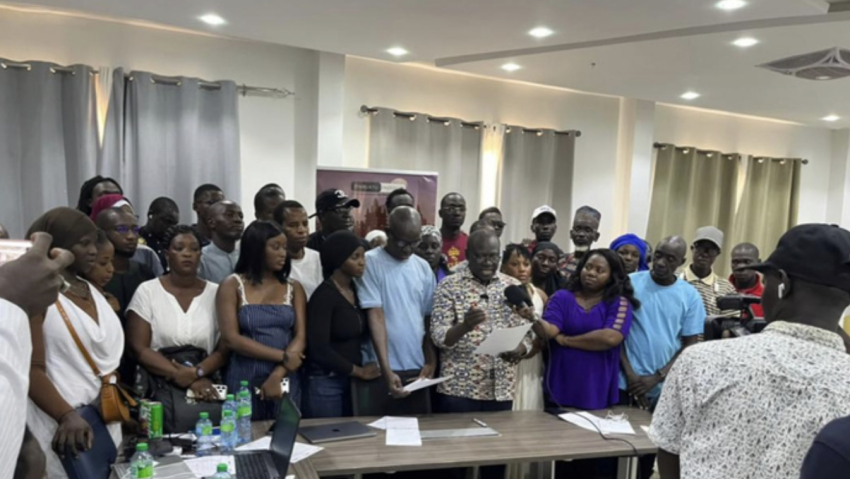
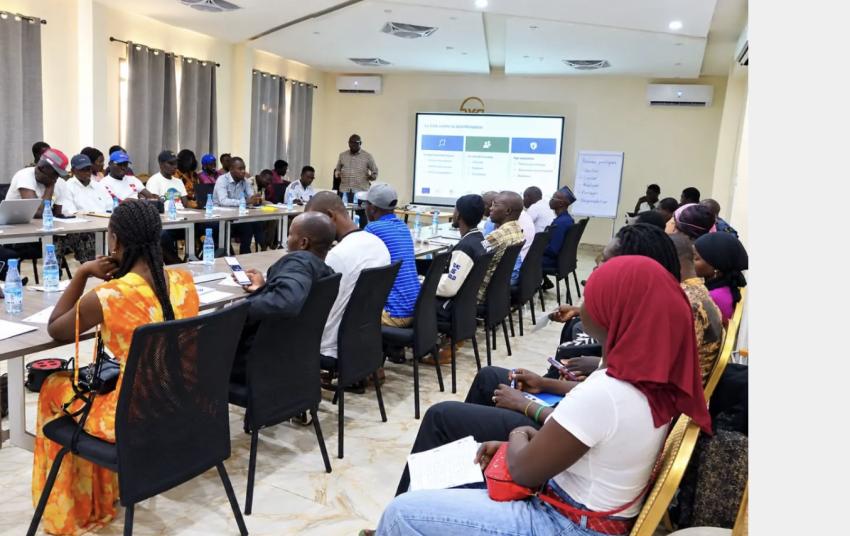
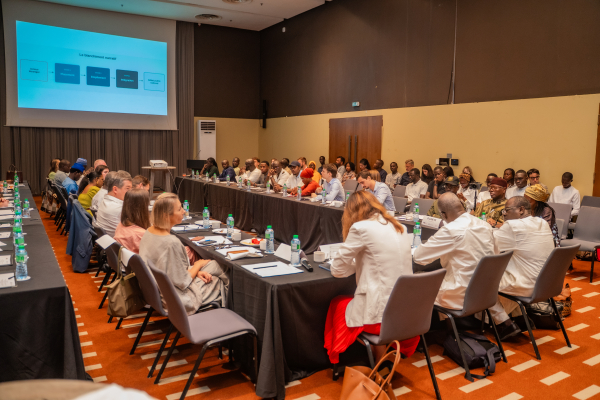
Organised with the support of the Embassy of Poland in Senegal, the presentation seminar brought together researchers, experts, journalists and civil society actors, including Momar Diongue, Director General of the Senegalese Press Agency (APS), Alioune Tine, President of AfrikaJom Center, and Professor Ndèye Astou Ndiaye, lecturer in political science at Cheikh Anta Diop University of Dakar. The discussions, moderated by Hamadou Tidiane Sy, Director of E-JICOM, helped to put into perspective the mechanisms of information manipulation and the conditions for a response that sacrifices neither public freedoms nor democratic pluralism. According to the report, disinformation is neither a passing anomaly nor reducible to the mere phenomenon of “fake news”. Rather, it acts as a crisis accelerator, inserting itself into pre-existing political and social fractures in order to amplify their effects and bend their trajectories to the benefit of particular interests. In this sense, it does not necessarily create the tensions it mobilises. However, it can give them new reach, exacerbate them and help turn them into drivers of instability.
This analysis builds on in-depth work undertaken by the Timbuktu Institute. Since 2024, its Observatory of Social Media in the Sahel and West Africa has documented the circulation of divisive content on social media (WhatsApp, Facebook, TikTok, X, Telegram, etc.), its capacity to polarise communities already tested by insecurity, and its contribution to the delegitimisation of states, regional organisations (ECOWAS, African Union, etc.) and international partners. As these narratives take root, they can fuel identity-based withdrawal, restrict civic space and strengthen regimes that came to power through coups d’état. Moreover, last September, the Timbuktu Institute had already devoted a study, Algorithms at War, to the appropriation of generative artificial intelligence (AI) by the actors of the crisis in Mali, and to the extent to which these new dynamics are reshuffling the cards in the ongoing conflict. It is from this perspective that this new report extends the reflection by opening up a comparison with Europe. In this respect, it upholds an essential orientation: responses to information manipulation must be designed as close as possible to the social and political realities they seek to protect, rather than reproducing models conceived in exogenous environments.
FIMI in the Sahel: The Art of Exploiting Fractures
The notion of FIMI (Foreign Information Manipulation and Interference) refers to information manipulation and interference operations conducted in a coordinated and concealed manner. The distinction is indeed decisive. While criticism of a foreign partner or the assertion of national sovereignty belong fully to legitimate political debate, the threat lies elsewhere, namely in the concealment of the origin of content, of its funding or of the actors who orchestrate it. In the Sahel, several factors combine to provide fertile ground for these operations. The exponential uptake of social media and encrypted messaging by young people, without critical media literacy always progressing at the same pace, is taking place in an environment marked by deteriorating security, political transitions and growing distrust of certain foreign partners. Sovereigntist discourses, when mixed with fabricated or manipulated narratives, can then become vectors of influence whose drivers are difficult to distinguish from the genuine aspirations of the populations.
This study distinguishes three main categories of actors: foreign powers engaged in what is now a multipolar competition; armed terrorist groups, notably JNIM and the Islamic State in the Sahel; and national and transnational actors, such as political leaders, influencers and influence entrepreneurs. Although their interests do not necessarily coincide, their narratives can converge and reinforce one another, without central coordination always being necessary. In this context, the Russian ecosystem, which is particularly well documented, illustrates this mechanism. This machinery combines state media, unofficial actors from the former Wagner galaxy or linked to the African Initiative news agency, and local relays. The strength of these set-ups lies precisely in their ability to blur the line between external production and domestic support. Content produced abroad thus acquires an appearance of legitimacy when it is picked up by a well-known local media outlet or attributed to an expert, real or fictitious. Influence is therefore exercised less by replacing existing narratives than by amplifying them, redirecting them and having them appropriated by local relays.
When Distrust Gains Ground in Democracy
The first consequence of these manipulations is the erosion of trust. Faced with contradictory information, misleading narratives and successive denials, citizens end up questioning the reliability of sources as much as the accuracy of facts. The danger then lies in the gradual disappearance of the common reference points on the basis of which a society can debate, settle its disagreements and exercise its political judgement. It therefore appears that, without a shared foundation of verifiable facts, democratic debate risks dissolving into a generalised competition of suspicions.
Election periods are, in this respect, moments of particular vulnerability. In Senegal, a fake poll attributed to a non-existent research centre circulated five days before the presidential election of March 2024, before being debunked by fact-checkers. This episode is a reminder of the capacity of such content to intervene at the very heart of democratic processes. From another perspective, in the countries of the Alliance of Sahel States (AES), social media accompanied the coups d’état and the reshaping of regional alliances. The narratives gradually hardened. Russia was first presented as an alternative to Western partners, before France (and the West more generally) was designated as the main party responsible for instability, and then accused of supporting terrorist groups. When these narratives are taken up by public officials, the line between propaganda and official discourse becomes more porous.
At the same time, the suspension of several international media outlets and the pressure exerted on the local press have reduced opportunities for confronting different points of view. The weakening of pluralism leaves more room for unverified content, while distrust of the media and institutions makes any attempt to re-establish the facts more difficult. Information manipulation thus thrives in a space where counter-narratives are gradually losing their ability to be heard.
Disinformation, a Catalyst for Insecurity
For armed groups, information is more than ever a weapon in its own right. It enables them to legitimise violence by exploiting local grievances, to glorify their military successes, to sow confusion through exaggerated casualty figures or misappropriated images, and also to divert attention from their own abuses. Numerous recent examples in the Sahel show how the circulation of misleading content can blur the understanding of security events. In Burkina Faso, a video presented as showing the army fleeing was in fact a propaganda sequence filmed in Mali, recycled during attacks in February 2026. Along similar lines, the stigmatisation of a community can turn a manipulation operation into a recruitment factor for armed groups, by heightening feelings of injustice and exclusion.
Information rivalry between foreign powers also contributes to weakening security cooperation. When actors accuse one another of supporting jihadist groups, attention is diverted from the perpetrators of attacks and counter-terrorism cooperation mechanisms are weakened. The threat, although cross-border, then comes up against a region divided by competing narratives. With the pressure exerted by JNIM in western Mali and the blockade of supply corridors, these dynamics now directly concern the coastal countries.
Sahel–Europe: Common Vulnerabilities, Distinct Realities
In Europe, interference operations exploit other fault lines: concerns about purchasing power, tensions around immigration, political polarisation and distrust of national or European institutions. The contexts are not the same as those of the Sahel, but the mechanisms show similarities that the report urges us not to underestimate. In both regions, manipulation relies on a pre-existing crisis of legitimacy, which it helps to aggravate. It also depends on domestic relays. In the Sahel, narratives are often co-produced by local actors; in Europe, they may undergo a form of “narrative laundering” that gives them an appearance of credibility. In both cases, external operations derive their effectiveness from their ability to fit into imaginaries and resentments already present within the societies concerned.
A third similarity lies in the risk that an exclusively repressive response would entail. Confusing the fight against manipulation with the control of criticism would fuel the very distrust that resilience policies seek to contain. Protecting the information space therefore requires distinguishing coordinated and concealed operations from investigative journalism, critical expression and legitimate political dissent. Any restrictive measure must be part of a clear legal framework and respect the principles of necessity, proportionality and transparency. The European experience, notably the European Union’s framework for countering FIMI, offers useful avenues in this regard. However, it cannot be mechanically transposed to different political, institutional and media environments. Cooperation between the European Union, the African Union and ECOWAS would therefore benefit from being based on an exchange of practices and the joint design of responses, rather than on the export of norms developed elsewhere.
Building Shared Information Resilience
In response to these challenges, the report makes seven recommendations aimed at states, regional organisations, digital platforms and civil society. It advocates the creation of a permanent cooperation mechanism between the European Union, the African Union and ECOWAS for information sharing, monitoring and early warning, with reinforced arrangements during election periods and crises. It also calls for better integration of information dynamics into early warning mechanisms and into the protection of democratic processes, as well as for coordinated responses to foreign manipulation operations. Digital platforms are also called upon to play their part, through enhanced cooperation on the detection of coordinated campaigns, the transparency of recommendation systems, researchers’ access to data and content moderation in national and local languages. Added to this are sustained support for independent media, fact-checkers and media literacy initiatives, as well as the preservation of pluralism and fundamental freedoms. Finally, joint research and evaluation must form the foundation of a partnership intended to last.
These recommendations reflect a deeper conviction: no strategy to combat disinformation can succeed in the long term if it merely fights narratives without tackling the grievances on which they feed. In the face of an exploited injustice, the most solid response remains the one that strives to correct it. Information resilience thus depends on the robustness of institutions, the independence of the media and the ability of citizens to weigh competing discourses in order to form an informed judgement.
Senegal and, more broadly, West Africa have resources on which to build this effort: institutions capable of withstanding tensions, societies shaped by a plurality of voices, and a tradition of dialogue that can still serve as a bulwark against attempts at polarisation. The challenge now is to turn these assets into lasting capacities for prevention and response. For in an information space where narratives travel faster than denials, vigilance cannot be the business of a single state or a single continent. It requires seeing earlier, coordinating responses and speaking accurately, right down to the local languages in which the battle for trust is fought every day.
The full report is available here: https://timbuktu-institute.org/media/attachments/2026/10/22/rapport---desinformation-dmocratie-et-enjeux-de-stabilit-et-de-scurit---quels-dfis-partags-entre-le-sahel-et-leurope-.pdf
Timbuktu Institute, novembre 2026
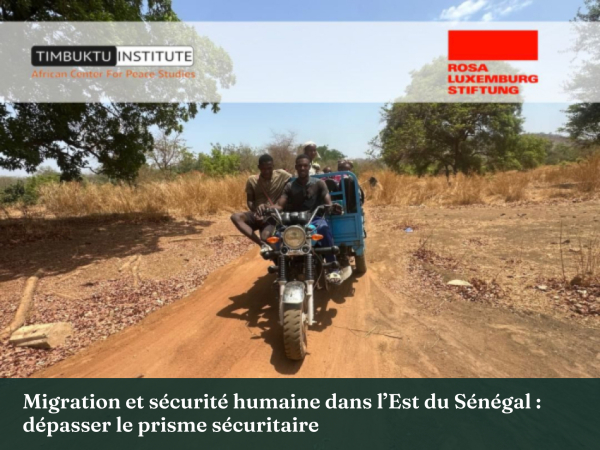
À Goudiry, dans la région de Tambacounda, la question migratoire s'impose avec une acuité particulière, au croisement des fragilités économiques, des dynamiques sociales et des préoccupations sécuritaires. Le 29 octobre 2026, le Timbuktu Institute, en partenariat avec la Fondation Rosa Luxemburg, y a organisé la restitution des résultats de son étude « Migration, résilience et sécurité humaine », consacrée aux départements de Goudiry et de Bakel. Réunissant des élus locaux, le préfet, des représentants de la société civile, des jeunes, des migrants de retour ainsi que des forces de défense et de sécurité (FDS), la rencontre a permis de mettre en discussion la conviction centrale selon laquelle la migration ne saurait être réduite à une question de sécurité ou de criminalité. Plutôt, elle doit également être appréhendée à travers ses dimensions économiques et sociales notamment son rôle dans les mécanismes de résilience des communautés.
L’atelier de restitution s'inscrit dans une réflexion plus large sur les liens entre migration, résilience économique et sécurité humaine dans l'Est du Sénégal. Situés dans la région de Tambacounda, à environ 650 kilomètres de Dakar, les départements de Goudiry et de Bakel comptent parmi les plus anciens bassins migratoires d'Afrique de l'Ouest. Ils se trouvent également en première ligne face aux répercussions de la crise sécuritaire qui affecte la région malienne de Kayes, de l'autre côté de la frontière. Dans ces territoires, les mobilités humaines, les solidarités transfrontalières et les vulnérabilités économiques entretiennent des rapports étroits, que les seules grilles de lecture sécuritaires ne permettent pas toujours de saisir. C'est dans cette perspective que le Timbuktu Institute et la Fondation Rosa Luxemburg ont organisé cet atelier de restitution, ouvert par le Dr Bakary Sambe, directeur régional du Timbuktu Institute, et Marie Nguettia, chargée de programme, en présence d'Alséyni Bangoura, préfet du département. Représentant le directeur régional de la Fondation Rosa Luxemburg, le Dr Armin Osmanovic, la représentante de la Fondation Rosa Luxemburg a rappelé l'ambition de la démarche, celle de confronter les conclusions de l'étude aux réalités vécues par les acteurs du territoire, afin d'aboutir à un document final qui prenne en compte les aspirations et les recommandations des communautés locales .
Migration, chômage et résilience : ce que révèle l'enquête de terrain
Menée du 9 au 30 juin 2026 dans les départements de Goudiry et de Bakel, l'étude repose sur un dispositif de collecte combinant 180 questionnaires auprès des ménages, 30 entretiens, 7 observations et 7 récits de vie. Les investigations ont associé des profils diversifiés : migrants de retour, familles, leaders religieux et communautaires, jeunes, autorités locales et membres des forces de défense et de sécurité. De ce travail de terrain ressortent trois enseignements principaux.
Le premier tient à la place centrale qu'occupe la migration dans l'organisation sociale et économique des communautés. Presque tous les ménages comptent au moins un membre établi à l'extérieur, au point qu'une formule revient dans les témoignages : « dans chaque maison, il y a au moins un migrant ». Les revenus issus de ces mobilités constituent un ressort essentiel de la résilience familiale, même si cette stratégie s'accompagne de drames humains, notamment sur les routes maritimes et désertiques. Ensuite, apparaît la problématique du chômage, qui se révèle le principal dénominateur des vulnérabilités locales. Pour 88 % des personnes interrogées, la recherche d'un emploi constitue le premier motif de départ. Plus significatif encore, 99 % estiment que le manque d'opportunités professionnelles expose les jeunes à la migration irrégulière. Le chômage figure également en tête des facteurs de risque de radicalisation cités par les répondants. Ces résultats soulignent combien les perspectives économiques conditionnent à la fois les choix migratoires et les perceptions de la sécurité. Enfin, un troisième constat met en évidence l'existence d'un capital de résilience territorial, encore largement informel. La médiation traditionnelle, la confiance accordée aux forces de défense et de sécurité et l'engagement de la diaspora constituent autant de ressources sur lesquelles les communautés peuvent s'appuyer. Ce socle demeure toutefois insuffisamment accompagné et se trouve fragilisé par les incompréhensions entre générations.
Néanmoins, les réalités observées révèlent des différences sensibles entre les deux départements. À Bakel, 87 % des ménages déclarent recevoir des transferts de la diaspora, contre 58 % à Goudiry. La perception de la menace sécuritaire y est également plus prononcée : 60 % des personnes interrogées à Bakel considèrent cette menace comme une réalité à prendre en compte, contre 29 % à Goudiry. À l'inverse, le manque d'opportunités économiques pour les jeunes est davantage ressenti à Goudiry, où 89 % des habitants interrogés le soulignent, contre 68 % à Bakel. Riverain du fleuve Sénégal et frontalier du Mali et de la Mauritanie, Bakel apparaît ainsi plus étroitement dépendant des transferts migratoires et davantage exposé aux préoccupations sécuritaires. Goudiry, territoire plus rural et enclavé, reste pour sa part particulièrement confronté à l'insuffisance des débouchés économiques. Deux configurations qui, malgré leurs différences, renvoient à une même nécessité : replacer les conditions de vie des populations au cœur des politiques de prévention et de développement.
Comprendre les ressorts de la migration
Lors de la présentation des résultats, le Dr Bakary Sambe a tenu à rappeler le fil conducteur de la démarche : la migration constitue avant tout un phénomène social complexe, intimement lié à la sécurité humaine et aux stratégies de résilience économique des populations. L'assimiler à une simple manifestation de criminalité reviendrait à poser un diagnostic incomplet et, par conséquent, à privilégier des réponses inadaptées aux réalités du terrain. Cette lecture invite à prendre de la distance avec les approches exclusivement sécuritaires. Les données recueillies montrent en effet que les populations associent d'abord leur sentiment d'insécurité au chômage, au déficit d'infrastructures et à la fragilité de leurs moyens d'existence, plutôt qu'aux attaques armées signalées de l'autre côté de la frontière. Pour rendre compte de cette complexité, l'étude s'appuie sur quatre grilles d'analyse complémentaires : la sécurité humaine, la résilience territoriale, la gouvernance et la « nouvelle économie de la migration ».
Cette dernière permet notamment de comprendre pourquoi les départs se poursuivent malgré la connaissance des risques encourus. L'émigration ne relève pas uniquement d'une décision individuelle, elle s'inscrit souvent dans une stratégie familiale de diversification des revenus, conçue comme une forme d'assurance face aux difficultés économiques et aux aléas climatiques. La recherche d'un emploi se double également d'une quête de dignité. Partir, pour de nombreux jeunes, signifie aussi échapper à l'oisiveté, acquérir une autonomie et gagner la considération de leur entourage.
Par ailleurs, l’évolution historique des mobilités dans la zone éclaire cette dynamique. Trois grandes vagues migratoires se sont succédé. La première, jusqu'aux années 1970-1980, correspondait à une émigration de travail relativement régulière vers la France. La deuxième, dans les années 1990-2000, s'est caractérisée par une diversification des destinations vers l'Afrique centrale et le Maghreb. La troisième, qui marque la période actuelle, est dominée par les départs irréguliers vers l'Europe, dans un contexte de fermeture progressive des voies légales de migration. À chaque restriction des possibilités de circulation, de nouvelles routes ont ainsi émergé, souvent au prix de risques humains considérables. Pour Bakary Sambe, les politiques de dissuasion et de fermeture des itinéraires migratoires ne peuvent donc produire que des effets limités et temporaires lorsqu'elles ne s'accompagnent pas d'une amélioration des perspectives économiques dans les territoires de départ. La question migratoire appelle, en ce sens, une réponse qui s'attaque aux causes structurelles des mobilités plutôt qu'à leurs seules manifestations.
La diaspora, un pilier de la résilience familiale et des services sociaux
L'un des apports majeurs de l'étude réside dans la mise en évidence du rôle économique et social des transferts migratoires. Pour 92 % des personnes interrogées, la migration contribue à l'amélioration des conditions de vie, tandis que 73 % des ménages concernés déclarent recevoir régulièrement de l'argent de leurs proches établis à l'extérieur. À l'échelle nationale, ces transferts représentent environ 10 % du produit intérieur brut (PIB). Les départements étudiés figurent vraisemblablement parmi les territoires où leur concentration est particulièrement importante. L'utilisation de ces ressources renseigne sur leur fonction première dans l'économie des ménages. Les sommes reçues servent avant tout à satisfaire les besoins essentiels : 81 % des bénéficiaires les consacrent à l'alimentation, 70 % à la santé et 54 % à l'éducation. Dans des territoires éloignés des principaux centres de décision et où la couverture des services publics demeure limitée, la contribution de la diaspora vient ainsi compenser, au moins partiellement, les insuffisances de l'offre institutionnelle. À Bakel, un habitant résume cette réalité en affirmant que la diaspora « joue le rôle de l'État », notamment à travers le financement d'écoles, de postes de santé et de forages.
Cependant, aussi déterminante soit-elle pour la survie et la stabilité des ménages, cette contribution ne se traduit pas encore suffisamment en investissements productifs. Lors de la restitution, Bakary Sambe a insisté sur cette limite : en l'absence de mécanismes adaptés de crédit et d'assurance, les transferts permettent davantage de sécuriser les conditions d'existence que de soutenir des activités génératrices de revenus. Seuls 26 % des bénéficiaires mentionnent l'investissement parmi les usages de ces ressources. En un certain sens, l’enjeu ne consiste pas tant à décourager les mobilités, mais à mieux valoriser leurs retombées économiques au profit des territoires d'origine. Plusieurs pistes sont avancées dans l'étude à l’instar : 1) le développement de dispositifs d'épargne-projet, 2) le cofinancement d'initiatives entre la diaspora et les collectivités territoriales, 3) la mise en place de fonds villageois ainsi que le soutien à des filières porteuses, notamment dans le solaire et la transformation agroalimentaire.
Cette économie des transferts comporte néanmoins un coût humain et social qui ne saurait être relégué au second plan. Les routes du Sahara et de l'Atlantique ont déjà emporté des vies au sein des communautés concernées. Dans les familles, l'absence prolongée des hommes partis en migration transforme également les responsabilités domestiques. Les femmes restées au foyer deviennent souvent les gestionnaires de fait des ménages. Si cette évolution peut leur conférer une autonomie accrue, elle les expose aussi à une vulnérabilité particulière lorsque les transferts financiers se raréfient ou s'interrompent.
Une restitution nourrie par les réalités du territoire
Au-delà d’une simple restitution des conclusions de l’enquête, la rencontre de Goudiry s’est également conçue comme un exercice participatif. En ce sens, elle a réservé une place importante aux échanges et aux travaux collectifs, réunissant élus locaux, forces de défense et de sécurité, leaders religieux, jeunes, femmes, migrants de retour et représentants de la société civile. Il s'agissait de confronter les résultats de l'étude aux expériences des acteurs locaux et de faire émerger des recommandations susceptibles d'enrichir le document final. Quatre groupes mixtes ont ainsi été constitués autour de problématiques directement issues des réalités du territoire. Chaque groupe avait pour mission de faire ressortir un constat local insuffisamment pris en compte par l'enquête, d'identifier un acteur jusque-là oublié et de proposer une action réalisable dans un délai de six mois. Cette démarche visait à faire de la restitution un espace de production collective, dans lequel les connaissances issues de la recherche dialoguent avec les savoirs et les expériences des communautés.
Le premier groupe, consacré à la jeunesse et à l'économie, devait notamment identifier les filières capables d'offrir de véritables perspectives aux jeunes, tout en réfléchissant aux réponses à apporter aux « candidats déçus » de retour après une tentative migratoire infructueuse. Le deuxième groupe s'est intéressé aux relations entre la diaspora et l'investissement. Ses travaux ont porté sur les moyens de dépasser la solidarité familiale pour orienter davantage les transferts vers des activités productives, sans négliger la place des femmes dans la gestion de ces ressources. Le troisième atelier a abordé les enjeux de sécurité de proximité. Les participants ont été invités à réfléchir aux conditions d'un renforcement des capacités des forces de défense et de sécurité qui préserve la confiance des populations, ainsi qu'aux modalités de prise en charge de la présence de déplacés venus du Mali. Enfin, le quatrième groupe s'est penché sur la médiation et les relations intergénérationnelles, avec une attention particulière portée à la participation effective des jeunes et des femmes aux mécanismes locaux de résolution des conflits.
Nuancer le tout-sécuritaire, repenser le dialogue avec l'Europe
Au terme des échanges, le message adressé aux décideurs s'articule autour de deux exigences. D'une part, le Dr Bakary Sambe, directeur scientifique de l'étude, a plaidé pour une approche de la migration qui ne fasse pas du contrôle sécuritaire son unique horizon. D'autre part, il a appelé à approfondir la réflexion entre l'Europe et les pays de départ, afin de mieux prendre en compte les ressorts économiques et sociaux des mobilités. Les priorités exprimées par les populations confortent cette orientation. Interrogées sur les leviers susceptibles d'améliorer leur sécurité, les personnes rencontrées placent très nettement le dialogue communautaire en tête de leurs attentes, avec 89 % à Goudiry et 87 % à Bakel. Viennent ensuite l'implication des jeunes dans les processus de décision et la gouvernance locale, le développement économique ainsi que la coopération transfrontalière pour la sécurisation des frontières avec le Mali. Le niveau de satisfaction à l'égard des politiques publiques demeure, quant à lui, particulièrement faible : seuls 27 % des répondants à Goudiry et 14 % à Bakel s'en déclarent satisfaits.
La confiance accordée aux forces de défense et de sécurité constitue néanmoins un acquis important. Elle concerne 92 % des personnes interrogées. Cette adhésion n'est toutefois pas inconditionnelle ; elle dépend des moyens mobilisés, mais également de la qualité des relations entretenues entre les forces de sécurité et les communautés. L'étude rappelle à cet égard que les perceptions d'abus commis par les représentants de l'État peuvent constituer un facteur précédant les processus de basculement vers la radicalisation. Dans ces conditions, un renforcement des effectifs qui ne s'accompagnerait pas d'une formation à l'approche communautaire risquerait de produire des effets contraires à ceux recherchés.
Il est notoire que la sécurité se joue également dans les conditions matérielles d'existence des populations. Le désenclavement apparaît comme la première priorité exprimée par les habitants, mais aussi comme la principale contrainte relevée par les forces de défense et de sécurité, particulièrement durant la saison des pluies. L'amélioration du réseau routier répond ainsi à une double nécessité : faciliter les échanges économiques et renforcer les capacités d'intervention et de présence des services de sécurité. L'étude résume cette logique dans sa théorie du changement : sur cette frontière, la sécurité passe d'abord par l'emploi, susceptible de retenir les jeunes, et par le développement des territoires.
La dimension européenne de la question migratoire mérite, elle aussi, d'être replacée au centre du débat. La troisième vague de départs irréguliers s'est notamment développée dans le sillage de la fermeture des voies légales d'accès à l'Europe. À cet égard, 55 % des ménages interrogés citent la France comme principale destination migratoire. Pour Bakary Sambe, une politique essentiellement fondée sur le contrôle des frontières ne fait que déplacer les itinéraires sans tarir les départs. Elle appelle plutôt à une réflexion concertée avec les pays d'origine, qui prenne en considération le rôle des transferts migratoires dans l'accès aux services sociaux de base et la nécessité de créer des perspectives économiques durables dans les territoires concernés. Cette problématique dépasse d'ailleurs les frontières sénégalaises. Les mêmes logiques économiques et migratoires se retrouvent dans un espace plus vaste, qui s'étend de Kayes, au Mali, jusqu'au Niger. Les réponses gagneraient dès lors à s'inscrire dans une approche transfrontalière, attentive aux interdépendances entre les territoires, plutôt que de demeurer enfermées dans des cadres strictement nationaux.
Prévenir les risques par la résilience locale
La restitution organisée à Goudiry aura ainsi permis de réaffirmer la conviction selon laquelle la prévention durable des risques sécuritaires dans les territoires frontaliers passe d'abord par un investissement dans leur résilience. Migration irrégulière et radicalisation apparaissent, dans les conclusions de l'étude, comme deux phénomènes susceptibles de trouver un terreau commun dans le déficit de perspectives économiques et sociales offert à la jeunesse. Leur prévention suppose donc une approche holistique, qui articule développement territorial, gouvernance locale, dialogue communautaire et sécurité humaine, plutôt qu'une réponse exclusivement centrée sur le contrôle.Dans cette perspective, l'étude identifie six axes d'intervention, dont quatre sont considérés comme hautement prioritaires. Le premier concerne la mise en place, à Bakel, d'un dispositif de veille communautaire sur les signaux faibles de rigorisme religieux. Cette veille, pensée comme une démarche de proximité et non comme un dispositif policier, devrait associer les forces de défense et de sécurité, les autorités religieuses et les représentants de l'État.
À court terme, l'étude recommande également à l'État et aux collectivités territoriales de consacrer des financements transparents et territorialisés au développement de l'auto-emploi des jeunes. Elle préconise, dans le même temps, de renforcer le maillage de proximité des forces de défense et de sécurité, en veillant à préserver la confiance que leur accordent les communautés. À moyen et long termes, l'amélioration des infrastructures routières à l'intérieur des terroirs, accompagnée d'un effort accru de l'État en matière d'approvisionnement énergétique, devra mobiliser les pouvoirs publics ainsi que les partenaires techniques et financiers. Deux autres orientations, directement mises en avant par les communautés, viennent compléter ce socle. La première consiste à reconnaître un statut à la médiation traditionnelle, sans pour autant chercher à l'instrumentaliser. La seconde vise à mieux orienter les contributions de la diaspora vers des investissements productifs, afin que les solidarités migratoires puissent également devenir un levier de transformation économique des territoires.
Plusieurs angles morts méritent toutefois d'être approfondis. L'étude souligne notamment la nécessité de mieux documenter les activités d'orpaillage le long de la Falémé, les retours forcés insuffisamment encadrés, la place encore trop peu reconnue de la voix des femmes ainsi que les conditions d'accueil des déplacés venus du Mali, contraints de quitter leurs localités sous l'effet de l'insécurité dans ce pays voisin. Autant de dimensions qui rappellent que les enjeux migratoires et sécuritaires de l'Est sénégalais ne peuvent être dissociés des réalités quotidiennes des populations. Les contributions recueillies auprès des participants à Goudiry ont vocation à nourrir le document final de l'étude, portée par le Timbuktu Institute avec l'appui de la Fondation Rosa Luxemburg. À travers cette démarche, l'ambition est de faire émerger des réponses ancrées dans les territoires, capables de reconnaître la migration dans toute sa complexité et de faire de la résilience communautaire un véritable levier de stabilité durable.
Timbuktu Institute, November 2026
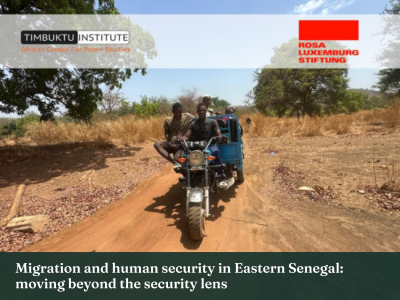
In Goudiry, in the Tambacounda region, the migration issue is especially acute, at the crossroads of economic fragility, social dynamics and security concerns. On 29 October 2026, the Timbuktu Institute, in partnership with the Rosa Luxemburg Foundation, held a meeting there to present the findings of its study “Migration, Resilience and Human Security”, which focuses on the departments of Goudiry and Bakel. Bringing together local elected officials, the prefect, civil society representatives, young people, returning migrants and the defence and security forces (DSF), the meeting opened up for discussion the central conviction that migration cannot be reduced to a question of security or crime. Rather, it must also be understood through its economic and social dimensions, in particular its role in community resilience mechanisms.
The validation workshop forms part of a broader reflection on the links between migration, economic resilience and human security in eastern Senegal. Located in the Tambacounda region, some 650 kilometres from Dakar, the departments of Goudiry and Bakel are among the oldest migration basins in West Africa. They are also on the front line of the repercussions of the security crisis affecting Mali’s Kayes region, just across the border. In these territories, human mobility, cross-border solidarity and economic vulnerability are closely intertwined, in ways that security-only frameworks do not always capture. It was with this in mind that the Timbuktu Institute and the Rosa Luxemburg Foundation organised this workshop, opened by Dr Bakary Sambe, Regional Director of the Timbuktu Institute, and Marie Nguettia, Programme Officer, in the presence of Alséyni Bangoura, Prefect of the department. Representing the Regional Director of the Rosa Luxemburg Foundation, Dr Armin Osmanovic, the Foundation’s representative recalled the aim of the exercise: to test the study’s conclusions against the realities experienced by local stakeholders, in order to arrive at a final document that takes into account the aspirations and recommendations of local communities.
Migration, unemployment and resilience: what the field survey reveals
Conducted from 9 to 30 June 2026 in the departments of Goudiry and Bakel, the study draws on a data collection system combining 180 household questionnaires, 30 interviews, 7 observations and 7 life stories. The research involved a wide range of profiles: returning migrants, families, religious and community leaders, young people, local authorities and members of the defence and security forces. Three main lessons emerge from this fieldwork.
The first concerns the central place of migration in the social and economic organisation of communities. Almost every household has at least one member living abroad, so much so that one phrase recurs in the testimonies: “in every house, there is at least one migrant”. Income from these movements is a key source of family resilience, even though this strategy comes with human tragedies, particularly on the sea and desert routes. Next comes the issue of unemployment, which proves to be the main common denominator of local vulnerabilities. For 88% of respondents, looking for work is the primary reason for leaving. More significantly still, 99% believe that the lack of job opportunities exposes young people to irregular migration. Unemployment also ranks first among the risk factors for radicalisation cited by respondents. These results underline how far economic prospects shape both migration choices and perceptions of security. Finally, a third finding highlights the existence of a territorial resilience capital that remains largely informal. Traditional mediation, trust in the defence and security forces and the commitment of the diaspora are all resources on which communities can draw. This foundation nevertheless receives too little support and is weakened by misunderstandings between generations.
Nevertheless, the realities observed reveal marked differences between the two departments. In Bakel, 87% of households report receiving remittances from the diaspora, compared with 58% in Goudiry. The perception of the security threat is also stronger there: 60% of respondents in Bakel consider this threat a reality to be reckoned with, compared with 29% in Goudiry. Conversely, the lack of economic opportunities for young people is felt more keenly in Goudiry, where 89% of respondents point to it, compared with 68% in Bakel. Located on the Senegal River and bordering Mali and Mauritania, Bakel thus appears more closely dependent on remittances and more exposed to security concerns. Goudiry, a more rural and isolated territory, remains particularly affected by the shortage of economic opportunities. Despite their differences, these two configurations point to the same need: to put people’s living conditions back at the heart of prevention and development policies.
Understanding the drivers of migration
When presenting the results, Dr Bakary Sambe stressed the guiding thread of the exercise: migration is first and foremost a complex social phenomenon, closely linked to human security and to people’s economic resilience strategies. Treating it as a mere manifestation of crime would amount to an incomplete diagnosis and, consequently, to favouring responses ill-suited to realities on the ground. This reading calls for some distance from exclusively security-based approaches. The data collected show that people associate their sense of insecurity first and foremost with unemployment, the lack of infrastructure and the fragility of their livelihoods, rather than with the armed attacks reported across the border. To capture this complexity, the study relies on four complementary analytical frameworks: human security, territorial resilience, governance and the “new economics of migration”.
This last framework helps to explain why departures continue despite awareness of the risks involved. Emigration is not solely an individual decision; it is often part of a family strategy of income diversification, conceived as a form of insurance against economic hardship and climatic hazards. The search for work also goes hand in hand with a quest for dignity. For many young people, leaving also means escaping idleness, gaining autonomy and earning the respect of those around them.
Moreover, the historical evolution of mobility in the area sheds light on this dynamic. Three major waves of migration have followed one another. The first, up to the 1970s and 1980s, consisted of relatively regular labour migration to France. The second, in the 1990s and 2000s, was marked by a diversification of destinations towards Central Africa and the Maghreb. The third, which characterises the current period, is dominated by irregular departures for Europe, against a backdrop of the gradual closure of legal migration channels. Each time opportunities for movement were restricted, new routes emerged, often at considerable human risk. For Bakary Sambe, policies of deterrence and route closure can therefore only have limited and temporary effects unless they are accompanied by improved economic prospects in the areas of departure. In this sense, the migration issue calls for a response that addresses the structural causes of mobility rather than its manifestations alone.
The diaspora, a pillar of family resilience and social services
One of the study’s major contributions is to highlight the economic and social role of remittances. For 92% of respondents, migration helps to improve living conditions, while 73% of the households concerned report regularly receiving money from relatives living abroad. At national level, these transfers represent around 10% of gross domestic product (GDP). The departments studied are probably among the areas where they are particularly concentrated. How these resources are used indicates their primary function in the household economy. The money received goes first and foremost to meeting basic needs: 81% of recipients spend it on food, 70% on health and 54% on education. In areas far from the main decision-making centres, where public service coverage remains limited, the diaspora’s contribution thus compensates, at least in part, for the shortcomings of institutional provision. In Bakel, one resident sums up this reality by saying that the diaspora “plays the role of the State”, notably by funding schools, health posts and boreholes.
However decisive it may be for the survival and stability of households, this contribution has not yet translated sufficiently into productive investment. During the presentation, Bakary Sambe emphasised this limitation: in the absence of suitable credit and insurance mechanisms, remittances do more to secure living conditions than to support income-generating activities. Only 26% of recipients mention investment among the uses of these resources. In a sense, the challenge is not so much to discourage mobility as to make better use of its economic benefits for the areas of origin. The study puts forward several avenues, such as: 1) developing project savings schemes, 2) co-financing initiatives between the diaspora and local authorities, 3) setting up village funds and supporting promising sectors, particularly solar energy and agri-food processing.
This remittance economy nevertheless carries a human and social cost that cannot be overlooked. The Saharan and Atlantic routes have already claimed lives within the communities concerned. Within families, the prolonged absence of men who have migrated is also changing domestic responsibilities. The women who remain at home often become the de facto managers of their households. While this shift can give them greater autonomy, it also exposes them to particular vulnerability when remittances become scarce or stop altogether.
A validation meeting informed by local realities
More than a simple presentation of the survey’s conclusions, the Goudiry meeting was also designed as a participatory exercise. It therefore gave considerable space to discussions and group work, bringing together local elected officials, defence and security forces, religious leaders, young people, women, returning migrants and civil society representatives. The aim was to test the study’s findings against the experience of local stakeholders and to generate recommendations that could enrich the final document. Four mixed groups were formed around issues drawn directly from local realities. Each group was tasked with identifying one local finding insufficiently covered by the survey and one stakeholder overlooked until now, and with proposing an action achievable within six months. The approach sought to turn the meeting into a space for collective production, in which knowledge from research enters into dialogue with the knowledge and experience of communities.
The first group, devoted to youth and the economy, was notably asked to identify the sectors capable of offering young people real prospects, while reflecting on how to respond to the “disappointed candidates” who return after an unsuccessful migration attempt. The second group looked at the relationship between the diaspora and investment. Its work focused on ways of moving beyond family solidarity to channel more remittances towards productive activities, without neglecting the role of women in managing these resources. The third workshop addressed the challenges of community-level security. Participants were invited to consider the conditions for strengthening the capacities of the defence and security forces while preserving people’s trust, as well as how to manage the presence of displaced people from Mali. Finally, the fourth group examined mediation and intergenerational relations, paying particular attention to the effective participation of young people and women in local conflict resolution mechanisms.
Tempering the security-first approach, rethinking dialogue with Europe
At the end of the discussions, the message to decision-makers centred on two demands. On the one hand, Dr Bakary Sambe, the study’s scientific director, argued for an approach to migration that does not make security control its sole horizon. On the other, he called for deeper reflection between Europe and the countries of departure, so as to take better account of the economic and social drivers of mobility. The priorities expressed by the population support this direction. Asked what could improve their security, respondents very clearly put community dialogue at the top of their expectations, with 89% in Goudiry and 87% in Bakel. Next come the involvement of young people in decision-making processes and local governance, economic development and cross-border cooperation to secure the borders with Mali. Satisfaction with public policies, meanwhile, remains particularly low: only 27% of respondents in Goudiry and 14% in Bakel say they are satisfied with them.
Trust in the defence and security forces is nevertheless an important asset, shared by 92% of respondents. This support is not unconditional, however; it depends on the resources deployed, but also on the quality of relations between the security forces and communities. In this regard, the study points out that perceptions of abuse by State representatives can be a factor preceding the slide into radicalisation. Under these conditions, an increase in personnel that was not accompanied by training in the community-based approach could produce the opposite of the desired effects.
Security clearly also depends on people’s material living conditions. Opening up isolated areas is the top priority expressed by residents, but also the main constraint reported by the defence and security forces, especially during the rainy season. Improving the road network thus meets a dual need: facilitating economic exchanges and strengthening the capacity of security services to intervene and maintain a presence. The study sums up this logic in its theory of change: on this border, security depends first on employment, which can keep young people at home, and on the development of the territories.
The European dimension of the migration issue also deserves to be placed back at the centre of the debate. The third wave of irregular departures developed notably in the wake of the closure of legal routes to Europe. In this respect, 55% of the households surveyed cite France as the main migration destination. For Bakary Sambe, a policy based essentially on border control merely shifts the routes without stemming departures. He calls instead for concerted reflection with the countries of origin, taking into account the role of remittances in access to basic social services and the need to create lasting economic prospects in the areas concerned. This issue also extends beyond Senegal’s borders. The same economic and migratory logics can be found in a wider area stretching from Kayes, in Mali, to Niger. Responses would therefore benefit from a cross-border approach, attentive to the interdependencies between territories, rather than remaining confined to strictly national frameworks.
Preventing risks through local resilience
The Goudiry meeting thus reaffirmed the conviction that the lasting prevention of security risks in border areas depends first and foremost on investing in their resilience. In the study’s conclusions, irregular migration and radicalisation appear as two phenomena that may find common ground in the lack of economic and social prospects offered to young people. Preventing them therefore requires a holistic approach that combines territorial development, local governance, community dialogue and human security, rather than a response focused exclusively on control. To this end, the study identifies six areas of intervention, four of which are considered high priorities. The first concerns the establishment, in Bakel, of a community monitoring system for early warning signs of religious rigorism. Designed as a community-based initiative rather than a policing mechanism, this monitoring should involve the defence and security forces, religious authorities and State representatives.
In the short term, the study also recommends that the State and local authorities allocate transparent, territorially based funding to developing youth self-employment. At the same time, it advocates strengthening the local presence of the defence and security forces, while taking care to preserve the trust that communities place in them. In the medium and long term, improving road infrastructure within rural areas, together with a greater effort by the State on energy supply, should mobilise public authorities as well as technical and financial partners. Two further priorities, put forward directly by the communities, complete this foundation. The first is to grant recognised status to traditional mediation, without seeking to instrumentalise it. The second aims to better channel diaspora contributions towards productive investment, so that migrant solidarity can also become a lever for the economic transformation of these territories.
Several blind spots nevertheless deserve further investigation. The study notably stresses the need for better documentation of gold panning along the Falémé river, of forced returns with inadequate support, of the still under-recognised place of women’s voices, and of reception conditions for displaced people from Mali, forced to leave their localities by insecurity in that neighbouring country. All these dimensions are a reminder that migration and security issues in eastern Senegal cannot be separated from people’s daily realities. The contributions gathered from participants in Goudiry will feed into the final document of the study, led by the Timbuktu Institute with the support of the Rosa Luxemburg Foundation. The ambition of this approach is to bring forth locally rooted responses, capable of recognising migration in all its complexity and of making community resilience a genuine lever for lasting stability.
Sacré-Coeur 3 – BP 15177 CP 10700 Dakar Fann – SENEGAL.
+221 33 827 34 91 / +221 77 637 73 15
contact@timbuktu-institute.org