 French
 Arabic
 English
 Portuguese
 Spanish
 Swahili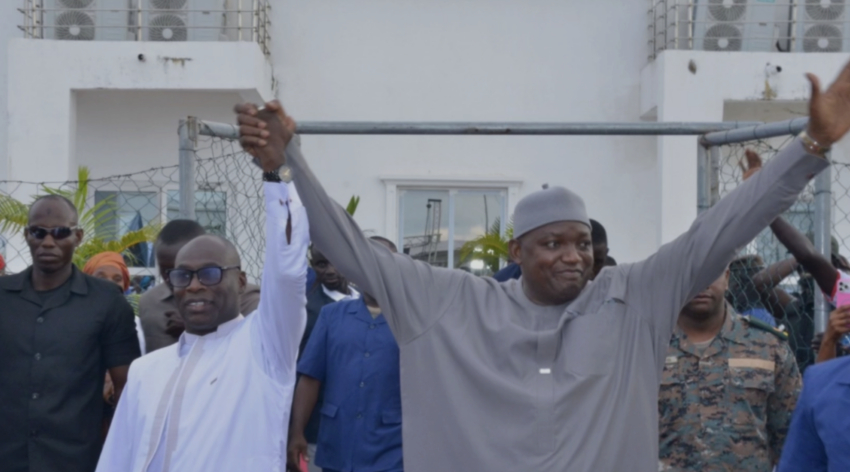




Sacré-Coeur 3 – BP 15177 CP 10700 Dakar Fann – SENEGAL.
+221 33 827 34 91 / +221 77 637 73 15
contact@timbuktu-institute.org

Timbuktu Institute Octobre 2026 - Semaine 1
À l’ONU, la transition bissau-guinéenne promet un scrutin « inclusif, libre, transparent et crédible » le 6 décembre. Sur place, l’espace politique continue pourtant de se réduire. Candidat déclaré, l’ancien président Umaro Sissoco Embaló s’est vu interdire son retour par le Haut commandement militaire, invoquant des raisons de sécurité. Cette décision se prête à deux lectures : une rupture réelle entre la junte et son ancien mentor, ou une mise en scène au service de son retour. L’examen de sa candidature, au regard de la condition de résidence fixée par la nouvelle Constitution, dira laquelle l’emporte.
Promesse de tenue d'élections générales « crédibles »
Devant l’Assemblée générale des Nations unies, le Premier ministre de transition, Ilídio Vieira Té, s’est engagé à ce que le scrutin du 6 décembre se déroule de manière « inclusive, libre, transparente et crédible ». Cette promesse contraste toutefois avec l’évolution de la situation politique intérieure. De l’interdiction des réunions politiques décidée en janvier, à la saisie du siège du PAIGC fin septembre, l’espace laissé à l’opposition n’a cessé de se réduire depuis le début de la transition.
Umaro Sissoco Embaló empêché de rentrer à Bissau
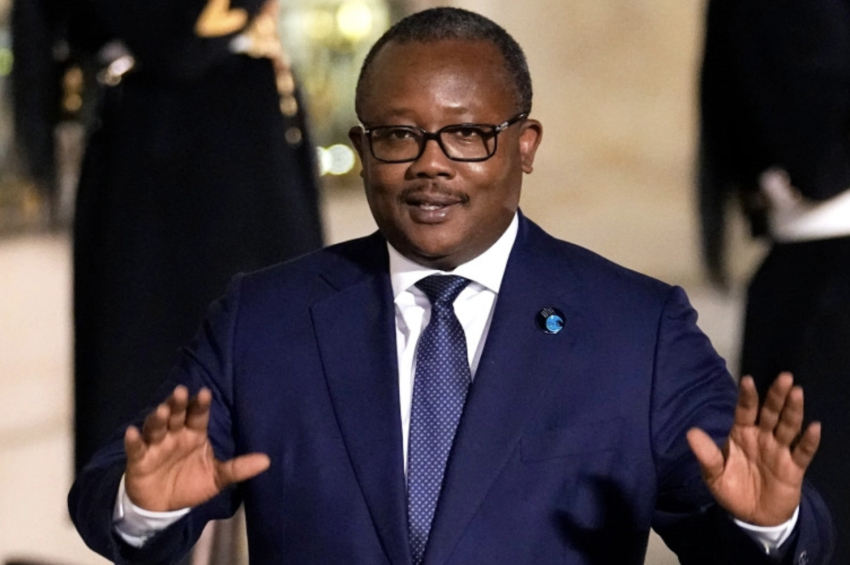
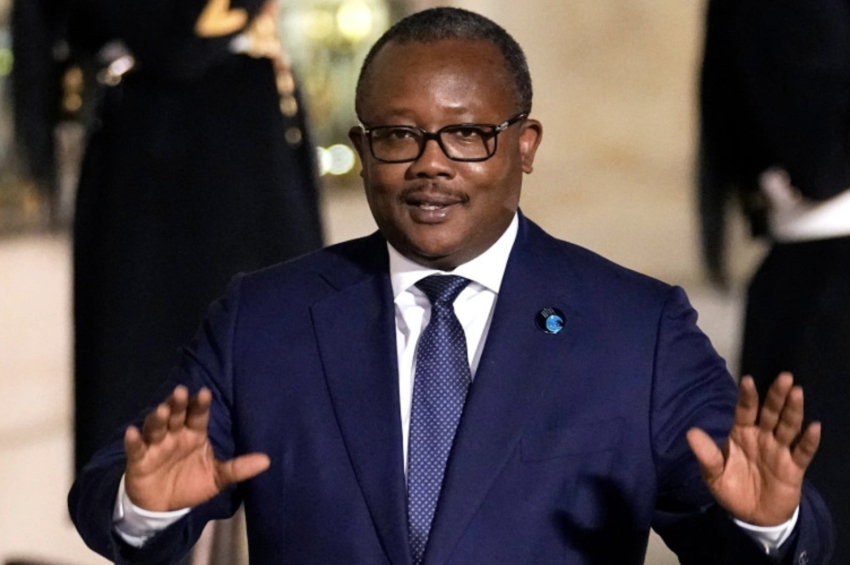
Renversé le 26 novembre 2025 par un coup d’État militaire, l’ancien président Umaro Sissoco Embaló a annoncé fin septembre dans un entretien accordé à Jeune Afrique qu’il serait candidat à l’élection du 6 décembre, sous la bannière de la Plateforme républicaine. Depuis son exil, il a indiqué vouloir rentrer en Guinée-Bissau le 4 octobre. Dans un premier temps, le porte-parole du gouvernement de transition, Fernando Vaz, a rappelé « le droit inaliénable de tout citoyen bissau-guinéen à rentrer dans son pays » et jugé sa candidature « recevable sur le principe ». Mais trois jours avant la date annoncée de son retour, le Haut commandement militaire a publié un communiqué officiel fermant la porte au retour de l’ancien président, invoquant des « conditions de sécurité » qui ne seraient pour l’heure pas réunies. La déclaration réaffirme également le maintien des mesures restrictives en vigueur, notamment l’interdiction des manifestations, des rassemblements et des réunions à caractère politique. Suite à cette décision, Umaro Sissoco Embaló a appelé ses partisans au calme, tout en affirmant rester « déterminé » à poursuivre sa démarche pour la présidentielle.
Rupture réelle ou mise en scène ? Deux lectures d’une même décision
La première lecture de cette situation est celle d’une rupture totale entre la junte et Embaló. L’interdiction de son retour s’inscrirait alors dans le contexte de verrouillage progressif de l’espace politique par les autorités de transition qui viseraient un rival potentiel. Les militaires qui lui étaient auparavant réputés proches chercheraient désormais à s’affranchir de son influence. La seconde lecture est celle d’une mise en scène destinée à préserver, voire à rétablir, l’influence de l’ancien président. La mesure pourrait alors s’intégrer dans une stratégie plus large, que certains qualifient de « faux coup d’État ». Dès novembre 2025, des opposants et certains observateurs avaient soupçonné Embaló d’avoir lui-même orchestré le putsch afin d’interrompre un processus électoral dont l’opposition revendiquait la victoire. Ces accusations reposaient notamment sur les liens entre l’ancien président et plusieurs figures aujourd’hui au cœur de la transition. Le président de transition, le général Horta Inta-A Na Man, avait ainsi été son chef d’état-major particulier puis chef d’état-major de l’armée de terre, tandis que le Premier ministre de transition, Ilídio Vieira Té, était son ministre des Finances.
La nouvelle Constitution, approuvée par référendum le 30 août et renforçant sensiblement les prérogatives présidentielles, alimente également cette seconde lecture. Embaló, qui avait dissous à plusieurs reprises l’Assemblée nationale, s’était en effet montré opposé au principe de séparation des pouvoirs. Pour l’opposant Agnelo Regalla, cette modification constitutionnelle permet de « créer un terrain favorable à la reprise du pouvoir présidentiel par Umaro Sissoco Embaló ». Même son de cloche chez le président du PAIGC, Domingos Simões Pereira, pour qui la manœuvre viserait à « maintenir des éléments de confiance » au pouvoir jusqu’à ce que les conditions du retour de l’ancien président soient réunies.
Un élément juridique pourrait toutefois remettre en cause cette seconde lecture. La nouvelle Constitution impose en effet cinq années de résidence continue dans le pays pour pouvoir se présenter à l’élection présidentielle. Un ancien président installé à l’étranger depuis plusieurs mois pourrait donc, en principe, ne pas satisfaire cette condition. L’examen de sa candidature constituera dès lors le véritable révélateur : validée malgré cette disposition, elle accréditerait la thèse d’une connivence ; rejetée, elle renforcerait celle de la rupture.
Timbuktu Institute October 2026 - Week 1
At the UN, the Bissau-Guinean transition is promising an “inclusive, free, transparent and credible” vote on 6 December. On the ground, however, political space continues to shrink. Former President Umaro Sissoco Embaló, a declared candidate, has been barred from returning by the Military High Command, which cited security reasons. This decision lends itself to two readings: a genuine rupture between the junta and its former mentor, or a staged move to pave the way for his return. The review of his candidacy, in light of the residency requirement set by the new Constitution, will show which one prevails.
Promise of “credible” general elections
Before the United Nations General Assembly, the transitional Prime Minister, Ilídio Vieira Té, pledged that the 6 December vote would be held in an “inclusive, free, transparent and credible” manner. This promise, however, contrasts with developments in the domestic political situation. From the ban on political meetings decided in January to the seizure of the PAIGC headquarters at the end of September, the space left to the opposition has steadily shrunk since the start of the transition.
Umaro Sissoco Embaló prevented from returning to Bissau
Overthrown in a military coup on 26 November 2025, former President Umaro Sissoco Embaló announced at the end of September in an interview with Jeune Afrique that he would be a candidate in the 6 December election, under the banner of the Republican Platform. From exile, he said he intended to return to Guinea-Bissau on 4 October. Initially, the transitional government’s spokesman, Fernando Vaz, recalled “the inalienable right of every Bissau-Guinean citizen to return to their country” and deemed his candidacy “admissible in principle”. But three days before the announced date of his return, the Military High Command issued an official statement closing the door to the former president’s return, citing “security conditions” that were not currently met. The statement also reaffirmed that restrictive measures remain in force, including the ban on demonstrations, gatherings and political meetings. Following this decision, Umaro Sissoco Embaló called on his supporters to remain calm, while stating that he remained “determined” to pursue his presidential bid.
Genuine rupture or staged move? Two readings of the same decision
The first reading of this situation is that of a total rupture between the junta and Embaló. The ban on his return would then be part of the gradual lockdown of political space by the transitional authorities, who would be targeting a potential rival. The military officers previously considered close to him would now be seeking to free themselves from his influence. The second reading is that of a staged move intended to preserve, or even restore, the former president’s influence. The measure could then be part of a broader strategy that some describe as a “fake coup”. As early as November 2025, opponents and some observers suspected Embaló of having orchestrated the putsch himself in order to halt an electoral process whose victory the opposition was claiming. These accusations rested in particular on the links between the former president and several figures now at the heart of the transition. The transitional president, General Horta Inta-A Na Man, had been his personal chief of staff and then Army Chief of Staff, while the transitional Prime Minister, Ilídio Vieira Té, had been his Minister of Finance.
The new Constitution, approved by referendum on 30 August and significantly strengthening presidential prerogatives, also lends weight to this second reading. Embaló, who had dissolved the National Assembly several times, had indeed shown himself to be opposed to the principle of separation of powers. For opposition figure Agnelo Regalla, this constitutional change makes it possible to “create favourable ground for Umaro Sissoco Embaló to regain presidential power ”. PAIGC President Domingos Simões Pereira takes the same view, arguing that the manoeuvre aims to “keep trusted elements” in power until the conditions for the former president’s return are met.
One legal factor could, however, call this second reading into question. The new Constitution requires five years of continuous residence in the country in order to run in the presidential election. A former president who has been living abroad for several months could therefore, in principle, fail to meet this requirement. The review of his candidacy will thus be the real test: if it is validated despite this provision, it would support the collusion theory; if it is rejected, it would reinforce the rupture theory.
Timbuktu Institute Octobre 2026 - Semaine 1
À un peu plus de deux mois de la présidentielle du 5 décembre, Adama Barrow consolide son camp. Après Mamma Kandeh, c’est Essa Faal qui rejoint le président sortant, au point de déclarer l’élection « morte et enterrée ». Mais ces ralliements ont un coût : contestations internes à l’APP-Sobeyaa et défections de cadres du NPP au profit d’un nouveau parti. Face à lui, l’opposition reste partagée entre deux coalitions concurrentes, celle d’Ousainou Darboe et celle de Talib Bensouda, dont le rapprochement bute sur la question du candidat commun.
Un ralliement officialisé au président sortant
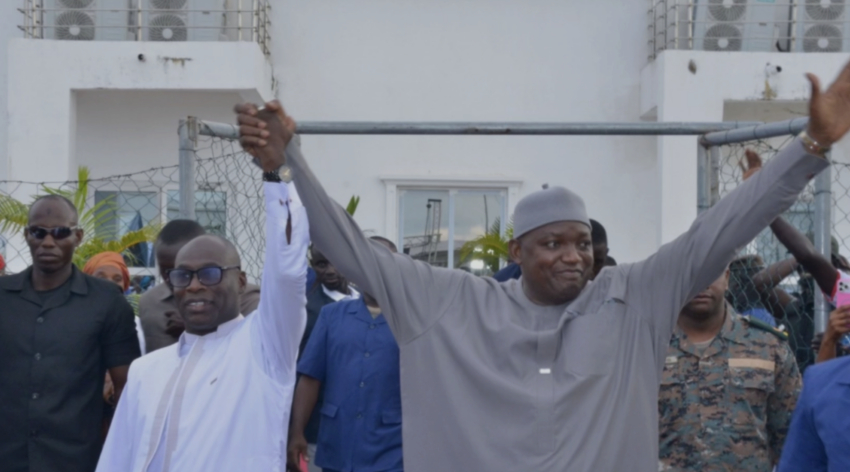
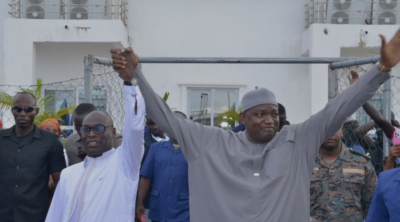
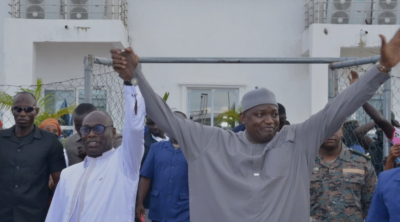
Le chef de file de l’APP-Sobeyaa, Essa Faal, a officialisé son alliance avec le président Adama Barrow et le National People’s Party (NPP) lors d’une cérémonie organisée au palais présidentiel de Banjul. Une vidéo de l’événement, montre les deux hommes main dans la main, les bras levés, sous les acclamations de leurs partisans. Ancien opposant, Essa Faal est allé jusqu’à affirmer que l’élection de décembre était « morte et enterrée »et que « Barrow a déjà gagné ». Lors de la cérémonie, Adama Barrow a mis en avant l’arithmétique de ce rapprochement. Additionnés à ses propres suffrages de 2021, ceux d’Essa Faal et de Mamma Kandeh, rallié au NPP depuis la fin juillet, rendraient sa réélection acquise. Ce choix est toutefois contesté au sein de l’APP-Sobeyaa, dont plusieurs membres fondateurs et cadres désapprouvent un ralliement qui conduit leur chef à renoncer à se présenter au scrutin du 5 décembre. Essa Faal s’est par ailleurs défendu d’avoir reçu de l’argent ou sollicité un poste en échange de son soutien.
Le parti présidentiel confronté à une vague de défections
Au moment même où il célébrait le ralliement d’Essa Faal, le NPP a vu une vingtaine de ses cadres rejoindre le National Democratic Party (NDP), fondé par Kebba Madi Bojang, ancien président de la jeunesse du parti présidentiel. Coordinateurs de jeunesse, responsables de l’aile féminine ou membres d’exécutifs de circonscription, les démissionnaires issus de plusieurs régions du pays affirment n’avoir milité au NPP qu’en raison de la présence de Kebba Madi Bojang, qu’ils ont désormais « décidé de suivre ». Si ces départs restent limités en nombre, ils touchent l’appareil militant de base du parti au pouvoir, à un peu plus de deux mois de la présidentielle.
Divisée, l’opposition débat d’un rapprochement entre Ousainou Darboe et Talib Bensouda
Face à cette stratégie de ralliements, l’opposition aborde le scrutin en ordre dispersé. Deux coalitions se font concurrence : Gambia First, structurée autour de l’United Democratic Party (UDP) d’Ousainou Darboe et Coalition 2026, emmenée par le maire de Kanifing, Talib Ahmed Bensouda et son mouvement Unite. Sur les réseaux sociaux, un sympathisant d’Unite basé au Royaume-Uni a relancé le débat en appelant les deux hommes à « trouver un chemin de convergence ». « La politique est l’art du possible. Les différences d’hier ne doivent pas devenir les obstacles de demain », a-t-il plaidé, rappelant que des rivaux du président, à l’image de Mamma Kandeh et d’Essa Faal, avaient su trouver un terrain d’entente avec le NPP. L’appel a suscité des réactions contrastées. Si plusieurs internautes ont exhorté les deux dirigeants à « placer l’intérêt national au-dessus des différences personnelles », d’autres ont pointé les obstacles concrets d’un tel rapprochement, à commencer par la question du candidat à la tête de cette coalition.
De son côté, Ousainou Darboe a privilégié un discours de fermeté. Devant la convention de la diaspora de l’UDP réunie à Londres le 27 septembre, il a salué trois décennies de loyauté de ses militants à l’étranger, avant de fustiger les responsables politiques prêts à abandonner leurs principes pour un avantage personnel ou politique, une critique qui sonne comme une allusion aux récents ralliements au camp présidentiel. « La vérité n’a pas de date d’expiration », a-t-il affirmé. Ousinou Darboe a assuré que son parti reste ouvert à la perspective de collaborer avec d’autres mouvements qui partagent les valeurs de l’UDP et a désigné Adama Barrow comme le seul adversaire de cette élection.
Timbuktu Institute October 2026 - Week 1
Just over two months before the 5 December presidential election, Adama Barrow is consolidating his camp. After Mamma Kandeh, it is now Essa Faal who has joined the incumbent president, going so far as to declare the election “dead and buried”. But these endorsements come at a cost: internal dissent within APP-Sobeyaa and defections of NPP officials to a new party. Facing him, the opposition remains split between two competing coalitions, led respectively by Ousainou Darboe and Talib Bensouda, whose rapprochement is stalled over the question of a joint candidate.
An official endorsement of the incumbent president
The leader of APP-Sobeyaa, Essa Faal, made official his alliance with President Adama Barrow and the National People’s Party (NPP) at a ceremony held at the presidential palace in Banjul. A video of the eventshows the two men hand in hand, arms raised, to the cheers of their supporters. A former opposition figure, Essa Faal went as far as to say that the December election was “dead and buried” and that “Barrow has already won”. During the ceremony, Adama Barrow highlighted the arithmetic of this alliance. Added to his own 2021 votes, those of Essa Faal and of Mamma Kandeh, who joined the NPP at the end of July, would make his re-election a foregone conclusion. This choice is, however, contested within APP-Sobeyaa, where several founding members and officials disapprove of an alliance that leads their leader to give up running in the 5 December vote. Essa Faal also denied having received money or sought a post in exchange for his support.
The presidential party faces a wave of defections
At the very moment it was celebrating Essa Faal’s endorsement, the NPP saw some twenty of its officials join the National Democratic Party (NDP), founded by Kebba Madi Bojang, former youth president of the ruling party. Youth coordinators, women’s wing leaders and members of constituency executives, the defectors from several regions of the country say they had only been active in the NPP because of Kebba Madi Bojang, whom they have now “decided to follow”. Although these departures remain limited in number, they affect the grassroots activist apparatus of the ruling party just over two months before the presidential election.
Divided, the opposition debates a rapprochement between Ousainou Darboe and Talib Bensouda
Faced with this strategy of endorsements, the opposition is going into the election in disarray. Two coalitions are competing: Gambia First, built around Ousainou Darboe’s United Democratic Party (UDP), and Coalition 2026, led by the Mayor of Kanifing, Talib Ahmed Bensouda, and his Unite movement. On social media, a UK-based Unite supporter revived the debate by calling on the two men to “find a path of convergence”. “Politics is the art of the possible. Yesterday’s differences must not become tomorrow’s obstacles,” he argued, recalling that rivals of the president, such as Mamma Kandeh and Essa Faal, had managed to find common ground with the NPP. The appeal drew mixed reactions. While several users urged the two leaders to “put the national interest above personal differences”, others pointed to the practical obstacles to such a rapprochement, starting with the question of who would lead the coalition as its candidate.
For his part, Ousainou Darboe opted for a firm stance. Addressing the UDP diaspora convention in London on 27 September, he praised three decades of loyalty from party members abroad, before lashing out at politicians willing to abandon their principles for personal or political gain, a criticism that sounds like an allusion to the recent defections to the presidential camp. “The truth has no expiry date,” he said. Ousainou Darboe stated that his party remains open to working with other movements that share the UDP’s values and named Adama Barrow as the only opponent in this election.
Sacré-Coeur 3 – BP 15177 CP 10700 Dakar Fann – SENEGAL.
+221 33 827 34 91 / +221 77 637 73 15
contact@timbuktu-institute.org