 French
 Arabic
 English
 Portuguese
 Spanish
 Swahili


Sacré-Coeur 3 – BP 15177 CP 10700 Dakar Fann – SENEGAL.
+221 33 827 34 91 / +221 77 637 73 15
contact@timbuktu-institute.org

Timbuktu Institute – August 30 2026
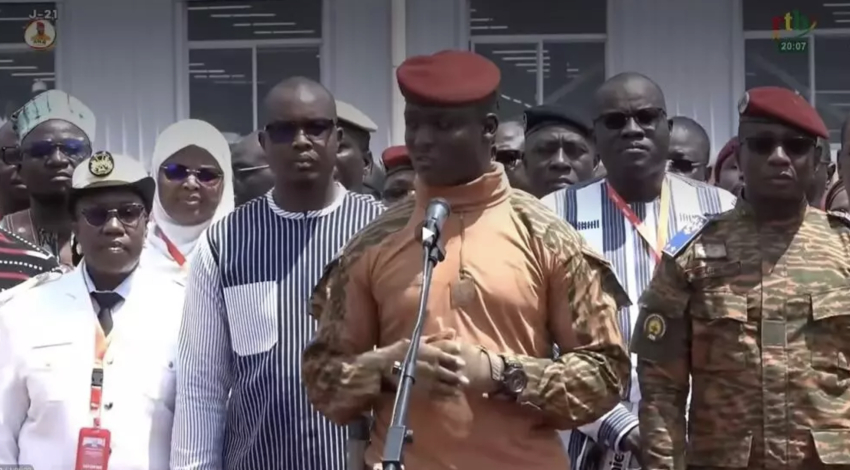
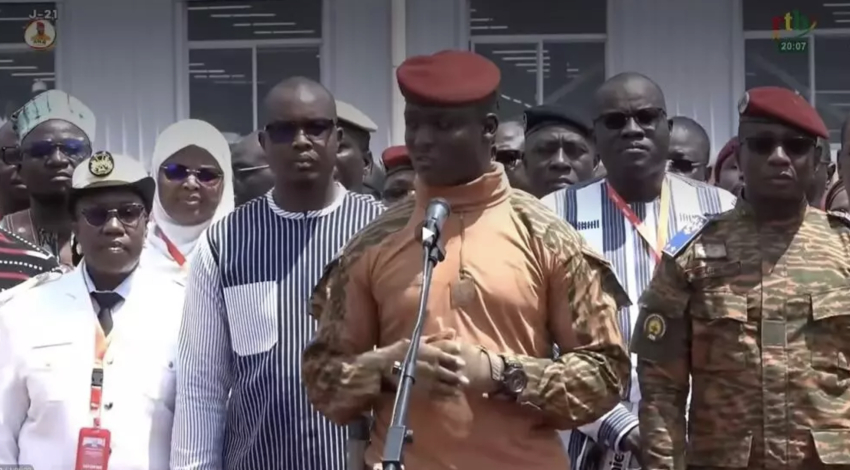
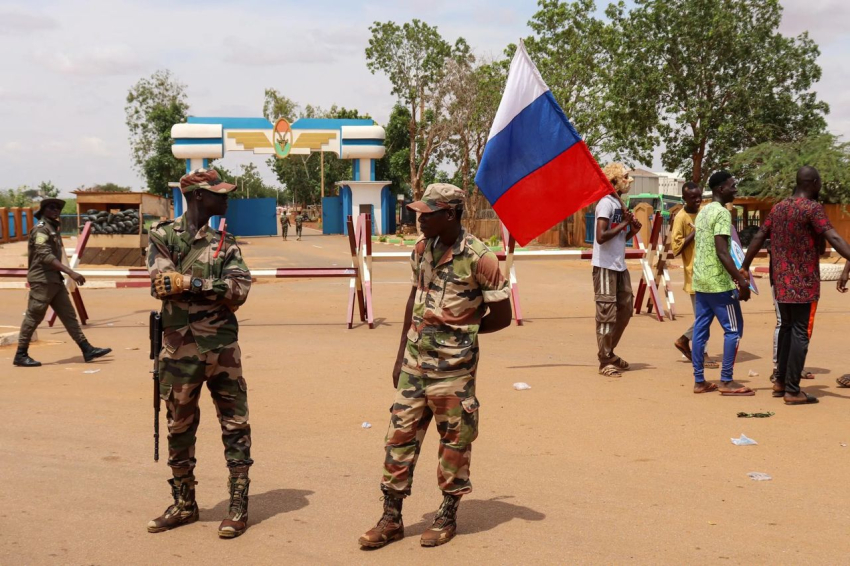
The mutiny that broke out in Niamey during the night of 28 to 29 August, followed by the recapture of Base 101 with the support of the Russian Africa Corps, could open a new phase in Niger's security equation. Beyond the unrest that emerged within the armed forces, this episode highlights the fragilities of a regime whose stability increasingly rests on a Russian partnership now liable to extend beyond the sole framework of the fight against jihadist groups. While Abdourahmane Tiani's government has made security sovereignty one of the pillars of its legitimacy, the intervention of an outside partner to help contain an internal crisis raises a central question: how far can the pursuit of strategic autonomy go when it comes hand in hand with growing dependence on Moscow?
In Niger, loyalist forces regained control on Saturday 29 August of Niamey's Base 101, which had been held for several days by mutinous soldiers, with support from the Russian paramilitary group Africa Corps. Initially, heavy gunfire was heard in several districts of the capital Niamey, notably around the presidency and Diori-Hamani international airport, while the authorities claimed to be gradually regaining control of the situation. Several mutineers are reported to have been killed during the recapture of the base. The mutiny was described as a "fit of temper" by Niger's Defence Minister, General Salifou Mody. However, the interruption of the national television signal for several hours, combined with the prolonged absence of any official statement, fuelled rumours in the early hours of the events about the precise nature of the mutiny. As a result, in a regional media landscape already saturated with recycled content and competing narratives, this information vacuum notably fostered, on social media, a rapid spread of contradictory information and a temporary loss of control over the official narrative — a situation now observable, to varying degrees, in several such episodes in certain Sahel countries.
As after the January 2026 attack on the same site, which was attributed at the time in official statements — without any evidence being produced — to France, Benin and Côte d'Ivoire, a narrative of foreign interference quickly resurfaced. This time it was notably put forward by Russian ambassador Viktor Voropaev, who raised the possibility of external coordination behind the mutiny attempt. For now, no information supports this theory. Nevertheless, the invoking of interference is not incidental: it seeks to frame a crisis whose roots are largely internal within a reading centred on external confrontation, at the risk of pushing the question of cohesion within the armed forces into the background.
Base 101, a site of high strategic value
Whether the jihadist attacks of January and June, or now this foiled mutiny, these episodes of violence have struck the same complex over the space of seven months. The first two were attributed to jihadist groups, while the third stems, based on the information currently available, from internal unrest within the armed forces. The corrective measures taken after the previous episodes have clearly not been sufficient. Nor is the recurrence of these incidents a coincidence. Base 101 notably houses the headquarters of the Russian Africa Corps as well as elements of the AES military apparatus. Until recently, it also held around 1,000 tonnes of Orano's uranium concentrate, whose export remains blocked. As both a military hub, a symbol of the break with Western partners, and a focal point for a major economic stake, Base 101 thus appears to function, in effect, as a genuine barometer of the regime's stability.
Russia, a new recourse in the face of internal crisis
It is arguably on this front that the situation shifted most clearly during this crisis. According to Russian ambassador Viktor Voropaev, it was the command of Base 101 itself that requested the Africa Corps' intervention. A high-ranking Nigerien military delegation subsequently visited the site to formally thank the Russian forces. That said, this episode appears to have gone beyond simple logistical support. Following the offensive launched by the presidential guard on the airport with the backing of Russian troops, deployed as an emergency measure to retake Base 101, the exact number of Russian personnel involved has not yet been confirmed with certainty. This degree of engagement, on the ground and in the air, involving the use of military force against elements of the national army itself, marks a break from earlier forms of Russian-Nigerien cooperation, which had until now been largely confined to maintenance, training and intelligence. As a result, the military partnership between Niamey and Moscow now appears, more than ever, as a direct operational factor closely tied to the management of a crisis striking at the very heart of the power structure. There is also a rather significant new element: for the first time since 2023, the threat came from within the armed forces themselves, rather than from jihadist groups or an identified foreign power. The stark exposure of internal tensions within the army, three years after Abdourahamane Tiani seized power, thus illustrates a new front, in that the Nigerien regime has now been forced to turn to an outside partner to help restore order within its own ranks.
Towards a new security equation for the regime?
In short, this sequence of events may above all reopen the question of the balance on which the Tiani regime intends to base its stability. Since 2023, the government has built much of its legitimacy around restoring security sovereignty and the ability of Nigerien forces to take charge of defending the country. Yet the eruption of unrest within the army itself introduces a difficulty of a different nature. Niamey must now contend not only with a persistent threat on the jihadist front, but also with the potential fragilities of the very apparatus tasked with fighting it. In this context, Russian support could gradually shift in function. From an openly declared auxiliary to Nigerien security policy, it would appear to be clearly moving towards becoming a stabilising element for the power structure itself, which would not be without consequences for the dependency relationship between the two partners. The question is therefore no longer simply how far Moscow is willing to go in supporting Niamey against armed groups, but to what extent the regime may now need Moscow to preserve its own cohesion. Such a shift could, over time, move the centre of gravity of the Russian-Nigerien partnership: from cooperation primarily aimed at strengthening the state's capacities against its adversaries, towards a relationship more closely tied to safeguarding the state itself.
Sacré-Coeur 3 – BP 15177 CP 10700 Dakar Fann – SENEGAL.
+221 33 827 34 91 / +221 77 637 73 15
contact@timbuktu-institute.org