 French
 Arabic
 English
 Portuguese
 Spanish
 Swahili



Sacré-Coeur 3 – BP 15177 CP 10700 Dakar Fann – SENEGAL.
+221 33 827 34 91 / +221 77 637 73 15
contact@timbuktu-institute.org

 © TDR
© TDR
Timbuktu Institute – Week 2 – February 2026
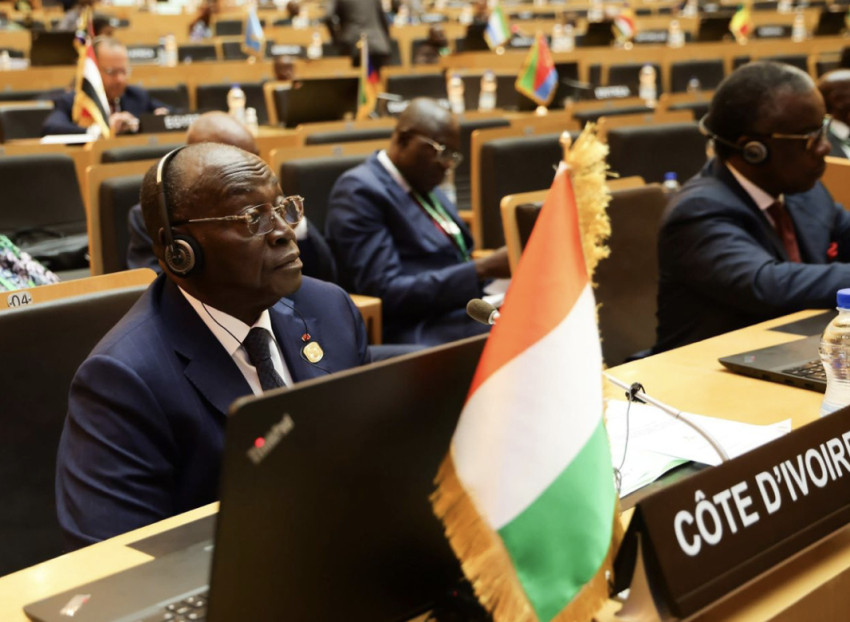
This week, Côte d'Ivoire was re-elected to the African Union Peace and Security Council for the 2026-2028 term during the 48th Ordinary Session of the Executive Council in Addis Ababa. This re-election reinforces Abidjan's position as a key player in continental security matters. In a regional context marked by the rise of military regimes in the Sahel, Ivorian diplomacy is reinforcing its image as a stable institutional hub and a privileged partner in African crisis management mechanisms. This reappointment strengthens Abidjan's ability to influence sensitive issues such as political transitions, sanctions regimes and African crisis prevention mechanisms. It also reinforces its strategic position as a balancing force between instability in the Sahel and relative stability in the Gulf of Guinea, thus affirming its role as a security interface in West Africa.
Abidjan-Bamako axis: towards a gradual normalisation of relations?
At the same time, the presidential pardon granted by Alassane Ouattara to Mamadou Hawa Gassama, a member of Mali's National Transition Council, sends a strong diplomatic signal. Convicted of ‘insulting the head of state’, Gassama was released after seven months in detention. This gesture could ease persistent tensions between the two countries, inherited in particular from the crisis stemming from the arrest of 49 Ivorian soldiers in Mali in 2022. He had described the Ivorian president as an ‘enemy of Mali’ and claimed to have evidence of Ouattara's involvement in an attempt to destabilise Mali. His lawyer welcomed the move in a public statement. The decision reflects a pragmatic approach to bilateral relations, combining judicial firmness with political openness.
Digital rumours and national cohesion: the information challenge in Côte d'Ivoire
At the same time, the official denial of the alleged arrest of Adama Bictogo, businessman and former President of the National Assembly of Côte d'Ivoire, highlights the growing scale of disinformation campaigns in West Africa, particularly in Côte d'Ivoire. The referral to the Platform for Combating Cybercrime demonstrates the authorities' willingness to prosecute the authors of digital rumours. According to the office of the former President of the National Assembly, ‘these malicious rumours are also likely to disrupt public order and tarnish the image of our country’. It is therefore necessary to analyse the dangers that such actions pose to national cohesion. Stability is no longer solely a matter of traditional security, but also of the information space. The regulation of information is becoming a strategic issue in the run-up to future political deadlines. Abidjan must continue to capitalise on its continental roots while strengthening vigilance against the threats of disinformation that could undermine the country's unity.
Sacré-Coeur 3 – BP 15177 CP 10700 Dakar Fann – SENEGAL.
+221 33 827 34 91 / +221 77 637 73 15
contact@timbuktu-institute.org