 French
 Arabic
 English
 Portuguese
 Spanish
 Swahili


Sacré-Coeur 3 – BP 15177 CP 10700 Dakar Fann – SENEGAL.
+221 33 827 34 91 / +221 77 637 73 15
contact@timbuktu-institute.org

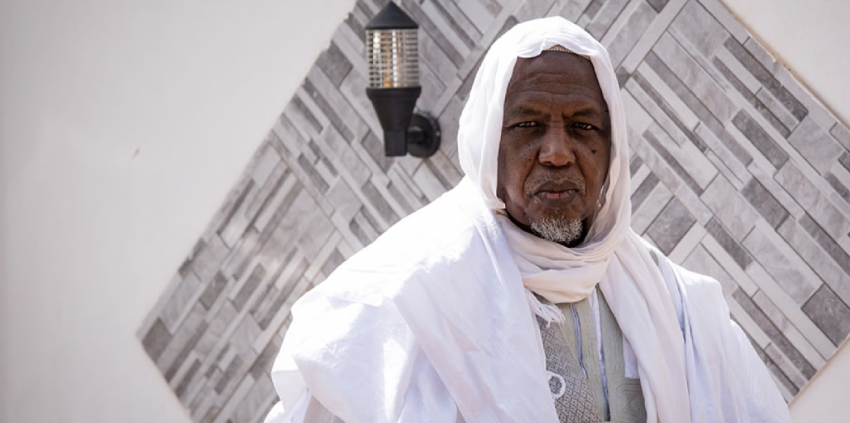 © Nicolas Réméné pour JA
Timbuktu Institute – Week 3 – February 2026
Download the full Sahel weather report
Imam Mahmoud Dicko, a central figure in Malian socio-political life, now finds himself at the heart of an ‘ambiguous adventure’ marked by his transition from being an indispensable power broker to a vocal opponent in exile. After playing a decisive role in the fall of Ibrahim Boubacar Keïta in 2020, he gradually distanced himself from the military rulers, denouncing their failure to respect the transition timetable. Now a refugee in Algeria, Dicko is seeking to redefine his roleby positioning himself as a mediator for peace, while joining opposition coalitions abroad, such as the Coalition of Forces for the Republic (CFR). His rhetoric, which skilfully blends religious rigour, populism and criticism of the elites, continues to divide opinion: his supporters see him as an indispensable moral bulwark against an authoritarian junta, while his detractors are concerned about his theocratic influence and ultra-conservative positions, which they believe threaten the secular nature of the state. Despite the dissolution of his movement (CMAS) by the authorities in Bamako, the imam remains a key figure whose ability to mobilise support, even from a distance, continues to pose a major challenge to the colonels in power.
FAMa operation in Ségou: Terrorists neutralised and equipment seized
According to a statement issued by the army general staff on Monday 16 February 2026, the Malian Armed Forces (FAMa) carried out a major search operation on the previous Sunday in the Nampala area (Ségou region). The intervention, which targeted the areas around the villages of Toulé and Akoub, resulted in the neutralisation of several terrorists. In addition to the human toll, the army seized a significant amount of equipment, including weapons, ammunition and communications equipment. Through this operation, the military hierarchy reaffirms its determination to track down armed groups throughout the national territory to ensure the safety of the population.
The AES launches its roadmap for its second year
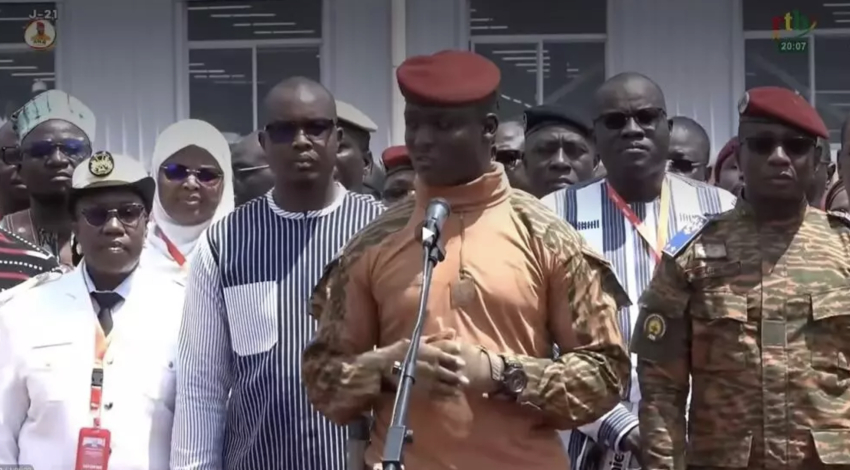
On 17 February 2026, the Malian government officially examined the roadmap for Year II of the Confederation of Sahel States (AES), which aims to consolidate the achievements of the first year and operationalise the commitments made by Mali, Burkina Faso and Niger. This step follows the recent ratification of four major protocols on defence, diplomacy, development and the creation of a confederal parliament. Under the rotating presidency of Captain Ibrahim Traoré, the confederation intends to transform these legal texts into concrete actions to meet the urgent needs of the population in terms of security, free movement and infrastructure. The authorities reaffirm the irreversible nature of this regional integration process, born out of the break with ECOWAS and the desire of the three states to build a sovereign and secure space.
Sacré-Coeur 3 – BP 15177 CP 10700 Dakar Fann – SENEGAL.
+221 33 827 34 91 / +221 77 637 73 15
contact@timbuktu-institute.org