 French
 Arabic
 English
 Portuguese
 Spanish
 Swahili

Sacré-Coeur 3 – BP 15177 CP 10700 Dakar Fann – SENEGAL.
+221 33 827 34 91 / +221 77 637 73 15
contact@timbuktu-institute.org

 © RFI
© RFI
Timbuktu Institute Week 2 - June 2026
Download the full Sahel weather report
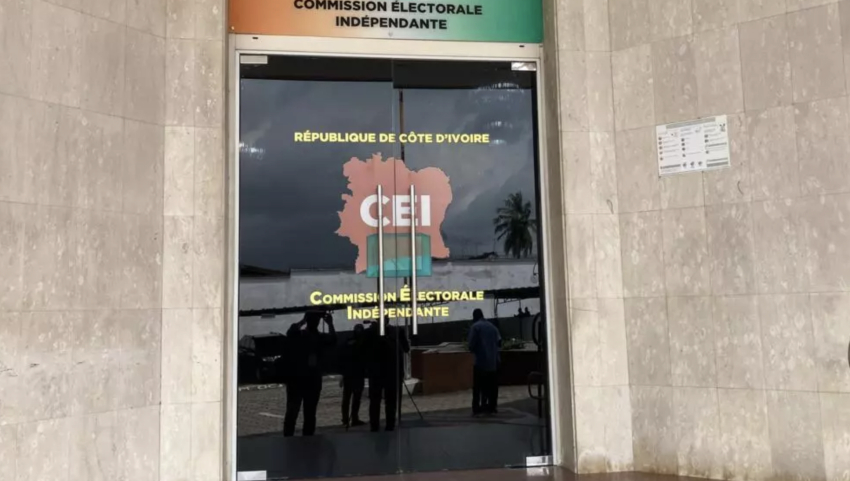
Since the dissolution of the Independent Electoral Commission (CEI), the outcome regarding the arrangements for managing the electoral process remains uncertain. To avoid remaining in a state of limbo, a coalition of around ten political parties, meeting on 8 June, proposed the creation of a ‘High Electoral Council’ to replace the current arrangements. Led in particular by the former First Lady, Simone Ehivet Gbagbo, with the support of political figures such as Charles Blé Goudé and Ahoua Don Mello, this initiative envisages the establishment of a body comprising 11 members drawn from civil society (professional, economic and legal circles), recruited through a transparent call for applications and approved by the National Assembly, with no partisan representation within it. Its members would be appointed for life and tasked with organising elections and conducting an annual review of the electoral register, with the stated aim of strengthening confidence in the electoral system and preventing recurring crises linked to elections. However, the proposal – which has been raised in the past without success – does not enjoy unanimous support and has been put forward without the involvement of the main opposition parties, the PDCI and the PPA-CI.
Meanwhile, whilst the issue of electoral governance remains unresolved, the Senate’s legislative agenda has moved forward on a more consensual basis. Indeed, on 8 June, the Ivorian Senate’s Committee on Economic and Financial Affairs adopted three draft laws concerning the reform of public procurement, the implementation of the African Continental Free Trade Area (AfCFTA) and the repeal of the tax to support the development of refining activities. The first bill aims to strengthen the powers and governance of the Public Procurement Regulatory Authority in order to improve oversight and transparency in public procurement and public-private partnerships. The second bill provides a framework for Côte d’Ivoire’s integration into the tariff dismantling mechanism of the African Continental Free Trade Area ( , AfCFTA), with a gradual removal of customs duties on the majority of non-sensitive products; whilst this is expected to have a budgetary impact, it offers prospects for economic growth and increased exports. Finally, the third bill confirms the abolition of the refining tax, which has become obsolete following the repayment of the debt owed by the Ivorian Refining Company. Through these reforms, the Senate aims to support the modernisation of economic governance, regional integration and the optimisation of the Ivorian energy sector.
A sovereignist voice on the political scene
Ahoua Don Mello, who was recently expelled from Laurent Gbagbo’s PPA-CI, is reportedly, according to *Jeune Afrique*, preparing to set up a new sovereignist political party, scheduled to be launched by August 2026. Currently based temporarily in Russia, he is said to be steering this project by establishing both the internal organisation and funding networks, with the support of close associates tasked with drafting the party’s constitution and setting up the administrative framework in Côte d’Ivoire. The initiative is also said to be based on a strategy of gradual mobilisation, targeting trade unions, community leaders, disillusioned political figures and the diaspora, through organised networks in Europe, Africa and the United States, whilst local cells are being set up under the guise of associations or think tanks. Names are currently being considered for this new political formation, whose ideological orientation is intended to be resolutely sovereigntist and pan-African. Whilst sovereigntism has driven a major geopolitical realignment in the Sahel in recent years, the emergence of such a structured political movement in Côte d’Ivoire – a country reputed to be pro-Western –
Sacré-Coeur 3 – BP 15177 CP 10700 Dakar Fann – SENEGAL.
+221 33 827 34 91 / +221 77 637 73 15
contact@timbuktu-institute.org