 French
 Arabic
 English
 Portuguese
 Spanish
 Swahili



Sacré-Coeur 3 – BP 15177 CP 10700 Dakar Fann – SENEGAL.
+221 33 827 34 91 / +221 77 637 73 15
contact@timbuktu-institute.org

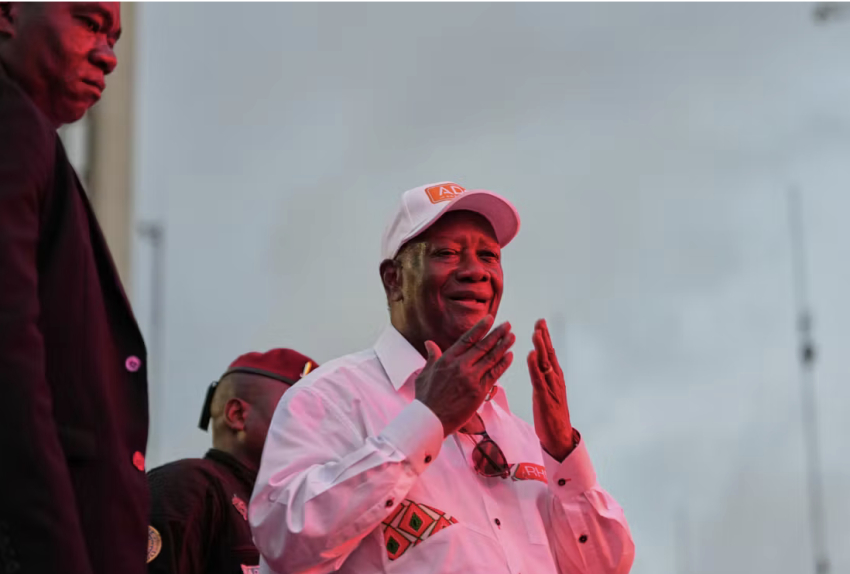 © MISPER APAWU / AP
Timbuktu Institute January 2026
In Côte d'Ivoire, the former prime minister was promoted to the head of the chamber by his fellow deputies with a large majority of 85% of the vote. The ruling party has thus confirmed its hegemony in the political arena following Ouattara's election to a fourth term. This guarantees the central government strong institutional coherence and a certain amount of leeway to implement its programs, ensuring stability and continuity of government action. The election of former Prime Minister Patrick Achi as President of the National Assembly marks a key step in the consolidation of the Ivorian political system in an unstable regional environment. In the same vein, President Alassane Ouattara carried out a cabinet reshuffleon Friday, January 23. This reshuffle did not involve any major changes and appears to be a continuation of the status quo. The appointment of his own brother, Téné Birahima Ouattara, as Deputy Prime Minister and Minister of Defense attracted attention in this government. At the same time, Agriculture Minister Kobenan Kouassi Adjoumani, who had been in office since 2011, was removed from the team. Was this due to the fall in world cocoa prices, which has severely penalized Ivorian farmers, the world's leading producers of this commodity? In any case, his departure has been a major news story in the country in recent days. He now holds the position of special advisor to the president.
Launch of the new five-year term: strategic directions and government priorities in Côte d'Ivoire
In the same vein, on January 24, 2026, President Alassane Ouattara chaired the first Council of Ministers of the new government formed after the 2025 elections in Côte d'Ivoire. He then set out the broad outlines of government action, emphasizing the rigorous implementation of the 2026-2030 national development plan, designed as a strategic framework to accelerate economic and social development while strengthening security, national cohesion, and peace. He emphasized the "government's determination to implement the 2026-2030 national development plan, as well as the guidelines derived from the social contract we entered into with our fellow citizens this year. We must go even further, because the people are counting on us."
The first Council of Ministers meeting thus marks the effective launch of the next five-year term and the structuring of the strategic framework for public action. The central place given to the National Development Plan reflects the desire to continue and strengthen planning in order to achieve measurable results in economic and social development. Emphasis is also placed on security, national cohesion, and peace, illustrating the close link between development and stability in a sensitive post-election and regional context. Finally, the reference to the "social contract" expresses the government's accountability and performance requirements in the face of the population's many expectations.
Security prevention and strong institutions: Côte d'Ivoire as a hub of regional stability
In recent years, the absence of any notable security crises has confirmed this trend. Unlike the Sahelian states, Côte d'Ivoire relies on the strength of its institutions to prevent instability. This prevention strategy is based on anticipating threats, monitoring northern borders, and combating trafficking and radicalization. Côte d'Ivoire seeks to position itself as a hub of stability and a trusted partner for both regional actors and international partners.
Sacré-Coeur 3 – BP 15177 CP 10700 Dakar Fann – SENEGAL.
+221 33 827 34 91 / +221 77 637 73 15
contact@timbuktu-institute.org