 French
 Arabic
 English
 Portuguese
 Spanish
 Swahili


Sacré-Coeur 3 – BP 15177 CP 10700 Dakar Fann – SENEGAL.
+221 33 827 34 91 / +221 77 637 73 15
contact@timbuktu-institute.org

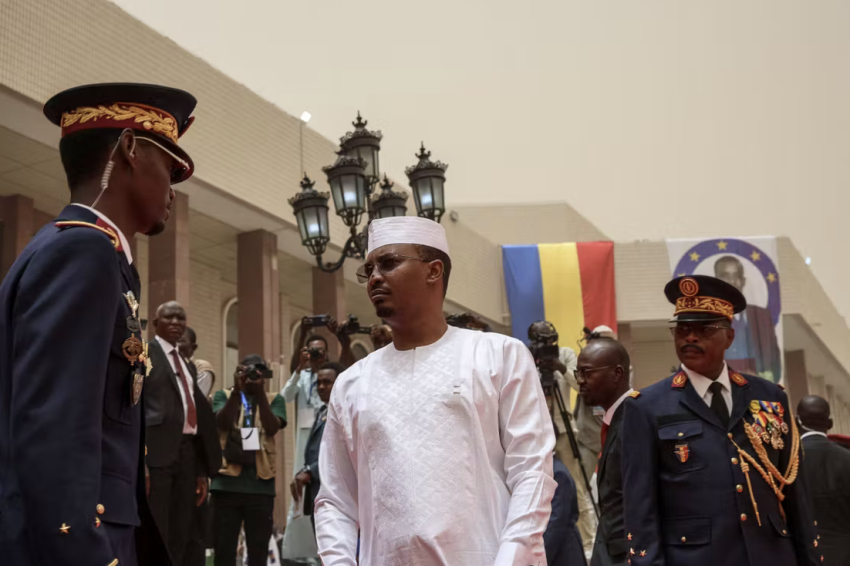 © JORIS BOLOMEY / AFP
Timbuktu Institute January 2026
N'Djamena continues to closely monitor developments in the war in neighboring Sudan. It was against this backdrop that on January 22, Chadian Minister of State Abdullah Sabir Fadoul received the interim staff of the Embassy of the Republic of Sudan in Chad to discuss current humanitarian and security issues and, above all, the situation of Sudanese refugees in eastern Chad. Through diplomat Abdullah Abker Saleh, Khartoum expressed its gratitude for the welcome and support given to refugees, particularly their socioeconomic inclusion and the assistance provided to students for their exams. For its part, N'Djamena stressed the urgency of lasting peace in Sudan, recalling that the stability of its neighbor is crucial for Chad's security and economy, already weakened by the conflict.
Furthermore, N'Djamena's bilateral cooperation activities in the first month of the year are not limited to its neighbors. On January 20, Chad and Belarus signed a memorandum of understanding on military-technical cooperation. This agreement aims to develop military and technological exchanges, strengthen skills, and equip the Chadian armed forces, while promoting technology transfer and logistical support. These initiatives illustrate Chad's strategy to secure its borders and strengthen its regional position through active diplomacy and targeted military partnerships. They also reveal N'Djamena's dual logic: supporting the stability of its neighbors while modernizing its defense capabilities to address persistent security and humanitarian challenges.
Creation of the National Council for Decentralization
A new body has been created within Chad's institutional architecture. This is the National Council for Decentralization (CND), whose founding decree was signed on January 22 by the head of state, Mahamat Idriss Deby Itno. As part of its mission to improve territorial governance, the CND will be responsible for coordinating the transfer of powers and resources from the state to local authorities, assessing their adequacy, making recommendations, and submitting an annual report to the president. In addition, the body will be chaired by the prime minister and administered by members of the government, parliament, and local authorities. While it remains to be seen whether the CND will bear fruit, its establishment at least demonstrates a desire to institutionalize the monitoring and evaluation of the decentralization process in Chad. In any case, such a formal framework could undoubtedly strengthen the coherence and effectiveness of the transfer of powers and resources to local authorities.
Sacré-Coeur 3 – BP 15177 CP 10700 Dakar Fann – SENEGAL.
+221 33 827 34 91 / +221 77 637 73 15
contact@timbuktu-institute.org