 French
 Arabic
 English
 Portuguese
 Spanish
 Swahili





Sacré-Coeur 3 – BP 15177 CP 10700 Dakar Fann – SENEGAL.
+221 33 827 34 91 / +221 77 637 73 15
contact@timbuktu-institute.org

 © wadr
Timbuktu Institute – Week 1 - February 2026
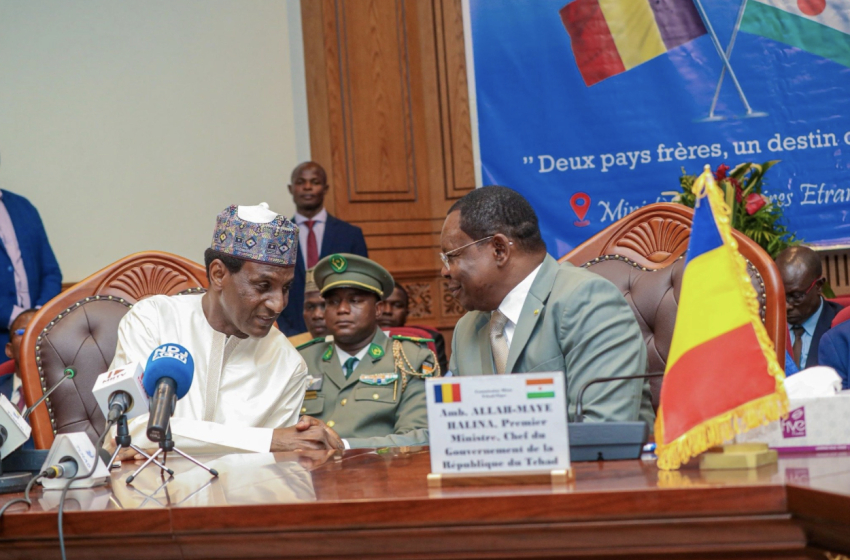
While the first month of the year was already a period of intense diplomatic activity, from France to Hungary via Turkey and the United States, Chad is continuing this momentum. The country is now turning its attention to its regional neighbors. On February 4, the Chadian ambassador to Burkina Faso, Mahamat Saleh Adoum Ahmat, was received by Burkina Faso's Minister of Foreign Affairs, Karamoko Jean-Marie Traoré, to discuss bilateral cooperation, particularly in the areas of citizen mobility and higher education. The two countries wish to relaunch a joint cooperation commission in 2026 in order to boost their economic, educational, and diplomatic exchanges in a context of common challenges such as insecurity, migration, and development.
On the same day, a delegation from the Chadian Civil Protection Agency was welcomed in Niamey, Niger, to discuss risk, disaster, and crisis prevention and management. The stated objective of both parties is to establish sustainable technical collaboration inspired by the Nigerien crisis management model in order to better respond to the growing challenges associated with natural disasters, climate shocks, and health emergencies in the Sahel region. Aware of its strategic role in regional stability, Chad is therefore working to strengthen its regional cooperation, not only to improve crisis management and population mobility, but also to consolidate its strategic position within a complex and unstable Sahelian context.
A trade unionist behind bars
On February 2, the N'Djamena High Court sentenced Djimoudouel Faustin, president of the Independent Teachers' Union (Siet), to one year in prison for “inciting hatred, revolt, and rebellion.” Demanding, among other things, that promises to improve teachers' working conditions and pay be fulfilled, he had called for a teachers' strike from January 5 to February 4. In a context where the continuous shrinking of civic space in Chad is evident, with numerous arrests of journalists and political activists, this new conviction of a critical voice of the country's governance further darkens an already worrying picture. It once again makes it difficult for civic actors to make their demands heard without risking sanctions.
In the east of the country, the humanitarian crisis caused by the Sudanese conflict remains a thorny issue. Recognizing this need, the Chadian government, with the support of international partners, launched the Humanitarian Response Plan (HNRP) and the Refugee Response Plan (RRP) for 2026 on February 5. These programs aim to coordinate humanitarian action in response to the emergency needs of millions of people affected by conflict, forced displacement, and food insecurity. Given the scale of the problem, Chad hopes to stem this crisis in a context where insecurity and forced displacement are compounded by socio-economic fragilities. However, it should be noted that the success of these programs will depend as much on international coordination as on the state's ability to translate its planning into concrete action on the ground.
Sacré-Coeur 3 – BP 15177 CP 10700 Dakar Fann – SENEGAL.
+221 33 827 34 91 / +221 77 637 73 15
contact@timbuktu-institute.org