 French
 Arabic
 English
 Portuguese
 Spanish
 Swahili


Sacré-Coeur 3 – BP 15177 CP 10700 Dakar Fann – SENEGAL.
+221 33 827 34 91 / +221 77 637 73 15
contact@timbuktu-institute.org

 © JOHN WESSELS / AFP
Timbuktu Institute – Week 2 – February 2026
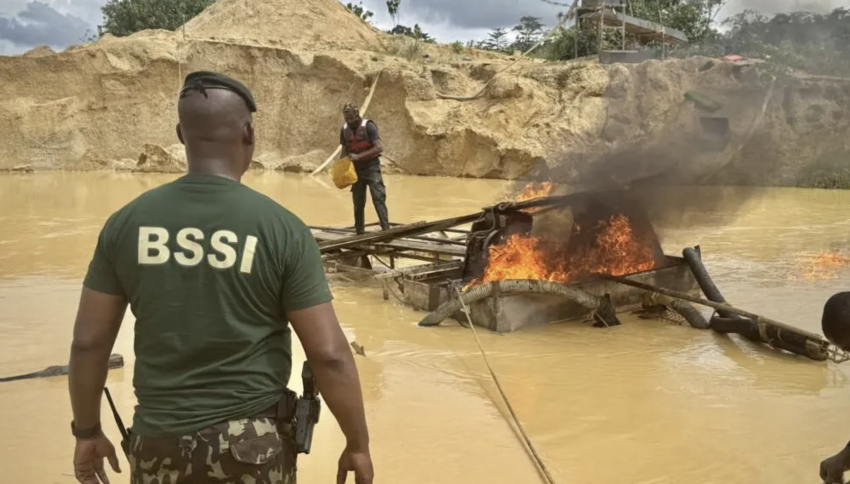
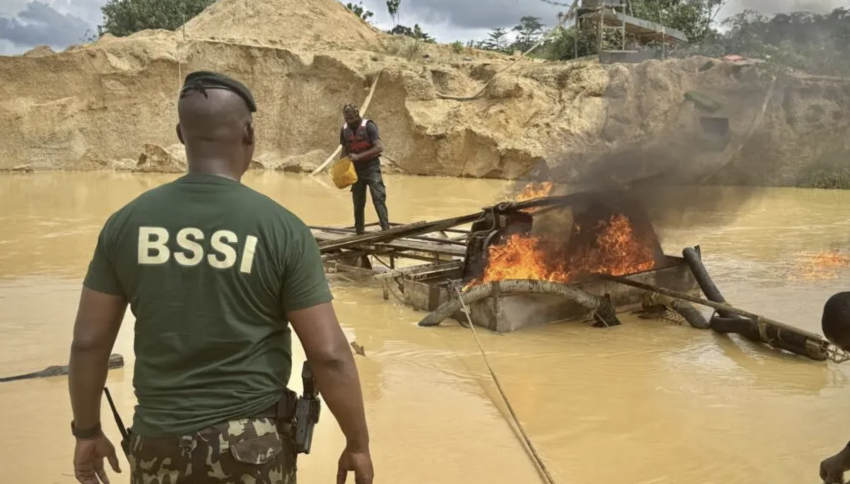
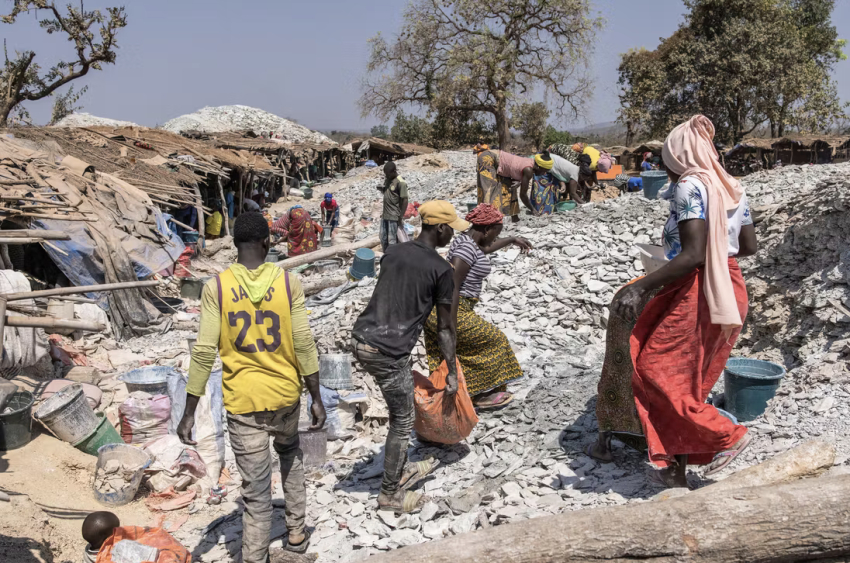
Another tragic accident occurred on 8 February 2026 in the Kédougou region (south-east Senegal) at an illegal gold mining site in Gamba-Gamba. According to local authorities, at least two people were killed after a sudden landslide buried part of the site while many gold miners were working in extremely precarious conditions. Three other individuals were slightly injured, all of whom were foreign nationals. The victims were evacuated to the Kédougou regional hospital, while the search had to be temporarily suspended due to the dangerous nature of the site.
This tragedy highlights the major human risks of illegal gold mining, which attracts many workers outside of secure channels, often without institutional supervision or compliance with safety standards. This illegal activity persists despite dismantling operations and efforts by the gendarmerie and army to secure the area.
Tensions at UCAD: anger after the death of a student
The Cheikh Anta Diop University in Dakar (UCAD) was rocked by violent clashes between students and law enforcement officers, amid discontent over poor living conditions on campus, including the closure of university restaurants and social difficulties.
During these clashes, Abdoulaye Ba, a second-year medical student, lost his life. His death has provoked strong emotions and deep anger among the student community, who denounce excessive repression and a lack of consideration on the part of the authorities.
The students express a feeling of abandonment, declaring themselves to be ‘hungry, betrayed and disappointed’. Their frustration is also directed at certain political figures, notably Ousmane Sonko, towards whom they say they feel a strong sense of disappointment, believing that the expectations placed on him have not been met in the face of this crisis.
The Centre des Oeuvres Universitaires de Dakar (COUD) has also closed the social campus, forcing many students to leave the premises, which further increases tension.
This crisis has reignited the debate on how to deal with student protests and the use of force on university campuses.
In the court case involving Mouhamadou Ngom, better known as Farba Ngom, the Indictment Division handed down an important decision on 12 February 2026. It upheld the provisional release previously granted to the deputy mayor of Agnam (Matam), despite opposition from the Financial Prosecutor's Office. This decision comes in a complex case involving financial, political and media allegations.
For several months, Farba Ngom has been at the centre of a closely followed legal proceeding, in which he faces charges of embezzlement of public funds, money laundering and other serious offences. Previous revelations by the Minister of Justice pointed to the illegal use of mobile phones in detention and intensive exchanges with political and media figures, which took the case beyond a simple criminal case.
The confirmation of his provisional release means that he will be able to leave detention under judicial supervision, unless the public prosecutor's office appeals to the Court of Cassation within the legal time limit. The decision reinforces the debate on justice, parliamentary immunity and the balance of powers in Senegal, and illustrates how legal proceedings are linked to political issues in the country.
Mass arrests linked to charges of homosexuality and related acts
In Senegal, several recent arrests have sparked heated controversy over charges related to ‘unnatural acts’. As part of investigations conducted by security forces, at least 12 people have been arrested, including two public figures—a television presenter and a singer—on charges including unnatural acts, wilful transmission of HIV, and ‘criminal conspiracy.’
Human rights organisations, such as Stop Homophobia, have expressed concern about these arrests, pointing out that consensual same-sex relations between adults remain criminalised in Senegal and expose LGBTQIA+ people to prosecution, arbitrary arrest and severe social stigma.
In this context, the controversy has been amplified by debates in the media and on social networks: some observers denounce the exploitation of cases related to homosexuality in a climate where Senegalese society is very conservative on these issues, while others insist on the need to enforce the law.
Arrests in a case involving a cross-border criminal network linked to sexual exploitation and HIV transmission
In parallel with the arrests for ‘unnatural acts’, the Senegalese authorities have arrested 14 people in a major case involving an alleged criminal network, involving much more serious offences, including organised paedophilia, pimping, rape of minors under the age of 15, filmed sexual acts, and deliberate transmission of HIV/AIDS.
This operation, carried out in coordination with French investigators, is believed to have dismantled a transnational group that had been active for several years and whose members are accused of forcing boys to perform sexual acts with men, often forcing them to have unprotected sex, according to official statements.
The suspects have been brought before a judge and face particularly serious charges. The authorities have also called on citizens to support the investigations by sharing relevant information via a toll-free telephone line made available to the public.
Sacré-Coeur 3 – BP 15177 CP 10700 Dakar Fann – SENEGAL.
+221 33 827 34 91 / +221 77 637 73 15
contact@timbuktu-institute.org