 French
 Arabic
 English
 Portuguese
 Spanish
 Swahili





Sacré-Coeur 3 – BP 15177 CP 10700 Dakar Fann – SENEGAL.
+221 33 827 34 91 / +221 77 637 73 15
contact@timbuktu-institute.org

 © 2024 Amnesty International
Timbuktu Institute - Week 3 - February 2026
Download the full Sahel weather report
In Togo, current events reveal a country plagued by tensions between strategic assertiveness and institutional challenges. From threats against journalist Roger Amemavoh to the appeal trial of Félix Abalo Kadangha, via Faure Gnassingbé's goal of food sovereignty and his presidency of the Organisation for the Harmonisation of Business Law in Africa, this sequence illustrates the delicate balance between political ambition, governance requirements and the protection of freedoms.
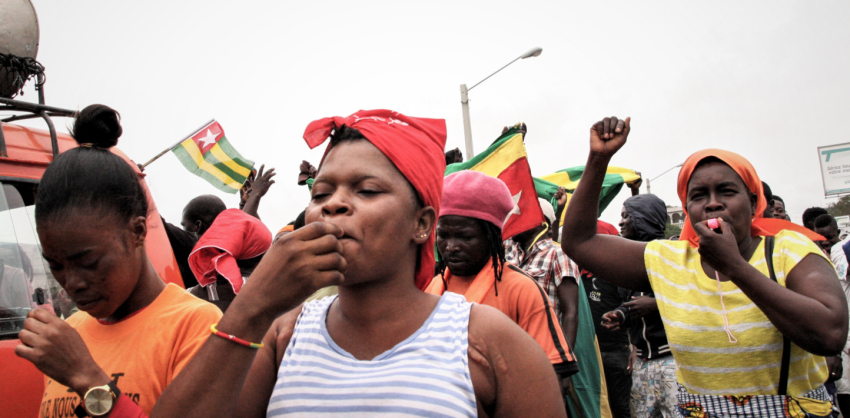
Threats against Roger Amemavoh: a sign of the structural challenges to press freedom in Togo
The threats against journalist Roger Amemavoh reveal the challenges facing press freedom in Togo. The Observatoire Togolais des Médias (OTM) has denounced ‘a serious attack on freedom of expression and the media,’ calling on the authorities to guarantee the journalist's safety. For its part, the Union of Independent Journalists of Togo (SYNJIT) condemned these threats ‘in the strongest possible terms’ and referred to a ‘resurgence of attacks on press freedom’. The government, through the ministries responsible for communication and security, said it was ‘monitoring the situation closely’. This case has reignited the structural debate on the protection of journalists in Togo. While the official reaction marks institutional recognition of the problem, the challenge now lies in the ability to translate these statements into concrete protection measures and effective procedural guarantees.
Félix Abalo Kadangha's appeal trial: credibility of military justice and issues of state responsibility in Togo
Five years after the death of Colonel Toussaint Bitala Madjoulba, Félix Abalo Kadangha's appeal trial opened on 16 February 2026 before a military court. Sentenced in 2023 to 20 years' imprisonment for ‘conspiracy against state security’, ‘complicity in murder’ and ‘obstruction of justice’, the former chief of staff is contesting a decision that his lawyers consider to be marred by procedural flaws and a glaring lack of evidence. This trial is highly symbolic; it calls into question the credibility of the military justice system, the handling of sensitive cases involving the armed forces, and the transparency of accountability mechanisms at the highest levels of government. This event comes amid ongoing debate over Damiba's extradition and his various misadventures.
Faure Gnassingbé: Focus on food sovereignty and self-sufficiency in agricultural production in Togo
During his visit to the planned agricultural development zones (ZAAP) of Dankpen and Binah, he stated: "Beyond food security, it is imperative to achieve food sovereignty. ‘ The President of the Council stressed that ’the government does not have all the answers" and called for greater collaboration with producers. This statement marks a strategic shift towards a logic of autonomy in agricultural production. By distinguishing between food security and food sovereignty, he emphasises reducing dependence on imports and the joint responsibility of the state and producers. The challenge is not limited to agricultural production: it is about consolidating the country's economic resilience and structuring rural value chains in a sustainable manner. This approach is therefore part of a strategic self-sufficiency strategy aimed at reducing dependence on imports and consolidating national economic resilience. However, the success of this approach will depend on the effective professionalisation of agricultural and agri-food activity zones (ZAAPs) and access to finance, inputs and markets.
Harmonisation of business law in Africa: a diplomatic lever for Togo's strategic repositioning
The Organisation for the Harmonisation of Business Law in Africa (OHADA) is a diplomatic lever for Togo's strategic repositioning. This assumption of office gives Togo increased visibility in the African legal arena. This accession to the presidency of OHADA strengthens Togo's diplomatic position within the African legal architecture. It provides Lomé with a strategic platform to promote legal certainty, investment attractiveness and regional economic integration, while strengthening its image as an influential institutional player. The country is making progress on several fronts, but sustainable consolidation will depend on the ability of institutions to simultaneously guarantee security, civil liberties and inclusive governance.
Sacré-Coeur 3 – BP 15177 CP 10700 Dakar Fann – SENEGAL.
+221 33 827 34 91 / +221 77 637 73 15
contact@timbuktu-institute.org