 French
 Arabic
 English
 Portuguese
 Spanish
 Swahili





Sacré-Coeur 3 – BP 15177 CP 10700 Dakar Fann – SENEGAL.
+221 33 827 34 91 / +221 77 637 73 15
contact@timbuktu-institute.org

 © TDR
© TDR
Timbuktu Institute - Week 3 - February 2026
Download the full Sahel weather report
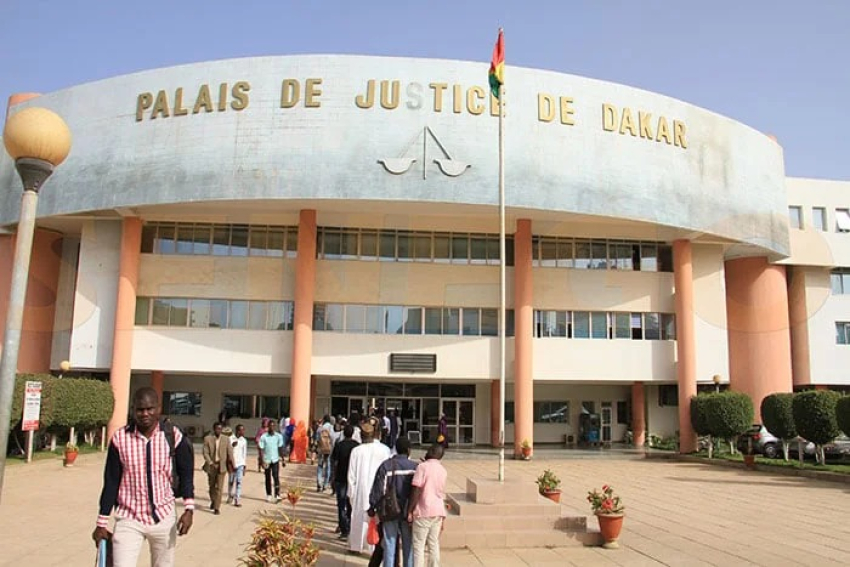
The National Assembly of Senegal has begun examining several crucial bills, including one concerning the request to lift the parliamentary immunity of MP Farba Ngom. This legislative procedure, which is part of a drive for accountability desired by the new authorities, aims to allow the justice system to hear the MP on financial matters. The Assembly's bureau met to set the timetable for this procedure, marking a significant symbolic step in the management of parliamentary privileges.
Farba Ngom's response: ‘Hand on the Koran’ In response to the allegations of embezzlement, Farba Ngomvigorously proclaimed his innocence, claiming that he had never received a single franc from the public treasury illegally. To emphasise his good faith, the MP symbolically took an oath with his hand on the Koran, declaring that he was prepared to respond to any legal summons once his immunity had been lifted. He denounced what he called an attempt at political demonisation, while insisting that his wealth was the result of transparent private activities.
Bassirou Diomaye Faye: Modern and preventive justice
President Bassirou Diomaye Faye outlined his vision for far-reaching reform of the judiciary, arguing that modern justice should go beyond its purely repressive role to become a lever for conflict prevention. In his speech, he emphasised the importance of promoting social dialogue and mediation to relieve congestion in the courts. For the Head of State, a peaceful and accessible justice system is essential to guarantee social stability and restore trust between citizens and institutions.
Death of Abdoulaye Ba: six uniformed men punished
The investigation into the tragic death of Abdoulaye Ba has resulted in the official punishment of six defence and security forces officers, a decision confirmed by lawyer Bamba Cissé, Minister of the Interior and Public Security. These administrative and disciplinary measures are intended to punish the serious misconduct observed during the intervention that led to the victim's death. This announcement is seen as a strong signal against impunity within the law enforcement agencies, responding to the expectations of justice of the family and public opinion.
Tightening of laws and extension of the scope of ‘unnatural acts’
The Senegalese government has decided to significantly strengthen the Penal Code with regard to ‘unnatural acts’. The new reform now provides for the punishment of not only the acts themselves, but also their advocacy, with prison sentences. This decision is part of a clear desire to preserve the country's socio-cultural and religious values in the face of what the authorities consider to be deviant behaviour, thereby tightening the existing legal framework.
The bill to amend the Senegalese Penal Code has been clarified to include two new profiles in the context of the repression of unnatural acts. Parliamentary debates indicate that the law now more specifically targets those who encourage or facilitate these practices, thereby broadening criminal liability. This legislative extension reflects pressure from certain social and religious groups for stricter and more comprehensive legislation on these moral issues.
Sacré-Coeur 3 – BP 15177 CP 10700 Dakar Fann – SENEGAL.
+221 33 827 34 91 / +221 77 637 73 15
contact@timbuktu-institute.org