 French
 Arabic
 English
 Portuguese
 Spanish
 Swahili



Sacré-Coeur 3 – BP 15177 CP 10700 Dakar Fann – SENEGAL.
+221 33 827 34 91 / +221 77 637 73 15
contact@timbuktu-institute.org

 ©TDR
©TDR
Timbuktu Institute - Week 4 - February 2026
Between opening up to new non-Western partners, strengthening cross-border cooperation with Ghana and accelerating the institutionalisation of the AES, Burkina Faso is confirming a three-pronged strategic dynamic. These diplomatic and security developments, concentrated around the end of February 2026, reflect a deliberate realignment of alliances, a pragmatic regionalisation of the response to the jihadist threat, and a desire for doctrinal structuring at the confederal level.
Burkina Faso–Iran: a diplomatic shift in the service of assertive security sovereignty
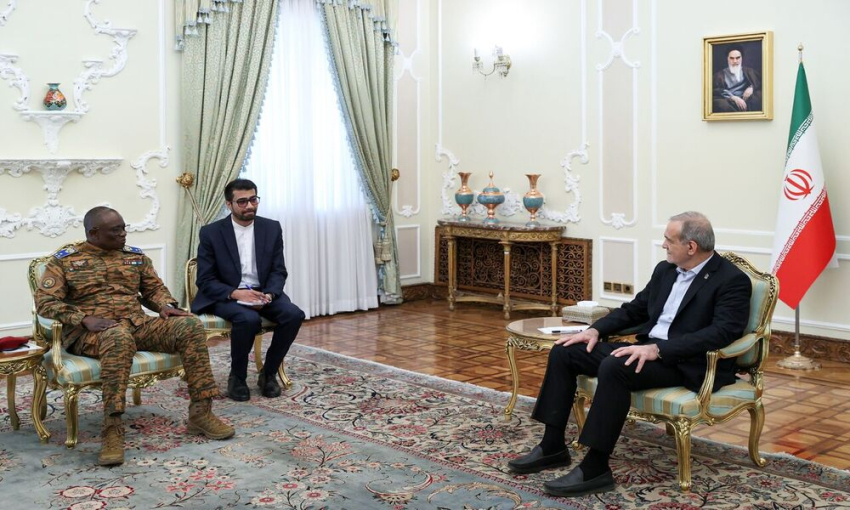
This week, Burkina Faso was marked by the historic visit of General Célestin Simporé to Tehran on 23 February 2026. This visit marks a notable diplomatic shift and the continuation of the diversification of partnerships that began with France's departure a few years ago. Received by Iranian President Massoud Pezeshkian and Defence Minister Aziz Nasirzadeh, the Burkinabe minister engaged in a strategic dialogue focused on security cooperation. The Iranian President took the opportunity to affirm that ‘Iran is keen to use its vast capabilities to improve its relations with African countries, which is a strategic priority of its foreign policy.’ This visit illustrates the pursuit of a sovereignist and pragmatic diplomacy, focused on securing the territory and strategic autonomy, but which is gradually redefining Burkina Faso's place in the game of international alliances. This is a continuation of their strategy of diversifying military equipment suppliers, with access to ‘non-Western’ technological and logistical cooperation.
Ouagadougou–Accra: towards a pragmatic regionalisation of the security response
Meanwhile, on 20 February, Burkina Faso signed seven bilateral agreements with Ghana on transport, security, cross-border management and the fight against drug trafficking. This cooperation comes at a time of increased border vulnerability, as evidenced by the death of Ghanaian traders in a jihadist attack claimed by JNIM, as reported in previous issues of Météo Sahel. According to Karamoko Jean-Marie Traoré, Burkina Faso's Minister of Foreign Affairs, ‘our peoples expect more from us than just statements’. They expect infrastructure, economic opportunities, enhanced security, easier mobility and smoother trade. The joint commission must be the driving force behind ambitious, structured, realistic and results-oriented cooperation. These remarks reflect the strategic awareness of Burkina Faso and Ghana that the threat posed by JNIM is not limited to national borders and requires a coordinated response that integrates security, border governance and the fight against transnational trafficking. These agreements between the two countries reflect a logic of regionalisation of the security response, in which cross-border cooperation becomes an indispensable strategic lever in the face of the spread of jihadist risk and the growing interconnection of criminal and terrorist threats in the Sahel region. Thus, security cooperation with Accra represents an attempt at horizontal stabilisation aimed at combating this conflict.
Ouagadougou: towards the strategic institutionalisation of Year II of the AES
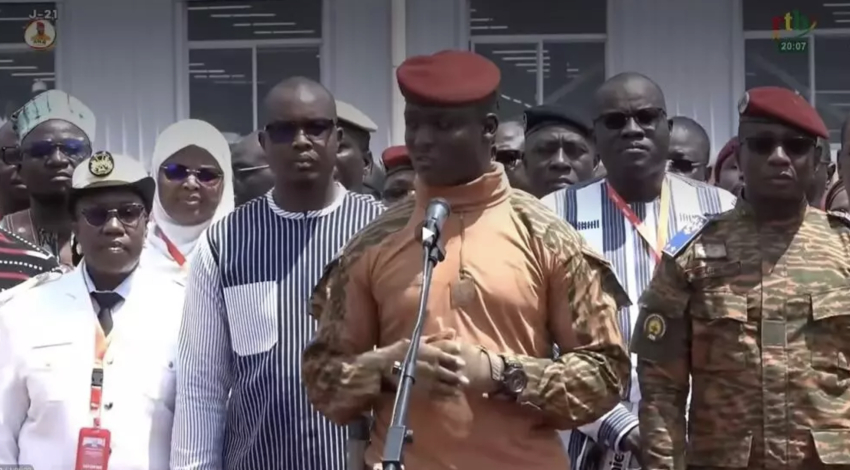
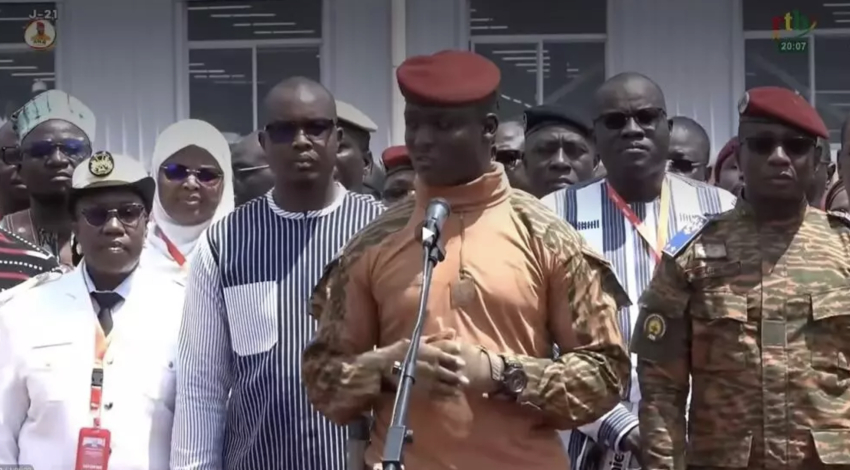
Work on the roadmap for the second year of the AES was launched in Ouagadougou on 24 and 25 February 2026. The aim is to structure a common doctrine on defence, diplomacy and development. This major step marks an important milestone in the institutionalisation of the confederal project between the three countries, which aims to go beyond ad hoc cooperation to formalise an integrated doctrine on defence, diplomacy and development. According to Bassolma Bazié, President of the AES National Commission for Burkina Faso, ‘it is necessary to meet to assess the content and see what types of elements can be put together in terms of draft roadmaps to be sent first to the confederal ministerial team, which will be able to assess them and in turn forward them to Their Excellencies for final adoption’. This approach demonstrates a desire for bottom-up structuring, revealing an attempt at institutional consolidation and strategic coordination in the face of security challenges and regional geopolitical realignments.
Sacré-Coeur 3 – BP 15177 CP 10700 Dakar Fann – SENEGAL.
+221 33 827 34 91 / +221 77 637 73 15
contact@timbuktu-institute.org