 French
 Arabic
 English
 Portuguese
 Spanish
 Swahili


Sacré-Coeur 3 – BP 15177 CP 10700 Dakar Fann – SENEGAL.
+221 33 827 34 91 / +221 77 637 73 15
contact@timbuktu-institute.org

 © TDR
© TDR
Timbuktu Institute – Week 2 – March 2026
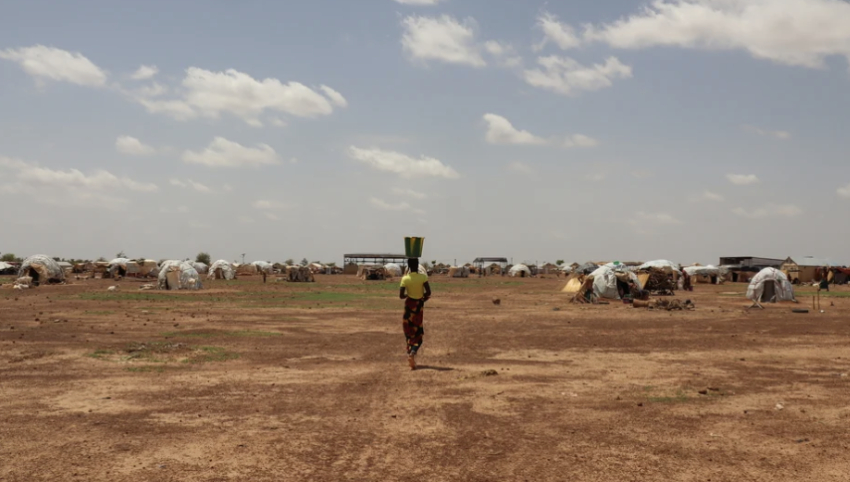
Burkina Faso is experiencing a highly tense March 2026, marked by terrorist attacks and restrictions on freedoms. Whilst the armed group JNIM intensifies its deadly attacks in the east and north of the country, the military regime is tightening its grip on the media sector, which was previously a model of excellence in the sub-region. Nevertheless, despite this multidimensional crisis, the humanitarian sector offers a glimmer of hope thanks to the adoption of a new refugee integration strategy, welcomed by the UN.
Deadly cycle in Burkina Faso: JNIM intensifies its attacks
This March, Burkina Faso has been the target of a wave of terrorist attacks of exceptional violence. In ten days, these attacks have claimed several dozen lives. The victims include both civilians and military personnel, notably during the assault on the police camp of the Yamba Mobile Intervention Unit Group, located 20 kilometres north of Fada N’Gourma, attributed to JNIM. A Human Rights Watch report dated 12 March paints a grim picture of the attacks carried out by JNIM in the north and east of the country. The report mentions “at least 38 civilians killed, 9 women abducted and properties set on fire”. This area, bordering Benin, Togo and Niger, has thus become an epicentre of deteriorating security. Whilst the conflict intensifies in the east and north, another battlefield – less visible but just as crucial – has emerged in the realm of fundamental rights. In this climate of intense tension, press freedom – once the cornerstone of democracy in Burkina Faso – is now under attack, raising concerns far beyond the country’s borders.
Stifling criticism: the end of a golden age for Burkina’s media?
Meanwhile, civil liberties continue to cause concern among observers. In the past, this country was seen as a place where renowned journalists, such as Norbert Zongo, who was murdered in complex circumstances, built their careers. He constantly lamented what he described as the “silence of the decent people”. According to Sadibou Marong, “this is a country that has always counted figures of great stature among its journalists”. Since 2022, the media landscape has been thrown into question following thearrest of journalists and the closure of various media outlets, in the wake of the military’s rise to power. Journalists and reporters in Burkina Faso have also been forced to go to the front line or flee. Many see this as an attempt to silence critical voices. Despite these internal tensions affecting public discourse, Burkina Faso remains committed to its humanitarian obligations. The government is currently attempting to project an image of resilience and pragmatism in its handling of displaced populations.
Paradigm shift: towards sustainable self-reliance for displaced populations
On a separate note, Ruvendrini Menikdiwela, Assistant to the United Nations High Commissioner for Refugees and Head of Protection, held a meeting on 9 March 2026 with the Minister of Foreign Affairs, H.E. Karamoko Jean Marie Traoré, to discuss the refugee situation in Burkina Faso. She took this opportunity to commend the government’s refugee reception policy, which she described as a model given the difficult circumstances the country is facing. For his part, the Foreign Minister emphasised that we were part of a “process aimed at moving away from the problematic image of the refugee and instead valuing them more as potential agents and contributors to development, rather than as an additional burden”. Minister Traoré stressed the need to move beyond the approach of providing ongoing assistance to these populations, by prioritising the development of their autonomy and their ability to contribute proactively to the progress of their host communities.
Sacré-Coeur 3 – BP 15177 CP 10700 Dakar Fann – SENEGAL.
+221 33 827 34 91 / +221 77 637 73 15
contact@timbuktu-institute.org