 French
 Arabic
 English
 Portuguese
 Spanish
 Swahili


Sacré-Coeur 3 – BP 15177 CP 10700 Dakar Fann – SENEGAL.
+221 33 827 34 91 / +221 77 637 73 15
contact@timbuktu-institute.org

 © TDR
© TDR
Timbuktu Institute – Week 3 – March 2026
Download the full Sahel weather report
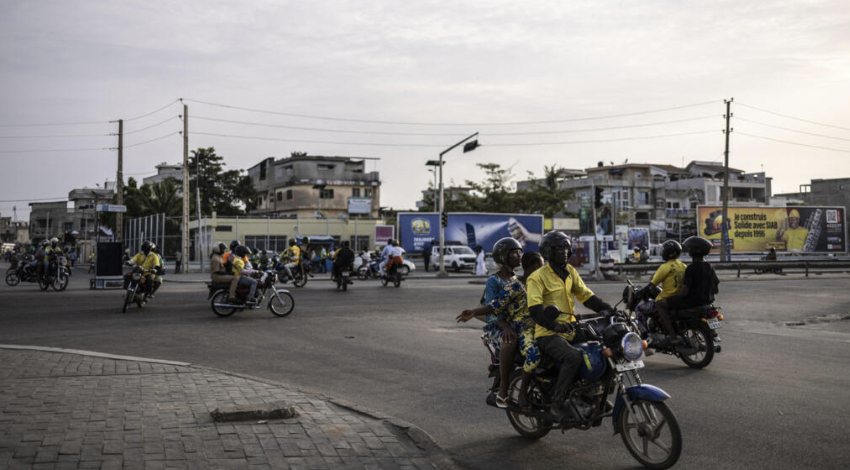
In Benin, the April presidential election is now fast approaching. With candidates switching allegiances, shifts in support and behind-the-scenes manoeuvring, the political scene is in turmoil. Whilst the two candidates in the running, the Minister for the Economy and Finance Romuald Wadagni and the president of the FCBE (Forces Bénin pour un Bénin Émergent), had still not presented their vision for the country, this has now been done, at least by the candidate from the presidential camp. On Saturday 21 March, in a setting inspired by TED talks and before a distinguished audience, Romuald Wadagni took to the stage for an hour-long presentation. From the outset, he described the country’s development in terms of a ‘long process, made up of stages’. In a tone intended to be accessible, Romuald Wadagni – one of the key figures in Patrice Talon’s administration – acknowledged the reality of missteps and errors in the implementation of the Government Action Programme (PAG), launched in 2016. “What we have done wrong, together, through dialogue, we will rectify,” he declared. At the same time, he pledged to be “the guardian of the institutions” and to uphold democratic principles. According to him, one of the main challenges is to consolidate the achievements of the past ten years. “I will carry out this work with integrity, courage and perseverance. I am convinced that by placing your trust in me, we will go further together,” he assured.
Furthermore, Romuald Wadagni did not fail to address the challenge of extreme poverty. His flagship proposal in this regard is to divide the country into six development hubs, focused on agriculture, industry, innovation and tourism, with regular monitoring at every cabinet meeting. Regarding the country’s security situation in the regional context, beyond strengthening the capabilities of the armed forces, the candidate calls for dialogue: “We must talk to one another. We have no choice. We will seize the opportunity to reach out further to our neighbours who struggle to trust us. Nature has made us neighbours, and we cannot change that.” All in all, R. Wadagni is pursuing a strategy of legitimisation that combines continuity with his track record and a forward-looking programme. This approach aims to consolidate his position as the reformist heir to the system embodied by the current president, Patrice Talon, whilst seeking to strengthen his credibility with an electorate awaiting social and institutional guarantees.
Standing firm against the security threat
Whilst Benin has suffered several security setbacks in recent weeks, the country is increasingly committed to a process of continuously strengthening its defence capabilities. Since 18 March, the Beninese Armed Forces (FAB) have been conducting the full-scale exercise ‘Alligator’ in the cities of Cotonou, Allada, Ouidah, Grand-Popo and Porto-Novo. Designed to train soldiers in real-world conditions, it aims to strengthen their ability to protect the population. Scheduled to end on 30 March, the exercise is presented as having an educational and civic dimension, enabling the public to become familiar with the military presence in urban areas and to test the troops’ operational procedures.
In the same vein, on 19 March 2026, the Chiefs of Staff of the armed forces of France, Côte d’Ivoire and Beninmet in Cotonou to reaffirm and strengthen their counter-terrorism cooperation, which began last year. The main objective is to combat the terrorist threat in northern Benin and Côte d’Ivoire. Colonel André Fofo Dokoui, commander of Operation ‘Mirador’ in northern Benin, emphasised the need for comprehensive regional cooperation to ensure an effective and sustainable response, whilst clarifying that only Beninese soldiers are participating in the operation. Whether through security operations or multilateral cooperation, these combined initiatives demonstrate a two-pronged approach, seeking to address both internal vulnerabilities and destabilising cross-border dynamics simultaneously. Furthermore, they reflect Benin’s determination to strengthen its own forces whilst operating within a framework of regional solidarity that is set to grow stronger.
Sacré-Coeur 3 – BP 15177 CP 10700 Dakar Fann – SENEGAL.
+221 33 827 34 91 / +221 77 637 73 15
contact@timbuktu-institute.org