 French
 Arabic
 English
 Portuguese
 Spanish
 Swahili




Sacré-Coeur 3 – BP 15177 CP 10700 Dakar Fann – SENEGAL.
+221 33 827 34 91 / +221 77 637 73 15
contact@timbuktu-institute.org

Timbuktu Institute – Week 3 – March 2026
Download the full Sahel weather report
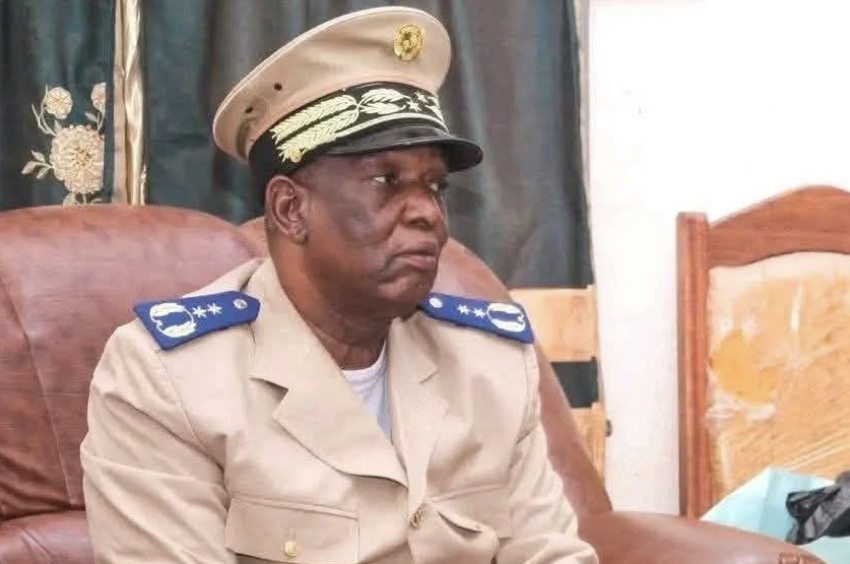
The escape of the Prefect of Dioïla after a month in captivity at the hands of JNIM (Group for the Support of Islam and Muslims) is a highly symbolic event for the Malian administration. Strategically, this episode illustrates the constant pressure exerted by Al-Qaeda-affiliated groups on state representatives in rural areas. By targeting prefects, JNIM seeks to decapitate the administrative presence in order to establish shadow governance and undermine Bamako’s sovereignty. However, the prefect’s successful escape shatters the narrative of the insurgents’ invulnerability and provides a morale boost to officials operating in “red zones”. It also highlights likely logistical flaws among the kidnappers, who are often forced into extreme mobility to evade the FAMa’s increased aerial surveillance. This individual success, whilst offering hope, serves as a reminder of the persistent vulnerability of local officials, whose protection remains a major logistical challenge. For the state, securing every level of decentralisation without tying up entire combat units is a complex equation that requires a overhaul of local security in the isolated districts of the centre and south of the country.
Military offensive in the Yélimané circle
The neutralisation of several members of Armed Terrorist Groups (GAT) in the Yélimané circle confirms the extension of offensive military activity towards western Mali. Historically less affected than the centre or the north, this region is becoming a new front where the FAMa are stepping up their clearance operations. The strategic rationale here is to intercept terrorist movements seeking to establish themselves near the Mauritanian border in order to secure smuggling and recruitment corridors. By striking these cells, the army aims to stifle the armed groups’ ability to regenerate before they can establish new safe havens. The success of these tactical operations relies on enhanced coordination between ground units and aerial intelligence gathered by drones. However, consolidating these gains requires a static post-offensive presence to reassure local populations and prevent the return of insurgents once military columns have withdrawn. This success in Yélimané demonstrates the General Staff’s determination to give the armed groups no respite, even in peripheral areas deemed stable, in order to secure the country’s entire western border.
Diplomatic tension between Mali and Mauritania: the escapees incident
The escape of two Malian soldiers claiming to have been held by “terrorist groups” on Mauritanian territory triggered an immediate diplomatic crisis between Bamako and Nouakchott. This incident crystallises the accumulated tensions over porous borders and the right of military pursuit. Strategically, this undermines cross-border security cooperation, which is essential for combating groups that flout state borders. Mutual mistrust is taking hold: Bamako appears to be questioning Mauritania’s ability, or even its willingness, to secure its territory against GAT infiltrations, whilst Nouakchott perceives these statements as an affront to its sovereignty and security credibility. Managing this crisis is crucial to prevent this border dispute from benefiting terrorist groups, which systematically exploit disagreements between neighbouring states to reorganise themselves in ‘grey zones’. A breakdown in dialogue between these two neighbours would exacerbate instability in the western Sahel, making the monitoring of insurgent movement corridors virtually impossible without sincere and transparent bilateral coordination at the highest levels of the military leadership.
Mali’s assertion that two of its soldiers were “held by terrorist groups” on Mauritanian soil is a statement with far-reaching geopolitical consequences. By placing the blame for this detention on armed groups operating from or towards Mauritania, Bamako shifts the focus of the threat towards its western neighbour. Strategically, this rhetoric serves to justify the need for more aggressive border patrols and potentially unofficial rights of pursuit. The aim is to prove that insecurity is a global phenomenon that does not stop at Mali’s borders, thereby forcing Mauritania to abandon a neutrality sometimes deemed ambiguous by the transitional authorities. This official communication also aims to reassure the national public regarding the fate of its soldiers, by framing their captivity as an act of heroism in the face of the enemy. However, it takes a tougher stance towards Nouakchott, demanding firmer security guarantees from a partner whose role is deemed pivotal to the stability of the Western Sahel and the management of refugee flows.
The account of the two FAMa soldiers who escaped their terrorist captors is used as a powerful communication tool to remobilise the troops and public opinion. Strategically, these repeated escapes suggest possible disorganisation within the terrorist cells responsible for guarding the captives, or a lapse in vigilance due to the constant pressure of Malian drone strikes. For the military command, these soldiers become invaluable sources of intelligence on the modus operandi and locations of enemy transit camps. This individual success reinforces the image of a resilient Malian soldier capable of taking the initiative even in situations of extreme vulnerability. It also helps counter jihadist propaganda, which often uses prisoners for staged videos. By ‘escaping’ in this way, these soldiers restore the symbolic advantage to the government side, proving that the will to fight remains intact despite the risks of capture.
Allegations of executions near Kayes: the human rights challenge
The announcement of the execution of at least eight people by the army near Kayes poses a major challenge to the legitimacy of security operations in the west of the country. In an asymmetric war, the distinction between combatants and civilians is the cornerstone of political and moral victory. If these allegations of abuses are confirmed, they risk radicalising local populations and providing a powerful recruitment argument for insurgent groups. Strategically, the Malian army faces a dilemma: the pressure to achieve rapid tactical results can lead to abuses on the ground, but such abuses undermine the trust necessary for lasting peace. These incidents further isolate Mali on the international stage and complicate its relations with human rights organisations and its remaining diplomatic partners. The military leadership’s ability to conduct transparent investigations and punish any abuses is crucial to maintaining national cohesion and preventing the fight against terrorism from turning into an uncontrollable cycle of inter-communal violence, which would play into the hands of the state’s enemies.
Washington’s pragmatic return to Bamako
Washington’s “discreet return” to Bamako, via the resumption of intelligence operations, marks a pragmatic readjustment of US diplomacy in the Sahel in the face of rising Russian influence. Recognising the ineffectiveness of a policy of total isolation, the United States is opting for an approach of “competitive coexistence”. The strategic rationale is twofold: to maintain surveillance capabilities over the movements of Al-Qaeda and Islamic State, whilst offering Bamako a technical alternative to the services of Africa Corps. This return suggests that the Malian authorities, despite their sovereignist rhetoric, recognise the superiority of US ISR (Intelligence, Surveillance, and Reconnaissance) technology for long-range surveillance. For Washington, the aim is to prevent Mali from becoming a zone of total lawlessness where Western interests would be directly threatened by unchecked jihadist expansion. This shift demonstrates that the Sahel remains a major battleground for competition between major powers, where security realism often ends up prevailing over traditional diplomatic principles. This discreet partnership allows Mali to diversify its intelligence sources whilst maintaining its professed political autonomy vis-à-vis the traditional blocs.
Sacré-Coeur 3 – BP 15177 CP 10700 Dakar Fann – SENEGAL.
+221 33 827 34 91 / +221 77 637 73 15
contact@timbuktu-institute.org