 French
 Arabic
 English
 Portuguese
 Spanish
 Swahili



Sacré-Coeur 3 – BP 15177 CP 10700 Dakar Fann – SENEGAL.
+221 33 827 34 91 / +221 77 637 73 15
contact@timbuktu-institute.org

Timbuktu Institute – Week 3 – March 2026
Download the full Sahel weather report
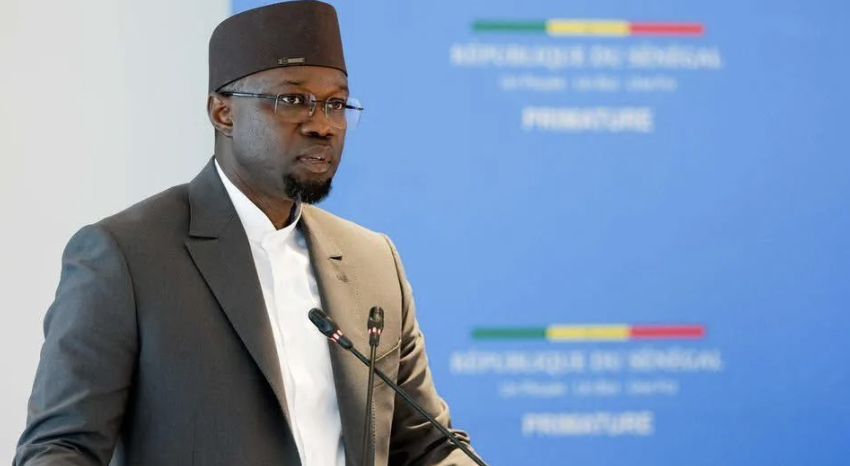
The 6 June 2026 deadline represents a crucial milestone for Ousmane Sonko’s political trajectory and the stabilisation of the ‘rupture’ regime. This date also marks the end of the National Assembly’s constitutional immunity period, constitutionally paving the way for its dissolution by the Head of State. Strategically, this stage is seen as the true “second round” of the 2024 presidential election. For the Prime Minister and his camp, the aim is to transform popular support into a solid parliamentary majority, essential for pushing through the structural reforms of the “PROJECT”. This anticipated shift should enable the legislative branch to be realigned with the executive, thereby facilitating the implementation of policies on economic sovereignty and judicial reform. For Ousmane Sonko, 6 June is not merely a date on the calendar; it is the starting point of a new era of governance in which the executive will have a free hand to redefine Senegal’s social contract without major parliamentary obstruction.
Dissolution reform: Pastef and the balance of powers
Pastef’s desire to limit the Head of State’s powers regarding the dissolution of the National Assembly marks an ideological break with Senegalese hyper-presidentialism. Although the current regime may retain the right to dissolve parliament after 6 June 2026, the long-term strategic argument is to safeguard the parliamentary mandate to ensure a better separation of powers. By proposing to regulate this power, Pastef seeks to prevent the Assembly from becoming a mere adjustment variable in the hands of the executive. This reform aims to strengthen institutional stability and protect the legislative branch from political ‘whims’.
For the ruling party, the challenge is to prove that the promised break with the past is not merely a slogan, but a profound overhaul of the Constitution to prevent any authoritarian drift in the future. This forms part of a vision of “virtuous governance” where the balance between the Presidential Palace and the National Assembly becomes the guarantee of a mature and resilient democracy.
Tragedy in Casamance: the cost of the fight against the criminal economy
The death of three Senegalese soldiers in an explosion during an anti-drug operation in North Sindian highlights the continuing danger in the border areas of Casamance. Strategically, this incident reveals the close intertwining of residual armed groups and the criminal economy linked to the cultivation of Indian hemp. The strategic imperative for the state is to maintain total security pressure to cut off the rebellion’s sources of funding and protect public health.
This deadly skirmish serves as a reminder that ‘peace’ in the South cannot be complete without the definitive dismantling of the drug trafficking networks that thrive in isolated areas. For the army, it is a stark reminder of the need for more effective detection capabilities and armoured protection. This sacrifice of soldiers highlights the human cost of territorial sovereignty in regions where the terrain and vegetation offer a tactical advantage to criminal networks. The state’s response must combine increased crackdowns on drug networks with accelerated economic development for rural communities to break the cycle of dependence on illicit crops.
Bacary Cissé versus the FSF: a crisis in sports governance
Bacary Cissé’s sensational statements against the Senegalese Football Federation (FSF) and the resulting complaint reveal a deep-seated crisis within the governing bodies of the national sport. By exposing rumours and internal malfunctions, the journalist and close associate of Sadio Mané is breaking the code of silence surrounding the management of the national team. The strategic argument here is one of transparency and accountability in a sector that generates billions and captivates millions of Senegalese. This legal battle illustrates the tensions between a governing body seeking to protect its image and critical voices calling for reform of the management model. For the FSF, the complaint aims to curb what it considers a destabilisation campaign in the run-up to major competitions. Conversely, for the critics, it is an opportunity to highlight the logistical and administrative shortcomings that could undermine the performance of the Lions of Téaranga. This case goes beyond the sporting arena to become a debate on freedom of information and the governance of public service providers in Senegal, in a context where the new regime advocates an end to impunity across all sectors.
Sacré-Coeur 3 – BP 15177 CP 10700 Dakar Fann – SENEGAL.
+221 33 827 34 91 / +221 77 637 73 15
contact@timbuktu-institute.org