 French
 Arabic
 English
 Portuguese
 Spanish
 Swahili


Sacré-Coeur 3 – BP 15177 CP 10700 Dakar Fann – SENEGAL.
+221 33 827 34 91 / +221 77 637 73 15
contact@timbuktu-institute.org

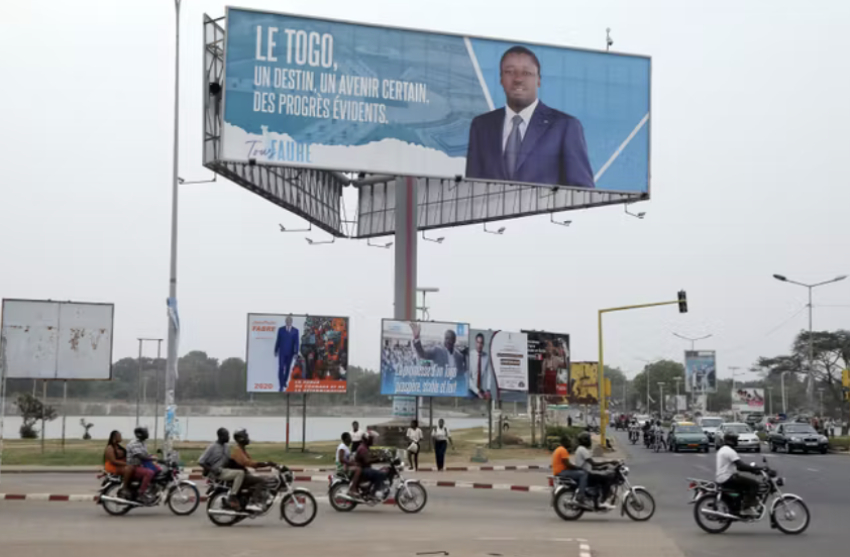 © REUTERS
Timbuktu Institute – Week 3 – March 2026
Download the full Sahel weather report
In March 2026, political developments in Togo are marked by rising tensions between the government and the opposition, against a backdrop of controversy surrounding the state of emergency and institutional reforms. Between restrictions on political activities and suspicions of a reshuffle of power, the political climate is becoming increasingly polarised.
Restrictions on political activities and controversy surrounding the state of emergency in the Savanes region
MP Brigitte Kafui Adjamagbo-Johnson, a leading figure in the Togolese opposition, was prevented by police and gendarmerie forces from continuing a parliamentary tour in the Savanes region, shortly after the vote against extending the state of emergency. This incident comes against a backdrop of high political tensions and has reignited criticism from the opposition, which accuses the authorities of exploiting the state of emergency to restrict people’s freedom of movement and the ability of elected representatives to carry out their duties. The mission was initially due to continue in the Kara region, considered a political stronghold of Faure Gnassingbé, but it could not proceed as planned. This episode highlights the growing politicisation of security measures, which can be perceived as tools of political control beyond their original purpose. It also underscores the risk of the erosion of institutional balances, against a backdrop of worsening tensions between the executive and the opposition.
Opposition to institutional reforms and mistrust of the government
On 12 March 2026, a coalition comprising the ‘Don’t Touch My Constitution’ Front, the Movement for the Majority of the People, the Monseigneur Kpodzro Movement and Light for Development in Peace held a joint press conference. At the conference, these opposition organisations denounced what they described as a strategy by the government aimed at consolidating its political grip: opening a dialogue with the opposition within the Permanent Consultation Framework, adopting new constitutional reforms, dissolving the National Assembly, organising early parliamentary elections, and then repositioning Faure Gnassingbé as President of the Council, endowed with renewed electoral legitimacy. This interpretation highlights the opposition’s structural mistrust of institutional reform processes, which it perceives as favouring the maintenance of the status quo. It also reflects a political climate marked by low levels of trust between the various actors, which is likely to undermine the credibility of dialogue mechanisms and fuel pre-election tensions. The political situation in Togo reveals growing tension surrounding issues of governance and institutional reform. In this context, the central challenge is to restore trust between political actors in order to prevent a lasting deterioration of the socio-political climate.
Sacré-Coeur 3 – BP 15177 CP 10700 Dakar Fann – SENEGAL.
+221 33 827 34 91 / +221 77 637 73 15
contact@timbuktu-institute.org