 French
 Arabic
 English
 Portuguese
 Spanish
 Swahili


Sacré-Coeur 3 – BP 15177 CP 10700 Dakar Fann – SENEGAL.
+221 33 827 34 91 / +221 77 637 73 15
contact@timbuktu-institute.org

 © Digital Journalist BBC Afrique
Timbuktu Institute - Week 4 - March 2026
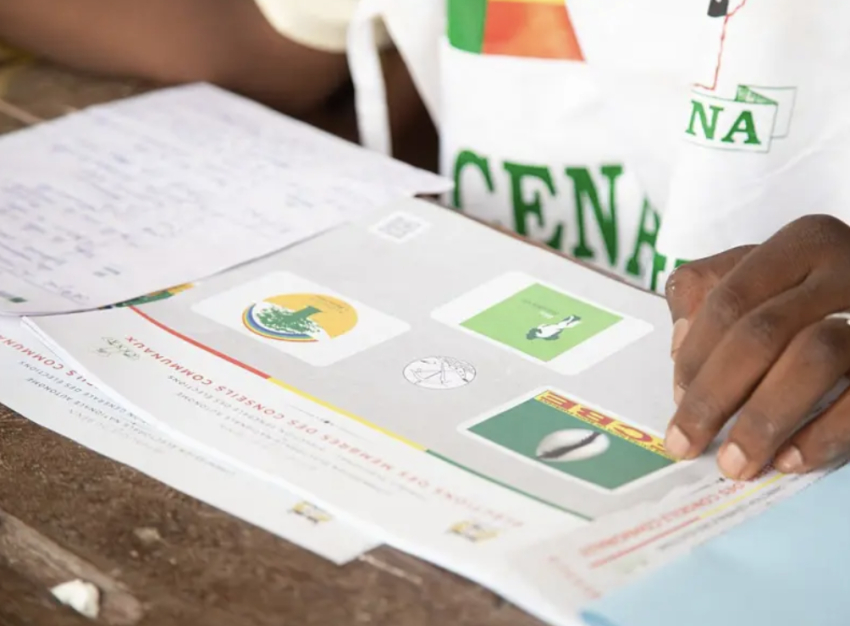
In Benin, the final phase before the April presidential election is underway. On 26 March, the Independent National Electoral Commission (CENA) officially launched the election campaign, scheduled to last fifteen days. This election, which is expected to mobilise around 8 million voters and over 5,000 observers, forms part of the first ‘general elections’ since the democratic renewal of 1990. It is against this backdrop that the CENA has called for a peaceful campaign, centred on the debate of ideas, whilst assuring that logistical and organisational preparations are nearing completion.
The presidential coalition’s candidate, the Minister of Economy and Finance, Romuald Wadagni, launched his presidential campaign on 27 March in the north of the country. His tour took him through the towns of Kandi, Banikoara and Ségbana, where he successively promised measures to improve agriculture, mechanisation, a pension scheme for farmers, security, the modernisation of the army and community policing, as well as the development of local infrastructure. As for the second candidate in the running, from the FCBE (Forces Bénin pour un Bénin Émergent) party, confidence remains high. “The match isn’t over yet (…) this isn’t a friendly match,” declared candidate Paul Hounkpè during the presentation of his vision for society. In his programme entitled “Rebuilding Beninese pride together”, his key pledges include reforms in education, health, sport, culture and the economy, as well as measures to boost youth employment and nurture local talent. On the political and security front, he proposes a government of national unity, the revision of electoral laws, the release of political prisoners, the strengthening of the defence forces and the securing of borders.
A presidential race already decided?
Already in the midst of a crisis, the main opposition party, Les Démocrates (LD), continues to crumble. Whilst the party is not participating in the presidential election, questions regarding its stance on the matter have been the subject of public debate. But whilst the party has officially announced that it will not support any of the licensed parties, this week has been marked by significant defections from its ranks. Firstly, after resigning in early March, Chabi Yayi (son of the party’s former president, Thomas Boni Yayi, and former secretary for external relations) announced his defection to Romuald Wadagni. A choice that is surprising to say the least, guided, according to him, by ‘pragmatism’, ‘carefully considered’ and the result of a ‘convergence’, as he explains. Subsequently, it was the party’s national communications secretary, Guy Mitopkè, who also announced his resignation, followed immediately by his decision to join Romuald Wadagni.
Meanwhile, the position of party president was the subject of controversy. Indeed, interim president Eric Houndété strongly opposed the decision of the LD National Council on 22 March to appoint Nourénou Atchadé as party leader. That was all it took for Eric Houndété to announce, on 26 March, his support for Romuald Wadagni. A choice he says he stands by ‘courageously’ whilst advocating for a ‘pluralistic Benin’. In a tit-for-tat move, the LD announced the suspension of Eric Houndété and 21 party officials. In light of this political soap opera, one question arises: what remains of the opposition in Benin? It would not be rash to suggest that these numerous defections reveal not so much a sincere endorsement of Wadagni’s project as a pragmatic reshuffling of the Beninese political landscape, where political survival seems to take precedence more than ever. In this sense, the outcome of this presidential election seems already a foregone conclusion in a scenario where the scope for competition is minimal for any opposition, however moderate, such as Paul Hounkpè’s FCBE party.
Sacré-Coeur 3 – BP 15177 CP 10700 Dakar Fann – SENEGAL.
+221 33 827 34 91 / +221 77 637 73 15
contact@timbuktu-institute.org