 French
 Arabic
 English
 Portuguese
 Spanish
 Swahili


Sacré-Coeur 3 – BP 15177 CP 10700 Dakar Fann – SENEGAL.
+221 33 827 34 91 / +221 77 637 73 15
contact@timbuktu-institute.org

 © TDR
© TDR
Timbuktu Institute – Week 4 – March 2026
In the final days of March, Yaoundé hosted an interministerial conference of the World Trade Organisation (WTO). From 26 to 29 March, Cameroon’s capital welcomed around 4,000 delegates from 160 countries. But just before that, a diplomatic incident led to Taiwan’s absence from the meeting. Indeed, the country announced that it would not attend the conference, following Cameroon’s designation of it as a ‘province of China’ on its delegation’s visa documents. Despite a subsequent “visa exemption” containing errors and omissions, the Taiwanese ministry concluded that Yaoundé had no sincere intention of resolving the issue. In truth, this episode illustrates Cameroon’s historical political alignment with China, more specifically, the shared economic interests between the two countries. Domestically for Yaoundé, this could be part of a domestic message aimed at reaffirming territorial unity in the face of separatist movements in the English-speaking regions (North-West and South-West). The WTO has not commented on the incident.
Furthermore,this 14th WTO Ministerial Conference took place against a backdrop of global tension. Specifically, the war in the Middle East threatening energy supplies, the four-year conflict in Ukraine, and Donald Trump’s second term, whose tariff policy is destabilising global trade. The conference was therefore aimed at reducing barriers to free trade, reviving WTO reform, addressing agricultural subsidies – particularly for cotton – and unblocking the Dispute Settlement Body, which has been paralysed by the deadlock over judges and by unilateral decisions by the US administration.
MPs’ term officially extended
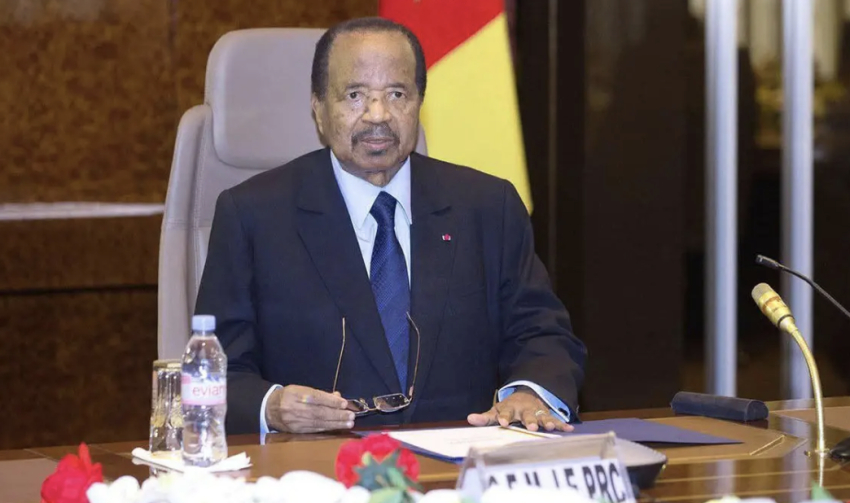
As expected following the parliamentary vote, the Head of State Paul Biya signed into law on 25 March 2026 a bill extending MPs’ terms until 20 December 2026, two days after its adoption by the National Assembly. The government justifies this extension on the grounds of ‘budgetary constraints’ and the logistical inability of Elecam (Elections Cameroon) to organise parliamentary and municipal elections under suitable conditions, emphasising the need to repair the damage caused by the 2025 post-election crisis and to secure funding for electoral operations. A justification that the opposition rejects, viewing this extension as a violation of the Constitution and a crisis of representation, arguing that the extended term MPs no longer reflect the will of the Cameroonian people. It must be said that this decision does not fit with efforts to calm the toxic socio-political atmosphere that has prevailed since Biya’s re-election, particularly as, against this backdrop, the death in prison of opposition figure Anicet Ekané in December 2025 continues to cause a stir. In Bafoussam (West Region), tributes organised from 26 to 28 March 2026 by his party – Manidem (African Movement for New Independence and Democracy) – in his memory,were interrupted on 27 March by the authorities. Manidem condemns acts of intimidation and restrictions on civil liberties that prevented the activities from continuing, notably the photographic exhibition at the party’s headquarters. These recent developments reflect growing tension between the demands of institutional governance and the democratic expectations of a section of Cameroonian society. Furthermore, they inevitably raise fundamental questions about the political system’s ability to reconcile stability and representativeness in a particularly fragile social and political context.
Sacré-Coeur 3 – BP 15177 CP 10700 Dakar Fann – SENEGAL.
+221 33 827 34 91 / +221 77 637 73 15
contact@timbuktu-institute.org