 French
 Arabic
 English
 Portuguese
 Spanish
 Swahili








Sacré-Coeur 3 – BP 15177 CP 10700 Dakar Fann – SENEGAL.
+221 33 827 34 91 / +221 77 637 73 15
contact@timbuktu-institute.org

 © Facebook Romuald Wadagni
Timbuktu Institute – Week 1 – May 2026
Download the full Sahel weather report
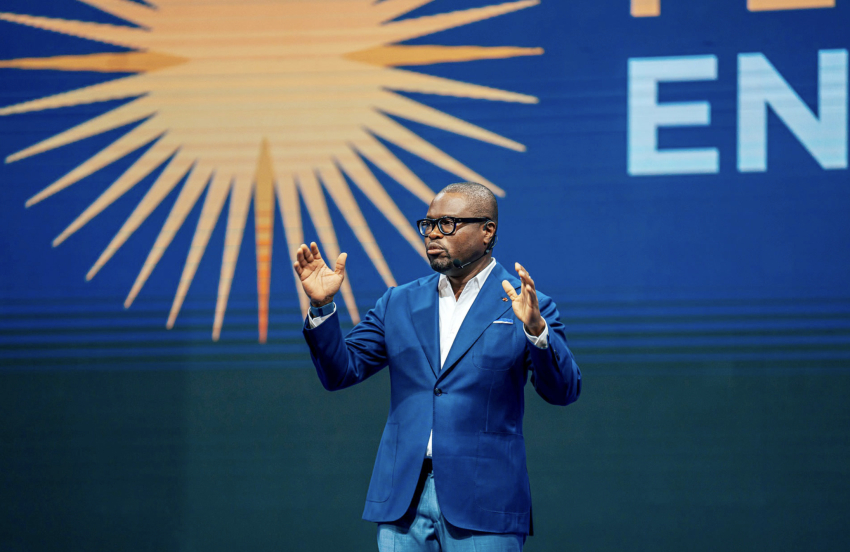
With the inauguration of the newly elected president, Romuald Wadagni, scheduled for 24 May, a wave of legal controversy appears to be sweeping across Benin. In an appeal filed on 28 April, a lawyer named Précieux Noël Dagan submitted a petition to the Constitutional Court seeking a ruling on the non-convening of the Senate in connection with the forthcoming swearing-in ceremony. Indeed, according to Article 53 of the Constitutional Law amended in December 2025, the oath is administered by the President of the Constitutional Court, in the presence of members of the institution, the National Assembly, as well as the bureaux of the Senate, the Supreme Court and the Court of Auditors. As the Senate has not yet been constituted, the petitioner does not contest the principle of the swearing-in but requests that the legal provisions applicable to the practical impossibility of convening the Senate be formally recognised.
This situation has been the subject, over several days, of sharp differences of interpretation among many legal experts and practitioners. Drawing on a civil law analogy, the former President of the Constitutional Court, Théodore Holo, argued that “the absence of a family member at a wedding does not invalidate the ceremony if the witnesses and the registrar are present”. A weak argument, according to Nourou-dine Saka Saley, a lawyer and member of the opposition party Les Démocrates (LD), who asserted – drawing on the same analogy – that “if the family were expressly mentioned in the laws of marriage, no marriage would be valid in its absence.” On 5 May, the Constitutional Court put an end to the controversy, ruling that the appeal lodged by the lawyer Précieux Noël Dagan was inadmissible. The high court justified its decision on the grounds that the applicant lacked standing. Whilst it remains to be seen whether the Senate will be in place by the date of the inauguration, it is clear that the Court’s decision, by refraining from ruling on the substance of the matter, has reignited the debate on the legitimacy and coherence of the institutional reform process underway in Benin.
The FCBE party joins the presidential camp
On Saturday 9 May, following a national party council meeting, the Forces Cauris pour un Bénin Émergent (FCBE) announced their decision to join the presidential camp, effective from the date of the inauguration of the newly elected president, Romuald Wadagni. The so-called “moderate opposition” party came second in the April presidential election with just 5.73%. Furthermore, a few days earlier, its national secretary Paul Hounkpè (a presidential candidate) announced his resignation. Whilst many observers have long pointed out that the label “moderate opposition” was a euphemism for collusion with the presidential camp, does this rallying confirm their claims?
According to the FCBE, this new direction is explained by “the hope that the elected President of the Republic inspires in correcting and improving the shortcomings of the outgoing regime”, as well as the governance agreements concluded with majority parties (the Progressive Union Le Renouveau and the Republican Bloc). As the political opposition landscape becomes increasingly sparse, the Les Démocrates party reaffirmed, following an extraordinary National Council meeting held on 9 May, its place in the opposition. In this regard, the party intends to “exercise a constructive and vigilant republican opposition towards the new government”. This thus constitutes a way of limiting the damage for a party weakened by an internal crisis, in a context where the marginalisation of the opposition in Benin’s political arena is more evident than ever.
Sacré-Coeur 3 – BP 15177 CP 10700 Dakar Fann – SENEGAL.
+221 33 827 34 91 / +221 77 637 73 15
contact@timbuktu-institute.org