 French
 Arabic
 English
 Portuguese
 Spanish
 Swahili




Sacré-Coeur 3 – BP 15177 CP 10700 Dakar Fann – SENEGAL.
+221 33 827 34 91 / +221 77 637 73 15
contact@timbuktu-institute.org

 © AFP/GETTY IMAGES
Timbuktu Institute – Week 1 – May 2026
Download the full Sahel weather report
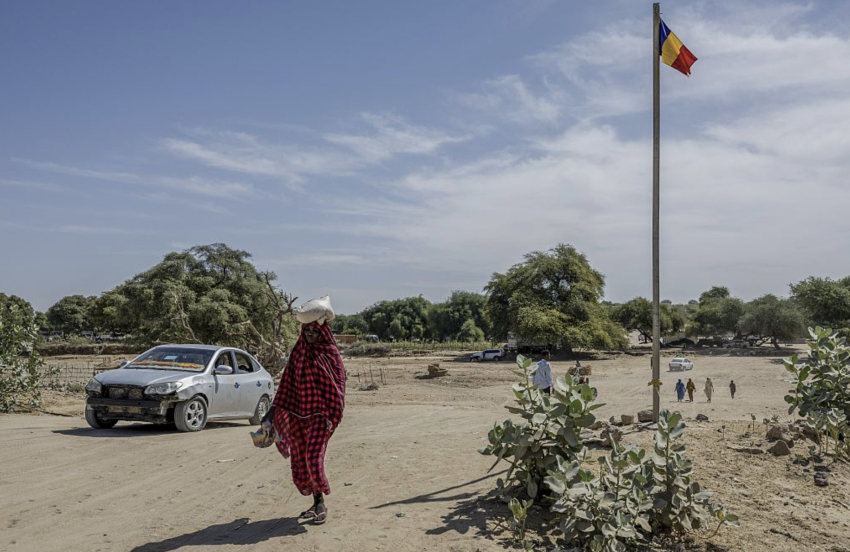
For over a decade, Chad has faced the threat of Boko Haram in the Lake Chad region. This vast marshy expanse, straddling Nigeria, Cameroon, Niger and Chad, has since become a sanctuary for the jihadist group and its rival, ISWAP. Despite numerous successive military operations carried out by the Chadian authorities, the jihadist group continues to regularly target the armed forces and the local population in the area. On 4 May, the group Boko Haram attacked the Chadian military base at Barka Tolorom, killing between 24 and 25 soldiers and wounding around 40 others. President Mahamat Idriss Déby Itno condemned the attack, describing it as “cowardly” and reaffirming his determination to continue the fight “until the total eradication” of the terrorist threat. The Head of State also declared a state of emergency for a period of 20 days, as well as three days of national mourning.
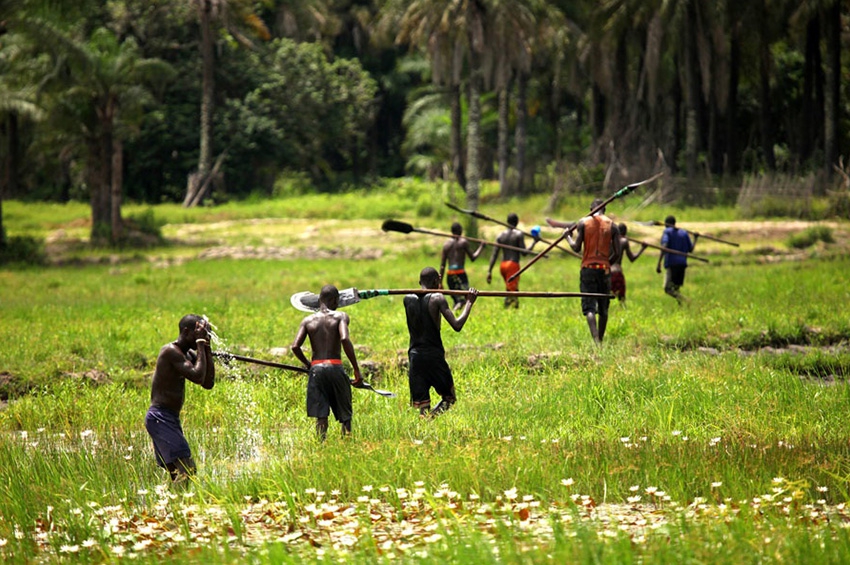
In retaliation, the Chadian army launched air strikes from 8 May on islands in Lake Chad controlled by Boko Haram, notably on Shuwa Island, a meeting point of the borders of Nigeria, Niger and Chad. According to Jeune Afrique, fishermen, mostly from the town of Doron Baga and Taraba State, were operating in these waters after paying a fee to Boko Haram for access. According to a representative of a fishermen’s union, around forty of them are reported missing, likely having drowned as a result of the strikes. The Chadian army has so far made no official statement on the matter. As a reminder, back in October 2024, Chadian retaliatory strikes on Tilma Island had killed civilians. When called to account, the army had denied these accusations. This is not the first time such a situation has occurred. In October 2024, Chadian retaliatory strikes on Tilma Island had already been accused of killing civilians, accusations which the army had denied at the time. These incidents, if confirmed, illustrate the complexity of the situation in the Lake Chad basin, where jihadists, civilians and military forces coexist in a vast border area that is clearly difficult to control.
Opposition leaders behind bars
It appears that the return to the political scene of the opposition coalition, the Group for Consultation among Political Actors (GCAP), was short-lived. After the Supreme Court ruled to dissolve it, eight leaders of the former GCAP were sentenced on 8 May to eight years in prison by the Special Criminal Chamber of the N’Djamena High Court.
The verdict was handed down on Friday during a hearing held directly at Klessoum Remand Centre, where the defendants had been held since their arrest on 25 April. They were found guilty of rebellion, participation in an insurrectionary movement, unlawful assembly and illegal possession of military weapons. These arrests followed the dissolution of their organisation and plans for a march dubbed the “march of indignation and dignity”, scheduled for 2 May but ultimately cancelled following the movement’s dissolution. Against the backdrop of the ongoing shrinking of civic space in Chad, the speed and intransigence with which this fringe of the opposition has been sidelined raise questions. Moreover, it appears to be a new episode in the slide towards authoritarian consolidation initiated by President Déby since his re-election in 2024.
Sacré-Coeur 3 – BP 15177 CP 10700 Dakar Fann – SENEGAL.
+221 33 827 34 91 / +221 77 637 73 15
contact@timbuktu-institute.org