 French
 Arabic
 English
 Portuguese
 Spanish
 Swahili


Sacré-Coeur 3 – BP 15177 CP 10700 Dakar Fann – SENEGAL.
+221 33 827 34 91 / +221 77 637 73 15
contact@timbuktu-institute.org

Timbuktu Institute – Week 3 – may 2026
Download the full Sahel weather report
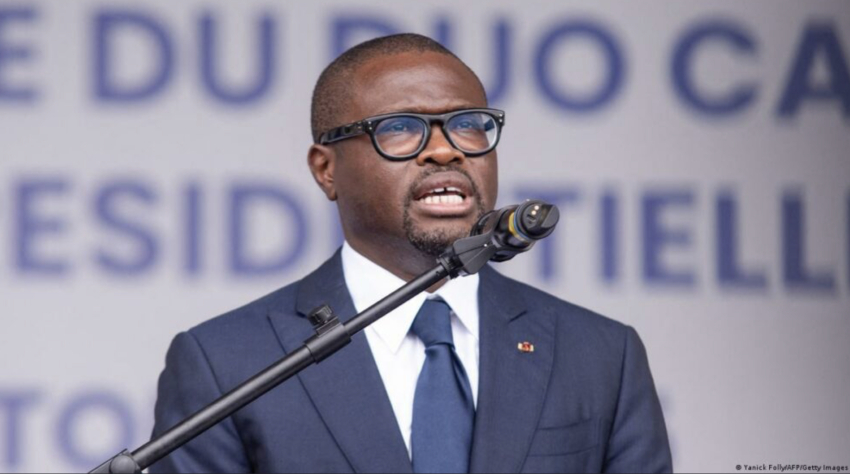
He will be the fifth president elected since the advent of democratic renewal in 1990. On 24 May, at the presidential palace in Cotonou, Romuald Wadagni was officially sworn in as president, succeeding Patrice Talon after a decade in power. Elected on 12 April with over 94% of the vote against a minor opponent, his victory was a formality. At the age of 49, the former Minister of the Economy takes office for a seven-year renewable term. In his inauguration speech, Wadagni sought to emphasise the need to continue the projects launched by his predecessor, in a spirit of continuity. Nevertheless, he did not fail to stress the need to make economic growth tangible, a promise he had already made during his election campaign: “National growth only makes sense when it becomes visible in people’s everyday lives,” he acknowledged. In a country where the majority of the population is under twenty-five, the new president sought to be a bearer of hope: “To the young people of Benin who reject the old fatalism and want to succeed here at home through their own hard work, I want to say this: Benin believes in you and will give you the opportunities to succeed.”
Furthermore, two major challenges lie ahead. On the security front, the north of the country remains vulnerable to recurring jihadist attacks. On this point, Wadagni promises that “the state will stand firm against anything that threatens our cohesion and our security”. On the diplomatic front, the new president has shown a conciliatory stance by calling for “working together” with his regional neighbours – Niger and Burkina Faso in particular – who, incidentally, regularly accuse Cotonou of seeking to destabilise them. In an encouraging sign, Niger’s Prime Minister Ali Mahaman Lamine Zeine was warmly welcomed, and the foreign ministers of Burkina Faso and Mali were also present at the ceremony. On another front, whilst Wadagni has pledged that “press freedom is among the priorities”, the state of civil and individual liberties will be one of the key areas to watch in the coming months, in a country where some were quick to highlight a shift towards authoritarianism under former President Talon. Finally, shortly after his inauguration, the new president appointed his first government, comprising 24 members, including several former ministers from the Talon era.
Over 90 kg of cocaine seized
At the heart of West Africa, which has become a hub for global maritime drug trafficking, Cotonou continues to play a key role. Between 16 and 17 May, Benin’s Special River and Maritime Police Unit seized over 90 kg of cocaine in the port of Cotonou. Officers discovered five bales of the substance concealed in the strainer of a foreign-flagged vessel during a surveillance operation in the harbour basin. Analyses confirmed the nature of the substances, which were handed over to the OCERTID (Central Office for the Suppression of Illicit Trafficking in Drugs and Precursors) for further investigation. Given the large quantity seized, this could be seen as evidence not only of the operational progress made by the security forces, but also and above all of the continuing scale of cocaine flows transiting through the Gulf of Guinea towards European markets. Given that the links and connections between criminal and jihadist networks have been established by numerous studies, this major seizure serves as a reminder of the scale of the security challenges facing the country’s new government.
Sacré-Coeur 3 – BP 15177 CP 10700 Dakar Fann – SENEGAL.
+221 33 827 34 91 / +221 77 637 73 15
contact@timbuktu-institute.org