 French
 Arabic
 English
 Portuguese
 Spanish
 Swahili




Sacré-Coeur 3 – BP 15177 CP 10700 Dakar Fann – SENEGAL.
+221 33 827 34 91 / +221 77 637 73 15
contact@timbuktu-institute.org

Timbuktu Institute – Week 3 – may 2026
Download the full Sahel weather report
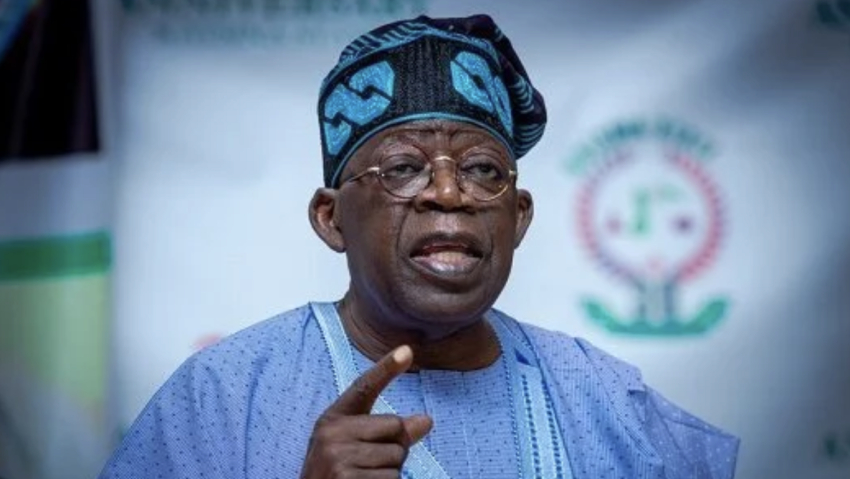
In Nigeria, the next presidential election in January 2027 no longer seems so far off, at least in the minds of politicians. Whilst the opposition is already, as best it can, gearing up for battle, it is now the ruling party’s turn to step up its game. Indeed, on 24 May, the current president, Bola Tinubu, was officially nominated as the candidate of the ruling APC (All Progressives Congress) party, following internal primaries that were little more than a formality. Facing a single challenger, the businessman Stanley Osifo, a complete unknown to the general public, the outgoing president met with no resistance within his party. His intention to seek a second term had never been a secret: the number 8 laid on its side – a symbol of infinity and two four-year terms – has adorned his headgear since he came to power in 2023.
Tinubu is in a strong position heading into 2027. The APC now controls 31 of the country’s 36 states, up from 21 in 2023, following a wave of defections by governors from the opposition. Facing him is a fragmented and weakened opposition that has yet to nominate its candidates. And yet, Tinubu must defend a mixed record. While his economic reforms have reassured investors and revived growth, they have also severely eroded Nigerians’ purchasing power: inflation exceeding 30% in 2024, petrol prices quadrupling in four years and the poverty rate rising from 56% to over 60% of the population, according to the World Bank. It is therefore on this mixed record that the 2027 presidential election will largely be decided.
A marked intensification of the Boko Haram threat?
It is well known that security challenges have been a central concern for the country’s various authorities for the past two decades. As the country heads towards a new presidential election, the dramatic resurgence of Boko Haram is hardly reassuring. On 15 May, armed men attacked several schools in Oyo State, in southern Nigeria, abducting, according to sources, between 25 and 39 pupils aged between 2 and 16, as well as seven teachers. A few days later, on 22 May, the Nigerian army formally attributed these abductions to Boko Haram, stating that the jihadist group had been driven from its strongholds in the north of the country by large-scale military operations, forcing it to retreat southwards. In doing so, this episode illustrates a worrying trend. In this case, the military successes recorded in the north-east (where joint Nigerian-US airstrikes are reported to have killed 175 jihadists in the space of a few days) appear to have had the perverse effect of shifting the threat to regions that had hitherto been relatively spared.
On the same day, in the early hours of 22 May, suspected ISWAP (Islamic State West Africa Province) terrorists launched an attack on a forward military base in Tungushe, in Borno State. They were repelled after a fierce exchange of fire. In the aftermath, troops from Operation Hadin Kai carried out search operations at around 6.00 am, neutralising at least 15 insurgents, according to military sources. Weapons, ammunition, grenades and equipment abandoned by the fleeing insurgents were recovered from the scene. Military sources report high morale among the troops and undiminished operational readiness. It thus appears, ultimately, that this resurgence of jihadist violence serves as a reminder that security will remain, in 2027, as much an electoral issue as a national imperative.
Sacré-Coeur 3 – BP 15177 CP 10700 Dakar Fann – SENEGAL.
+221 33 827 34 91 / +221 77 637 73 15
contact@timbuktu-institute.org