 French
 Arabic
 English
 Portuguese
 Spanish
 Swahili


Sacré-Coeur 3 – BP 15177 CP 10700 Dakar Fann – SENEGAL.
+221 33 827 34 91 / +221 77 637 73 15
contact@timbuktu-institute.org

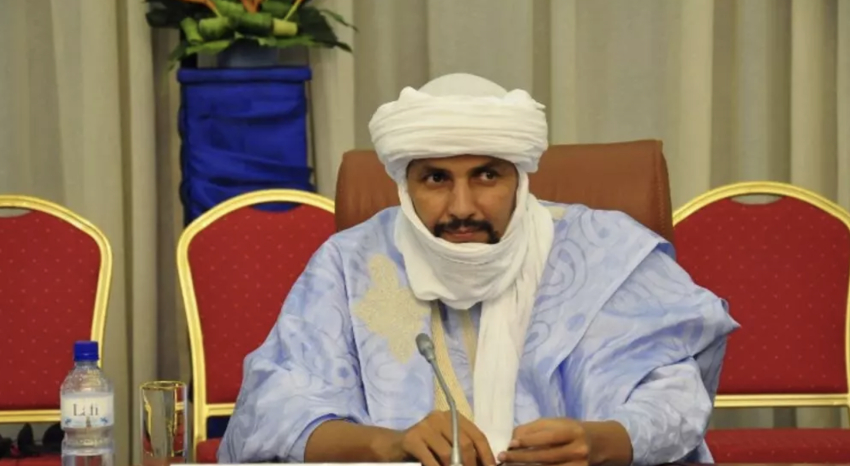 © AFP PHOTO / AHMED OUOBA
Timbuktu Institute – Week 3 – may 2026
Download the full Sahel weather report
The town of Kidal, in northern Mali, has a new leader: Alghabass Ag Intalla. Whilst the region is at the heart of tensions between the army and the rebels, this Tuareg leader has managed to establish himself by forming a team around him to run the town. To understand his strategy for controlling the situation, one must look at his ‘inner circle’, a strategic mix of people from very different backgrounds. Among those around him are traditional Tuareg leaders, former military personnel well-versed in the art of war, and figures close to jihadist movements. This highly complex alliance enables Alghabass Ag Intalla to maintain his authority on the ground whilst broadening his communication. The formation of this highly organised group around Kidal’s new leader is bad news for the Malian government. It shows that the rebellion is organising and growing stronger, making it even more difficult for the government to retake this area.
The main roads: an obstacle course
Road traffic is currently facing its darkest hours. Lorries carrying various goods, foodstuffs and essential supplies are being blocked en route as soon as they attempt to enter the Malian capital. The pressure exerted by armed groups is becoming increasingly felt; and this strategy of imposing a blockade on such a scale is clearly intended to paralyse the heart of the country, undermining the national balance. The repeated attacks are causing concern among transport companies, which are being forced to turn their lorries back in order to minimise both human and material losses. The FAMa are responding by closely monitoring the movements of these groups and are determined to regain control of the already delicate situation. Breaking this blockade is essential to allow lorries to move freely and ensure the capital is resupplied.
When military operations have a severe impact on the civilian population
A new tragedy has struck the civilian population in central Mali. At least ten civilians lost their lives in drone strikes carried out by the Malian army, whilst they were travelling to celebrate a wedding . The attack struck public transport vehicles near the town of Amoustarat, located in the Gao region. According to accounts from relatives of the victims and local authorities, the death toll could rise as several of the injured are in a serious condition. Incidents of this kind involving the use of drones by the Malian Armed Forces (FAMa) occur regularly in this conflict zone, where the army is hunting down armed groups. While the military authorities defend the effectiveness of these tools in better targeting the enemy, human rights organisations are outraged by the rising number of civilian casualties. For the current regime, this latest tragedy further erodes the support of local populations in a region that is already extremely unstable.
Furthermore, it is noted that the Malian army is stepping up its offensives on the ground and achieving tactical successes in its fight against the terrorist groups destabilising the region. The major problem lies in the fact that this intensification of military operations is accompanied by a critical rise in reported attacks against local populations. This strategy is eroding the fragile trust that rural residents have in the defence and security forces. This climate of fear and injustice is highly likely to drive young people towards the recruitment networks of insurgent groups.
The AES faces the Malian crash test
The Sahel Joint Force (SJF), comprising Mali, Niger and Burkina Faso, is facing its first major crisis. Repeated attacks in northern and central Mali, particularly strikes that have hit civilians and the advance of rebels, are putting the SJF’s solidarity to the test. Whilst the organisation was created in part to prove that the Sahel countries could secure the region without the help of foreign powers or the UN, the difficulty in securing Bamako is complicating the task. For Niger and Burkina Faso, the situation is becoming untenable. The three countries had promised to provide mutual military assistance, but the Malian government now appears overwhelmed on its own territory, which threatens the security situation of its neighbours. This crisis is forcing the leaders of the AES to review their defence strategy: either they succeed in coordinating a joint and effective military response to save Mali, or the alliance will suffer a blow that will complicate future cooperation.
Disagreements over Mali are straining relations between Algiers and Moscow
Relations between Algiers and Moscow are at breaking point. Traditionally allies, the two countries now display deep differences over the handling of the Malian crisis. Algeria views the growing influence of Russia and its military partners in Mali with great suspicion, a presence it considers destabilising for its own border security and which undermines its long-standing diplomatic efforts in the region. To demonstrate its dissatisfaction in a dramatic manner, Algiers has abandoned its usual neutrality. The Algerian ambassador to Ukraine visited the site of a Russian missile strike in Kyiv, openly describing the act as an attack. This strong diplomatic gesture is a direct message to the Kremlin: to protect its strategic interests in the Sahel, Algeria is prepared to jeopardise its alliance with its main arms supplier.
Consequences of the attacks: President Goïta consolidating power?
The military regime in power in Bamako has skilfully exploited the psychological and security shock caused by the 25 April attacks to strengthen its political control over the entire country. This major security crisis has been used to centralise all levers of national defence and public security in the hands of the transitional president. By taking full control of the military apparatus, President Assimi Goïta has succeeded in silencing the democratic opposition and stifling criticism from within the regime itself. This method of permanent governance would now rule out any prospect of a return to civilian rule or a democratic transition in the short term in Mali.
Fear of losing their land divides communities
The forced displacement of thousands of people and repeated waves of violence across the country are now fuelling deeply worrying local concerns about the potential loss of inhabited territories. This conflict in the Sahel, initially perceived as a purely security-related crisis against terrorism, is now taking an identity-based turn that is extremely dangerous for national unity. Residents of the affected regions sometimes perceive the army’s operations not as a liberation, but as an attempt to exclude them from their ancestral lands, which makes national reconciliation difficult. This social divide weakens community alliances and stokes long-standing tensions that go beyond the simple framework of the war against the insurgents.
Russian ally accused of using banned weapons
Russian forces from the Africa Corps, official partners of the Bamako government, face very serious formal accusations regarding the widespread use of cluster munitions during air strikes on areas inhabited by civilians. For the Malian junta, the decision to authorise the use of these munitions, banned under international treaties, demonstrates a clear determination to eradicate the rebellion at any cost, without regard for the terrible human collateral damage. This use of banned weapons further isolates Malian diplomacy on the international stage whilst creating a lasting danger for the region’s civilian populations. The debris from these bombs continues to threaten people long after the fighting has ceased, preventing farmers from returning to their fields.
Sacré-Coeur 3 – BP 15177 CP 10700 Dakar Fann – SENEGAL.
+221 33 827 34 91 / +221 77 637 73 15
contact@timbuktu-institute.org