 French
 Arabic
 English
 Portuguese
 Spanish
 Swahili


Sacré-Coeur 3 – BP 15177 CP 10700 Dakar Fann – SENEGAL.
+221 33 827 34 91 / +221 77 637 73 15
contact@timbuktu-institute.org

 © Afrik 2026
Timbuktu Institute – Week 3 – may 2026
Download the full Sahel weather report
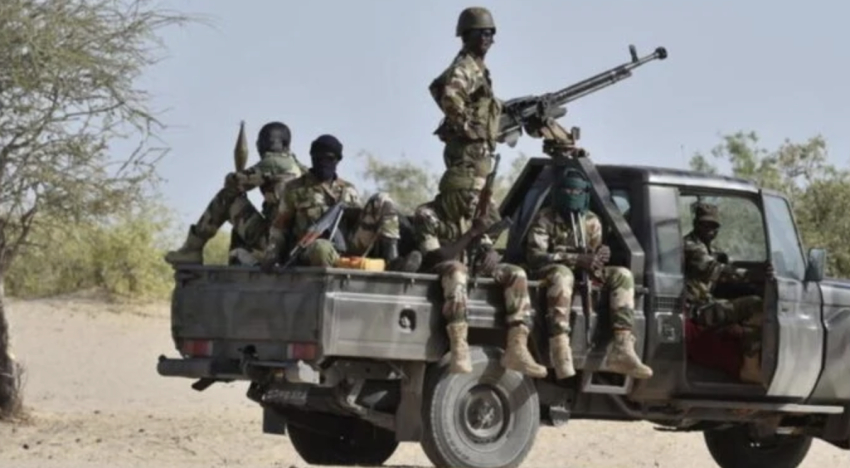
The heavy human toll recorded during the violent attack on the Garbougna military base serves as a brutal reminder of the persistent vulnerability of the Nigerien army’s positions. This tactical setback, which cost the lives of at least sixty professional soldiers, clearly demonstrates that armed groups retain a significant capacity for planning and coordination in the Sahel. The attackers are still managing to bypass the defensive systems put in place, thus demonstrating that the transitional government in Niamey is far from having achieved total control of the territory. This reality on the ground stands in stark contrast to the reassuring official rhetoric regarding the technological and logistical build-up of the national troops.
The border blockade: major operations
To address the deteriorating security situation and the fact that its borders are the scene of repeated attacks, the government of Niger has responded by opening two major new military fronts along the borders with Algeria and Chad. The strategic aim of this manoeuvre is to block the advance of mobile armed groups and to paralyse trafficking networks by permanently cutting off their traditional supply and retreat routes. By deploying special forces to these remote, hard-to-reach desert areas, Niger is seeking to reaffirm the state’s sovereignty over its geographical peripheries and to reassure its regional partners in the face of the transnational threat.
The oil agreement with China: a new lease of life for the economy
The final signing of the new oil export agreement between Niger and China provides vital financial support for the economic survival of the military regime in Niamey, following more than a year of technical deadlocks and severe political tensions. By securing oil revenues through the Chinese state-owned company Beijing, the Nigerien government has finally obtained the funds needed to finance its heavy military campaign and pay for its cross-border military operations. This major trade agreement enables the military regime to effectively resist international financial isolation and withstand the economic pressures or sanctions imposed by certain traditional Western countries. Crude oil thus became Niger’s main diplomatic weapon for preserving its political autonomy and consolidating its policy of breaking with the status quo in the sub-region.
Sacré-Coeur 3 – BP 15177 CP 10700 Dakar Fann – SENEGAL.
+221 33 827 34 91 / +221 77 637 73 15
contact@timbuktu-institute.org