 French
 Arabic
 English
 Portuguese
 Spanish
 Swahili

Sacré-Coeur 3 – BP 15177 CP 10700 Dakar Fann – SENEGAL.
+221 33 827 34 91 / +221 77 637 73 15
contact@timbuktu-institute.org

 © TDR
© TDR
Timbuktu Institute Week 3 - June 2026
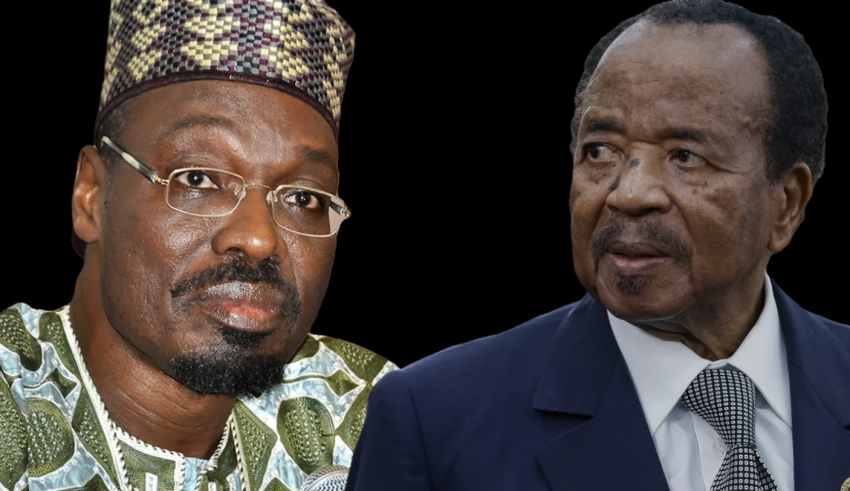
Since President Paul Biya’s reelection in October 2025, the Cameroonian opposition has found itself increasingly mired in a difficult situation. While the opposition believed it could capitalize on the pressure from post-election protests, the government in Yaoundé has firmly maintained the balance of power in its favor, to such an extent that the opposition now appears increasingly marginalized on the political scene. In this context, opposition figure Issa Tchiroma Bakary, who finished second in the presidential election, has been attempting—from his exile in The Gambia—to save face, at least as much as possible from afar. On June 15, the former Minister of Employment announced that he had filed two complaints with the Paris Court of Justice against President Paul Biya and some twenty senior Cameroonian officials, including the Secretary-General of the Presidency, Ferdinand Ngoh Ngoh. Citing the principle of universal jurisdiction, he denounces the crackdown that followed the 2025 presidential election and asserts that several thousand Cameroonians remain detained under conditions that violate fundamental rights. He also claims to have been conducting an investigation since October 2025 to gather testimonies, evidence, and information to establish accountability at all levels of the chain of command.
While in Yaoundé, the focus is currently on negotiations to overhaul the institutional framework, does Issa T. Bakary’s complaint amount to yet another futile effort against a regime whose desire for dynastic perpetuation currently faces no organized opposition forces? This question is all the more legitimate given that, within the opposition, the need to reorganize appears to be one of the top priorities. It is in this vein that the Movement for the Renaissance of Cameroon (MRC), led by opposition figure Maurice Kamto, is working to restore party unity following the divisions caused by the rejection of his presidential candidacy. Indeed, deprived of their own candidate, many MRC activists and leaders chose at the time to support other contenders for the presidency, notably Issa T. Bakary and Bello Bouba Maïgari. This fragmentation of support had exacerbated tensions within the party, with some senior members going so far as to actively participate in the campaigns of rival candidates. Despite this desire for unity, some critical figures within the party have refused to respond to the commission’s summons, illustrating the persistence of internal tensions. The MRC nevertheless hopes to put the divisions stemming from the 2025 presidential election behind it and reposition itself as one of the main forces of the Cameroonian opposition ahead of the upcoming local and legislative elections.
Yaoundé Strengthens Its Border with Nigeria
In recent weeks, neighboring Nigeria has been facing an unprecedented resurgence of pressure from terrorist and armed groups. Aware of this, Cameroon wants to show its support. Indeed, on June 16, Yaoundé and Abuja strengthened their security cooperation with the signing in Yaoundé of a memorandum of understanding on defense. The agreement was signed by Cameroon’s Minister Delegate to the Presidency in charge of Defense, Joseph Beti Assomo, and his Nigerian counterpart, General Christopher Gwabin Musa, during a ceremony held at the Cameroonian Ministry of Defense. Presented as an important milestone in their bilateral relations, this initiative reflects the two countries’ shared commitment to consolidating peace and security in a region facing multiple security challenges, particularly cross-border threats. Both parties emphasized the need to strengthen coordination between their defense and security forces, as well as intelligence sharing, in order to improve the effectiveness of the fight against armed groups and criminal networks operating on both sides of the border. The rationale behind this approach is thus to strengthen regional stability and promote a secure environment conducive to the economic and social development of the populations of both countries, as well as the subregion as a whole.
Sacré-Coeur 3 – BP 15177 CP 10700 Dakar Fann – SENEGAL.
+221 33 827 34 91 / +221 77 637 73 15
contact@timbuktu-institute.org