 French
 Arabic
 English
 Portuguese
 Spanish
 Swahili


Sacré-Coeur 3 – BP 15177 CP 10700 Dakar Fann – SENEGAL.
+221 33 827 34 91 / +221 77 637 73 15
contact@timbuktu-institute.org

 © ONAMA Tchad
Timbuktu Institute Week 3 - June 2026
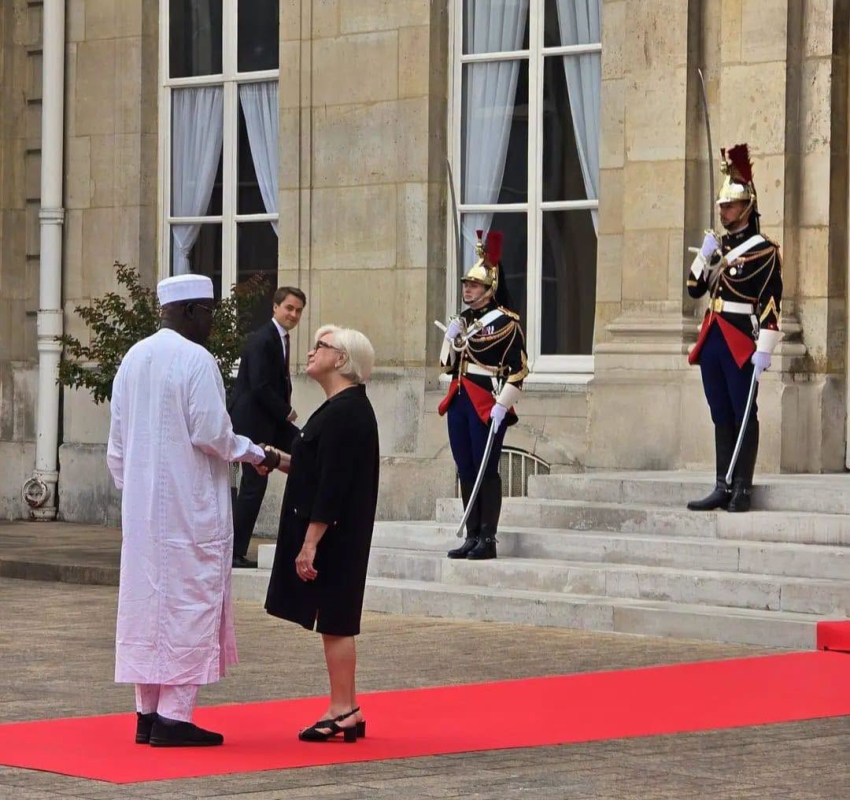
The reconciliation between France and Chad—which began early this year with the aim of establishing a limited but more operational partnership—is gaining momentum, even if it is proceeding discreetly. Although Paris and N’Djamena have limited themselves to affirming their willingness to collaborate without detailing the true nature of the partnership, things appear to be moving along smoothly in diplomatic circles. The latest news: a meeting in Paris on June 15 between Chad’s Minister of the Armed Forces, Issakha Malloua Djamous, and his French counterpart, Catherine Vautrin, on the sidelines of the Eurosatory trade show. On the security front, the proposed new cooperation is expected to focus primarily on training, intelligence, and capacity-building for the Chadian military, against a regional backdrop marked by instability in the Sahel, the war in Sudan, and tensions in Libya. N’Djamena is particularly interested in receiving French support in the areas of aviation and intelligence, while Paris seeks to reestablish its strategic projection capabilities in the region.
The rapprochement also includes an economic dimension. A Chad-France economic forum is scheduled to take place in Paris in September 2026 to rally French companies behind the “Chad Connexion 2030” development plan, with investments targeting the energy, infrastructure, agriculture, and mining sectors. However, this positive momentum does not seem capable of sweeping certain points of concern under the rug, notably Chad’s relations with the United Arab Emirates in the context of the Sudanese conflict, as well as the situation of opposition figure Succès Masra, who is serving a twenty-year prison sentence. Nevertheless, while these issues remain sensitive, they do not currently constitute real obstacles to the overall resumption of the partnership between Paris and N’Djamena, following the withdrawal of French forces in January 2025 and the closure of military bases.
While N’Djamena is fine-tuning its rapprochement with France, a rift is emerging between Cameroon and Chad over the proposed railway line connecting Ngaoundéré to N’Djamena, a major instrument of regional integration in Central Africa. Approved in early June 2026 by Cameroonian authorities under President Paul Biya, the preferred option calls for a corridor passing through Cameroon’s Far North region (Garoua, Maroua, Kousséri) before reaching the Chadian capital—a route championed by Yaoundé for its economic benefits and its role in opening up the northern regions. But this decision was immediately contested by Chad, which points out that no joint approval has been formalized and advocates for an alternative better suited to its agricultural production areas. However, Yaoundé has made it clear that Chad must first state its position before a final decision is reached by the two countries.
Tensions Within the Government
On the domestic front, disagreements are coming to light within the executive branch, specifically between Foreign Minister Abdoulaye Sabre Fadoul and his counterpart in the Ministry of Finance, Tahir Hamid Nguilin. During a Senate hearing on June 15, the foreign minister publicly questioned the implementation of budgetary guidelines, arguing that working conditions for diplomats abroad would only improve once the budget law had “more power than the finance minister.” This statement, perceived as a direct criticism of the influence of Tahir Hamid Nguilin—one of the pillars of Mahamat Idriss Déby Itno’s administration and head of the “Chad Connexion 2030” strategic plan—sparked strong reactions within the government. Privately, several sources acknowledge that tensions related to budget execution have existed for several years, with some ministries complaining that their allocations fall short of the approved budget estimates. The foreign minister’s public statement, however, marks a turning point, to the extent that it has forced the presidency to consider mediation. A mediation meeting between the two ministers, under the authority of the head of state, Mahamat Idriss Déby Itno, is being considered. Already known for his strong stances, Abdoulaye Sabre Fadoul had held several government positions since 2011 and had made a name for himself at the start of the transition in 2022 through a conflict with the presidency, which had cost him his position at the time.
Sacré-Coeur 3 – BP 15177 CP 10700 Dakar Fann – SENEGAL.
+221 33 827 34 91 / +221 77 637 73 15
contact@timbuktu-institute.org