 French
 Arabic
 English
 Portuguese
 Spanish
 Swahili


Sacré-Coeur 3 – BP 15177 CP 10700 Dakar Fann – SENEGAL.
+221 33 827 34 91 / +221 77 637 73 15
contact@timbuktu-institute.org

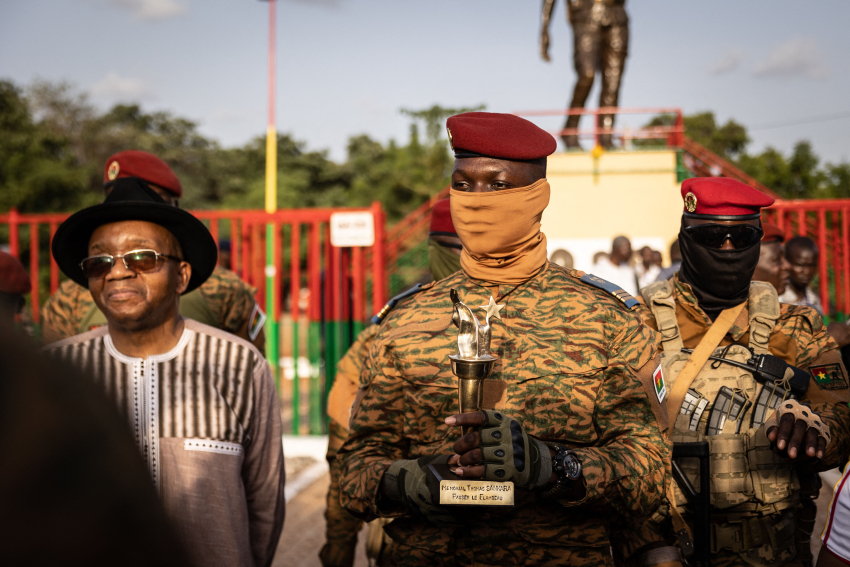 © OLYMPIA DE MAISMONT | Crédits : AFP
Timbuktu Institute Week 3 - June 2026
Although long criticized within religious circles—particularly Islamic ones—the law governing religious freedoms nevertheless passed without a hitch. Despite the uproar caused by this law, on June 20, the Legislative Assembly unanimously adopted the bill, which consists of 112 articles divided into six chapters. According to Ouagadougou, this new legislation aims to guarantee freedom of worship in a secular state while strengthening public order, social cohesion, and social harmony. The bill also introduces a repressive component, providing for criminal penalties and fines against certain practices deemed abusive in connection with religion, notably the forced begging of children and breaches of financial transparency by religious organizations. The Minister of Territorial Administration, Émile Zerbo, justified this reform by citing the need to “combat extremist tendencies” and “prevent religious radicalism.” The bill’s passage comes amid a climate of tension: in late May, the draft bill sparked protests from several religious leaders, including Imam Kindo of the Grand Sunni Mosque in Ouagadougou, who was arrested shortly thereafter.
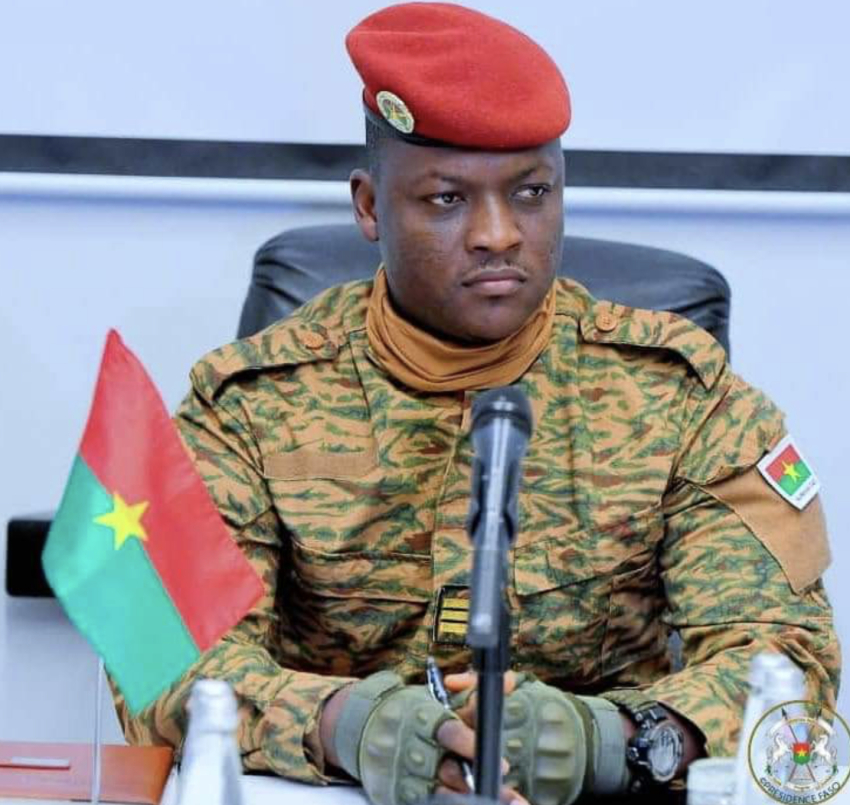
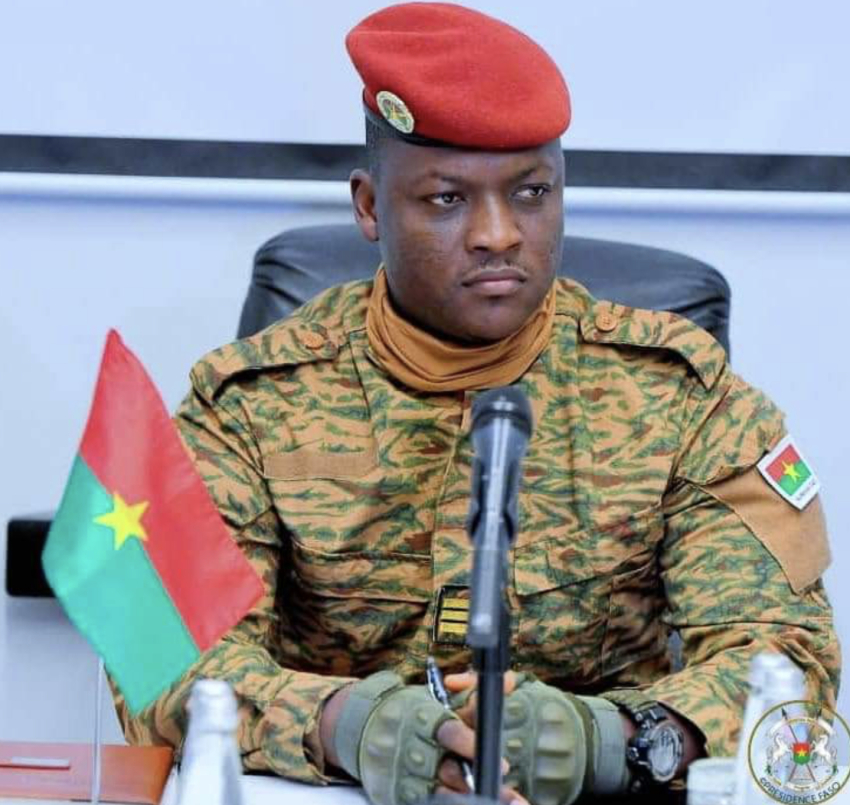
Protests by worshippers were subsequently suppressed, and no information has since been released regarding his fate. This rift also reveals the structural limitations of the tacit pact between the government and Islamic circles, upon which Head of State Ibrahim Traoré had built part of his popular legitimacy. By turning against his former allies, he risks drying up an important source of legitimacy, without thereby resolving the security problem that justifies his actions. Beyond these tensions, this situation highlights the fact that religious authorities—initially mobilized as agents of stabilization or patriotic mobilization—now appear to be driven by a logic of partial autonomy. In this sense, the boundaries of legitimate discourse and the conditions for the acceptability of public norms could become an issue of internal legitimacy as well as a source of confrontation with the government, which intends to maintain control over the production of public legitimacy.
Ouagadougou Takes a Harder Line
While Ouagadougou has recently shown a conciliatory approach in its efforts to ease regional tensions with neighboring Benin, it is safe to say that reconciliation between Burkina Faso and France is not on the horizon. According to a decision dated June 12 and made public on June 17, Burkina Faso, through its High Council for Communication, imposed a fine of 50 million CFA francs on the Canal+ group for failing to meet its contractual obligations to broadcast national public channels. According to the regulator, despite an agreement signed in February 2025 and several formal notices, the operator failed to fully guarantee free access to public channels (notably the national channel), and certain technical restrictions—such as activation via SMS—persisted beyond the specified deadlines.
The CSC, which took up the case on its own initiative, considers this to be a “violation of the terms of the agreement” and has granted Canal+ an additional 30 days to comply, under penalty of more severe sanctions. This decision is part of a broader trend toward stricter media regulation, marked in particular by the recent suspension of the French channel TV5 Monde in Burkina Faso.
Switzerland and Mauritania Court Ouagadougou
Aware of how rapidly the political and security balance in the Sahel is shifting, it appears that no international actor wants to leave it to others alone to shape the outcome. Less visible than its European neighbors, Switzerland nevertheless hopes to position itself. It is in this context that we should interpret the meeting held on June 17 in Ouagadougou between Burkina Faso’s Minister of Foreign Affairs, Karamoko Jean Marie Traoré, and the Swiss Confederation’s Special Envoy for the Sahel, Cédrine Berney. Following this discussion, which focused on security and political developments within the Alliance of Sahel States (AES) and prospects for cooperation with Switzerland, the Swiss delegation expressed its satisfaction at gaining a better understanding of regional dynamics, while the Burkinabé side emphasized the “notable progress” made in the fight against terrorism and denounced what it described as “biased narratives” spread by certain international media outlets. On the same day, the Burkinabé head of state received the Mauritanian Minister of Defense, Hanana Ould Sidi, who delivered a message from President Mohamed El Ghazouani. The discussions reaffirmed the strong ties of friendship and cooperation between Ouagadougou and Nouakchott, along with a shared commitment to strengthening coordination on key issues such as security, sovereignty, and regional integration.
Sacré-Coeur 3 – BP 15177 CP 10700 Dakar Fann – SENEGAL.
+221 33 827 34 91 / +221 77 637 73 15
contact@timbuktu-institute.org