 French
 Arabic
 English
 Portuguese
 Spanish
 Swahili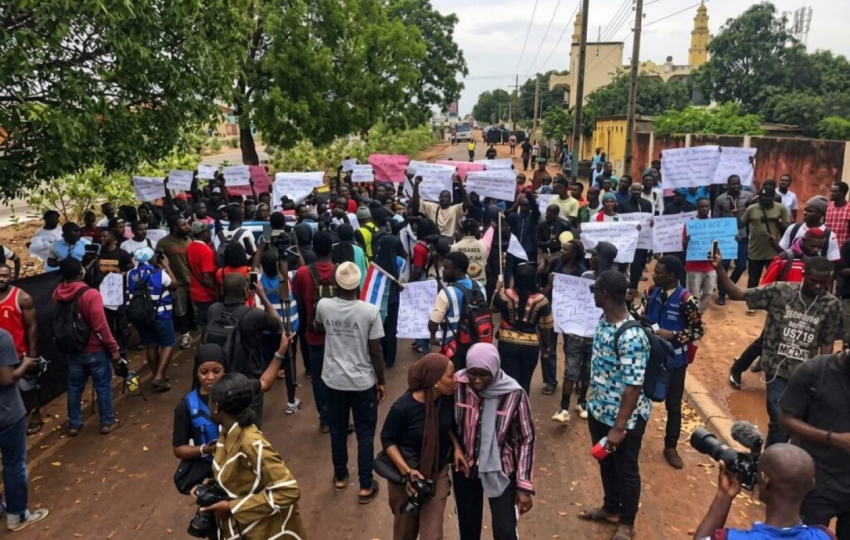



Sacré-Coeur 3 – BP 15177 CP 10700 Dakar Fann – SENEGAL.
+221 33 827 34 91 / +221 77 637 73 15
contact@timbuktu-institute.org

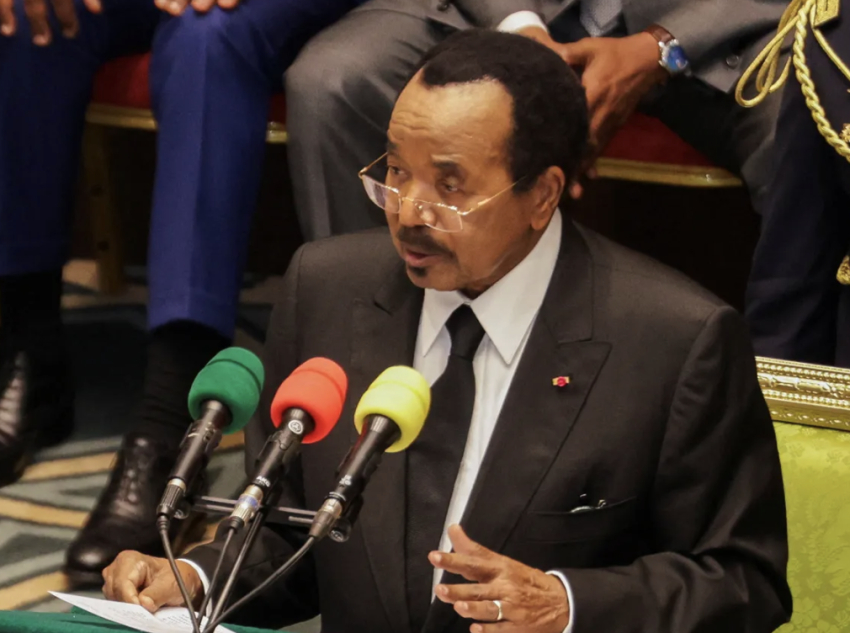 © Reuters
Timbuktu Institute, Week 1 - July 2026
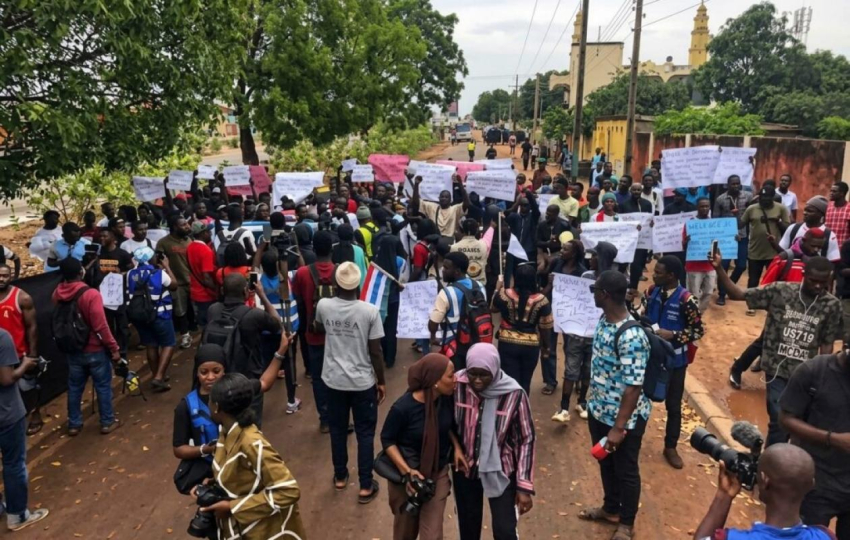
In Cameroon, the government is moving stealthily toward a plan for intentional restructuring. On the horizon: the inevitable question of what comes after Paul Biya, who is 93 years old and has been in power for more than 43 years. Since the adoption of a constitutional amendment establishing the office of Vice President of the Republic—designated to ensure the continuity of the executive branch in the event of a power vacuum—speculation has been rife. This is all the more so given that the name of Franck Biya, the president’s son, frequently comes up among the contenders for the position. But recently, a heated controversy has rocked the country following the revelation of an attempt to circulate an alleged presidential decree appointing a vice president. On June 12, an individual arrived at the headquarters of CRTV (Cameroon’s public radio and television broadcaster) in Yaoundé to deliver an envelope containing this document, which appeared to bear the official seals of the presidency and a signature attributed to President Biya. Since the text was not broadcast on public television, the matter did not come to light until several days later, sparking intense speculation in the media and on social media. Some observers saw this as a possible attempt at institutional destabilization. In response to the controversy, the government issued a statement on June 30 noting that the publication of official documents is governed by strict procedures, particularly in the case of a presidential decree of such significance. The person suspected of submitting the document was arrested, and an investigation was launched.
As a result, the investigation has taken on a new dimension. The probe, led by the Secretariat of State for Defense (SED) and the Presidential Security Directorate (DSP) on the instructions of President Biya, is now seeking to determine whether Johann Sitchom—who was arrested after submitting the forged documents to CRTV on June 12—acted alone or as part of a more organized operation. While the suspect’s family cites a state of psychological vulnerability that made him susceptible to manipulation, several security sources now favor the hypothesis of an attempted “institutional coup.” According to information from Jeune Afrique, the case has become more complicated with the emergence of the name of Oswald Baboke, deputy director of the presidency’s civilian office, who is said to have been listed as the future vice president in one version of the fake decree. Although Baboke denies any involvement and claims the incident is part of a conspiracy linked to rivalries surrounding Biya’s succession, his name is now at the center of the investigation. Authorities are continuing to question several key figures to determine who is responsible in this case, which highlights the tensions and power struggles within Cameroon’s presidential inner circle, against a backdrop of speculation surrounding Paul Biya’s succession.
In the Far North, a dual humanitarian and security crisis
According to an assessment published in late June by the Famine Early Warning Systems Network (FEWS NET), the food crisis is expected to continue in Cameroon at least until September, as poor harvest prospects will prevent the most vulnerable households from emerging from the crisis. In the regions most affected by insecurity, particularly the Far North, violence by armed groups has disrupted agricultural activities, preventing many families from preparing their land for the main growing season. This situation is exacerbated by the lean season, rising food prices, low agricultural incomes, and the risk of seasonal flooding, all of which are likely to increase population displacement.
The English-speaking regions of the Northwest and Southwest are experiencing a slight respite thanks to the June harvests, but several departments remain severely affected by violence from separatist groups. In urban centers, particularly in Yaoundé and Douala, the poorest households and internally displaced persons are also feeling the effects of food inflation. As humanitarian needs reach their highest level of the year, aid organizations are facing a significant funding shortfall. According to estimates by the World Food Program (WFP) and its partners, nearly 2.9 million people could face food insecurity in Cameroon in 2026.
On the security front, communities in the Far North continue to face pressure from terrorist groups. On the night of July 2–3, an attack attributed to Boko Haram claimed the lives of nine civilians in the village of Milari, located near Kousseri in the Far North region. Carried out with knives and firearms, the attack also left nine people wounded, several of whom are in serious condition. According to security sources and local accounts, the attackers reportedly acted in retaliation for the discovery, a few days earlier, of a large cache of weapons handed over to the authorities by the village residents. This attack, one of the deadliest recorded in recent months in the region, comes amid a resurgence of Boko Haram violence in the Logone-et-Chari department, on the border with Chad. It has reignited a climate of fear among the population, prompting many families to limit their movements and temporarily abandon their farming, herding, and fishing activities for fear of further reprisals.
Sacré-Coeur 3 – BP 15177 CP 10700 Dakar Fann – SENEGAL.
+221 33 827 34 91 / +221 77 637 73 15
contact@timbuktu-institute.org