 French
 Arabic
 English
 Portuguese
 Spanish
 Swahili


Sacré-Coeur 3 – BP 15177 CP 10700 Dakar Fann – SENEGAL.
+221 33 827 34 91 / +221 77 637 73 15
contact@timbuktu-institute.org

 © Pius Utomi Ekpei, AFP
Timbuktu Institute Week 1 - July 2026
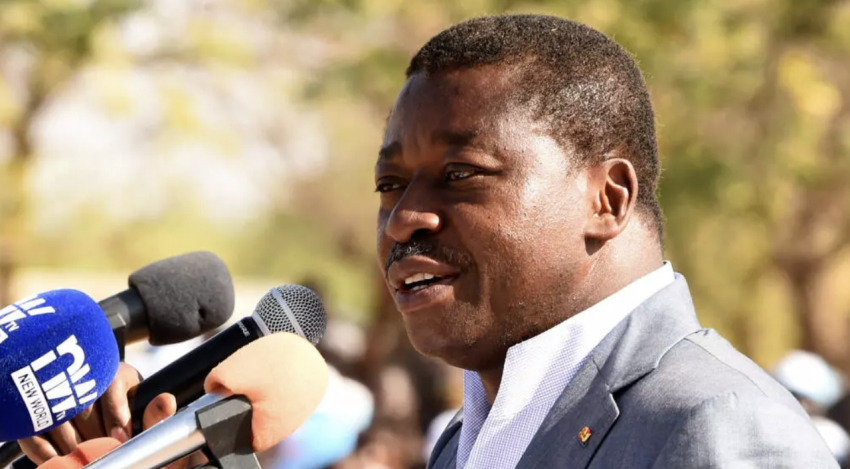
Ever since President Faure Gnassingbé consolidated his position at the head of state with the shift from a presidential to a parliamentary system, the Togolese opposition has consistently challenged the legitimacy of the new government. To the point, it must be said, of sometimes appearing somewhat powerless. However, since the ECOWAS Court of Justice issued a ruling characterizing Togo’s March 2024 constitutional amendment as an “unconstitutional change of government,” the political opposition appears to have regained its vigor. On June 30, the Dynamique pour la Majorité du Peuple (DMP) boycotted the second session of the Permanent Consultative Framework (CPC), which took place from July 1 to 3, arguing that this forum for dialogue no longer addresses the gravity of the political and institutional crisis Togo is facing. For the DMP, this decision reinforces its condemnation of an “institutional coup” and underscores the need to challenge the constitutional reform. The coalition believes that the national priority is no longer the continuation of the CPC’s work, but rather the launch of an inclusive political transition aimed at restoring constitutional legality, rebuilding institutions, and reestablishing trust among political actors. Reaffirming its withdrawal from the CPC, announced in July 2025, the DMP also stands by its demands for the release of political prisoners, the abolition of the Fifth Republic, Faure Gnassingbé’s departure from power, and an improvement in the living conditions of the population. Finally, it considers that the CPC has become an ineffective forum for dialogue, incapable of addressing the main issues of the Togolese crisis.
Similarly, in a statement released on July 1, 2026, the Freedom Togo–National Liberation Movement (MLN) welcomed the ruling by the ECOWAS Court of Justice; the movement believes that this decision supports its accusations that the new constitutional framework is “illegal” and “illegitimate.” Citing this ruling by the regional court, Freedom Togo–MLN called for increased mobilization by opposition parties, civil society organizations, labor unions, students, and the defense and security forces in support of a change in government. The movement also urges the international community to increase pressure on the Togolese authorities to secure the departure of the current regime and the launch of a process to restore constitutional and democratic order. The Dynamique Monseigneur Kpodzro (DMK) echoed this sentiment, announcing on the same day a two-pronged offensive—both “legal and spiritual”—aimed at achieving what it describes as the restoration of the political legitimacy resulting from the Togolese presidential election of February 22, 2020. On the legal front, the movement expressed its support for the referral to the Togolese League for Human Rights (LTDH) to explore domestic and international legal remedies following the second ruling by the ECOWAS Court of Justice, issued on January 29, 2026, which the DMK interprets as a recognition of the unconstitutional nature of the institutional reform adopted in 2024. Thus, it appears that the Togolese opposition is regaining momentum following the ECOWAS Court’s significant—albeit non-binding—decision. However, to what extent could this new pressure currently shake the foundations of Faure Gnassingbé’s power? This question is all the more pertinent given that, in the current political landscape, the scope for such challenges remains limited. In any case, this development heralds a possible new wave of sociopolitical protest in a country that has clearly experienced a continuous narrowing of its civic space in recent years.
Deadly Floods
At the same time, Togo has not been spared the floods currently affecting several countries in the subregion. In a statement released on July 4, the Togolese government reported a provisional death toll of five people following the heavy rains of June 28 and 29, which affected the Maritime, Plateaux, and Central regions, as well as the Autonomous District of Greater Lomé (DAGL). The rainfall, described as exceptional for the countries of the Gulf of Guinea, caused significant property damage and disrupted travel. In response to this situation, the authorities activated the ORSEC Plan, coordinated by the National Civil Protection Agency (ANPC), to conduct relief operations with the support of the defense and security forces.
While offering their condolences to the victims’ families, the authorities stated that a multisectoral assessment of the damage was underway to guide assistance efforts for the affected populations. The government also called on citizens to strengthen preventive measures, particularly by maintaining drainage systems, cleaning gutters, clearing natural waterways, and improving waste management, as heavy rainfall continues to affect several West African countries.
Sacré-Coeur 3 – BP 15177 CP 10700 Dakar Fann – SENEGAL.
+221 33 827 34 91 / +221 77 637 73 15
contact@timbuktu-institute.org