 French
 Arabic
 English
 Portuguese
 Spanish
 Swahili



Sacré-Coeur 3 – BP 15177 CP 10700 Dakar Fann – SENEGAL.
+221 33 827 34 91 / +221 77 637 73 15
contact@timbuktu-institute.org

Timbuktu Institute Week 1 - July 2026
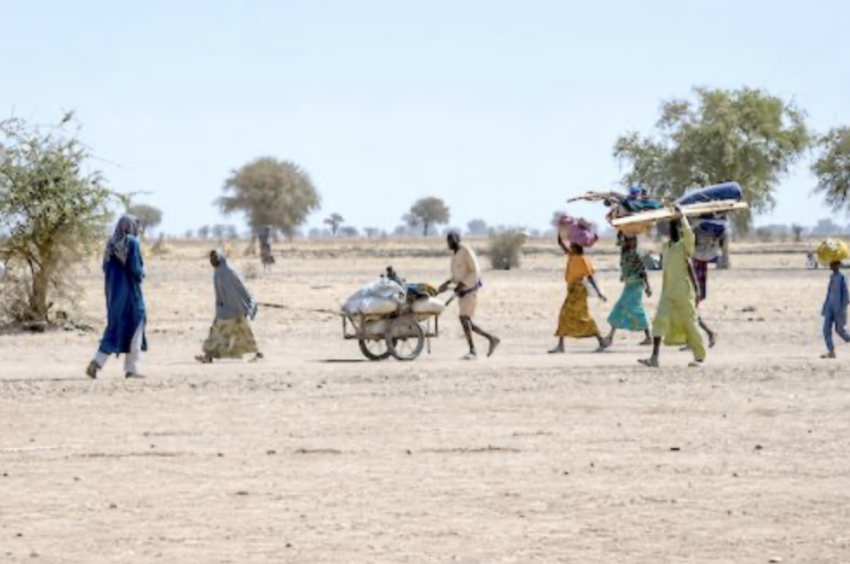
More than a decade after the emergence of Boko Haram, the Lake Chad Basin remains a hotbed of chronic instability, where jihadist incursions continue to dictate the daily lives of local populations. As a result, the security situation there continues to deteriorate, exacerbating an already severe humanitarian crisis. According to the United Nations High Commissioner for Refugees (UNHCR), more than 3.5 million people are currently forcibly displaced in Cameroon, Chad, Niger, and Nigeria, while more than 8 million people require humanitarian assistance. Between January 2024 and April 2026, security incidents rose significantly, with an increase in attacks on civilians, kidnappings, and clashes involving armed groups such as Boko Haram and the Islamic State in West Africa (ISWAP). Borno State, in northeastern Nigeria, remains the epicenter of this violence, leading to new displacements into neighboring countries, particularly Niger and Chad. The crisis particularly affects vulnerable populations: women and children face increased risks of violence and disruptions to essential services, while school closures are depriving thousands of children of an education. Given the scale of the needs, UNHCR warns that humanitarian funding is insufficient and calls for increased international support to prevent a lasting escalation of instability in the region.
Meanwhile, flooding is ravaging the country, particularly in the capital. Faced with the persistent risk of flooding in N’Djamena, Prime Minister Allah-Maye Halina conducted, on June 30, a field visit to several neighborhoods in the capital to assess prevention measures and identify the most affected areas. Following the recent heavy rains, he observed that several drainage channels were blocked and that maintenance work on water infrastructure was inadequate, specifically criticizing the failures of the National Committee for Flood Management and Prevention. Urgent measures were ordered, including the removal of sediment from drainage systems and the acceleration of work on the Walia levee, the partial absence of which had contributed to the severe flooding of 2024. The head of government also called on local authorities to prioritize a preventive and ongoing approach, arguing that risk management should not be limited to periods of heavy rainfall.
N’Djamena Strengthens Its Alliances
On the international front, Chad is stepping up its efforts toward international cooperation. On June 30 in Abu Dhabi, Chadian President Mahamat Idriss Deby Itno was received by his Emirati counterpart, Sheikh Mohamed Bin Zayed Al Nahyan, as part of a meeting focused on strengthening strategic cooperation between Chad and the United Arab Emirates. In particular, the two leaders reviewed the progress of commitments related to the “Chad Connexion 2030” National Development Plan, for which a financing forum was held in November 2025 in Abu Dhabi. Discussions also focused on several projects supported by the UAE in the fields of energy, health, social development, and humanitarian aid, as well as regional and international issues of mutual interest.
Furthermore, in this vein, the government has resumed its cooperation with the South African NGO African Parks Network (APN) through new agreements covering the management of four major protected areas in the country: Zakouma National Park, Siniaka-Minia Park, the Aouk Reserve, and the Ennedi Natural and Cultural Reserve. This signing follows a period of tension marked by the Chadian authorities’ decision in October 2025 to terminate the previous partnership agreements, prior to the start of new negotiations. The new cooperation framework provides for an increased role for the state in the management and oversight of protected areas, strengthened financial governance, and greater involvement of local authorities. The authorities also highlight commitments to transparency, the development of ecotourism, support for local communities, and the fight against poaching. This renewed partnership thus aims to reconcile biodiversity conservation, the economic development of natural resources, and the strengthening of national sovereignty in the management of protected areas.
Sacré-Coeur 3 – BP 15177 CP 10700 Dakar Fann – SENEGAL.
+221 33 827 34 91 / +221 77 637 73 15
contact@timbuktu-institute.org