 French
 Arabic
 English
 Portuguese
 Spanish
 Swahili

Sacré-Coeur 3 – BP 15177 CP 10700 Dakar Fann – SENEGAL.
+221 33 827 34 91 / +221 77 637 73 15
contact@timbuktu-institute.org

 © Sidwaya
Timbuktu Institute, Week 3, July 2026
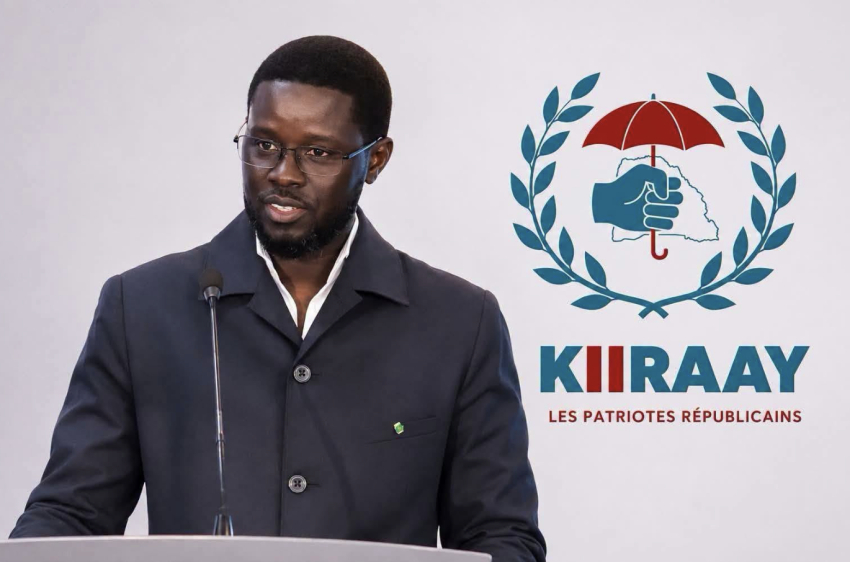
Three years after coming to power, Bassirou Diomaye Faye is closing one political chapter and opening another. On 25 July, in Dakar, the head of state officially launched his own party, “Kiiraay – The Republican Patriots ”, thereby cementing, now publicly and formally, the rupture that has been building for several months with his former mentor Ousmane Sonko and PASTEF. This launch, prepared since November 2025 under the supervision of Aminata Touré, crowns a strategy of political realignment under way on several fronts at once. Domestically, the president has multiplied gestures of openness beyond Pastef's historic base, going so far as to back Macky Sall's candidacy for UN Secretary-General – a decision unthinkable a year earlier – while at the same time tightening his grip on institutions and the administration: the appointment of Ousmane Diagne to head the Constitutional Council after the invalidation of the constitutional revision pushed through by the parliamentary majority, the replacement of several officials seen as close to Sonko at the head of strategic institutions (the Autonomous Port of Dakar, 3FPT, the National Vocational Training Office), and successive rallyings of PASTEF cadres to the “presidential initiative”. Sonko, for his part, continues to downplay the crisis, presenting it as a mere difference in outlook rather than an institutional dysfunction, but the rivalry has now crystallised around two competing projects: loyalty to Pastef's original line for one, the building of a broader legitimacy for the other. Senegal's political landscape is thus being redrawn around three rival poles (Kiiraay, PASTEF and Macky Sall's APR), a configuration that could, according to several observers, hasten early legislative elections. This domestic realignment is finally accompanied by a regional assertion of Senegal, with the rotating presidency of ECOWAS entrusted to Diomaye Faye and the announced appointment of General Birame Diop to head the organisation's Commission for 2026-2030, placing Dakar in a position of influence over the future of an ECOWAS weakened by security crises and tensions with the AES. One fundamental question remains, one that the creation of Kiiraay does not resolve but rather makes more pressing: whether Senegal can durably operate with two centres of power stemming from the same founding movement, but now set on clearly diverging paths.
A year ago, few could have foreseen such a scene: former president Macky Sall, welcomed in Dakar amid a sea of supporters and cheers. And yet that was exactly what happened on 17 July, when the former head of state made a striking return to his country to secure the official backing of his successor Bassirou Diomaye Faye for his bid to become UN Secretary-General. A request to which the latter responded favourably. The head of state thus instructed the government and Senegal's diplomatic network to mobilise in support of this candidacy among UN member states, through a public statement. This decision marks a major political turning point. Breaking with the line historically defended by Pastef, which had made Macky Sall one of its principal adversaries and had considered prosecuting him, Bassirou Diomaye Faye once again confirms his break with Ousmane Sonko. This repositioning is part of a strategy of openness and realignment of alliances, as the president prepares to launch his own political party and looks ahead to the coming electoral deadlines, amid speculation over a possible rapprochement with the Alliance for the Republic (APR).
In doing so, it now appears clearer than ever that the divorce between the president and his former prime minister Ousmane Sonko is part of a lasting dynamic of power realignment in Senegal. A rift that, as is known, affects institutions, the public administration and Pastef's own internal organisation alike, with each camp seeking to consolidate its own bases of legitimacy. A recent institutional sequence illustrates this. Thus the appointment, on 13 July, of magistrate Ousmane Diagne to head the Constitutional Council, replacing the late Mamadou Badio Camara. A former attorney general at the Dakar Court of Appeal, first advocate general at the Supreme Court and then minister of Justice, Ousmane Diagne already sat on the high court before his appointment. His arrival comes at a particularly sensitive time, just days after the Constitutional Council invalidated the constitutional revision adopted by the National Assembly at the initiative of the Pastef-led parliamentary majority. The presidential assertion of authority is also reflected in the gradual takeover of several strategic sectors of the administration. Indeed, since Sonko's departure from the Prime Minister's office in May 2026, several officials seen as close to him have been replaced at the head of major public institutions. The change of leadership at the Autonomous Port of Dakar, with the departure of Waly Diouf Bodiang, a lieutenant very close to Sonko, stands as one of the most symbolic examples. Other changes have also affected the vocational training sector, with the replacement of the heads of 3FPT and the National Vocational Training Office. These changes reflect the presidential camp's determination to tighten its grip on the machinery of state, while Pastef itself is undergoing internal realignments. The departure of Babacar Faye, a party cadre in Fatick — former president Sall's stronghold — and managing director of the Naval Repair Infrastructure Company, illustrates this dynamic. After ten years of activism, he announced he was rallying to the “presidential initiative” led by Bassirou Diomaye Faye, giving up his responsibilities within Pastef. A development that reflects the battle for influence under way between the two camps to retain or attract the movement's cadres.
Realignments under way
Despite this rising tension, Ousmane Sonko continues — every other day — to present the split with Bassirou Diomaye Faye as a political disagreement rather than an institutional crisis. In an interview given to Al Jazeera, the Speaker of the National Assembly rejected the idea of any dysfunction within Senegal's institutions, arguing that the separation of powers between the presidency, the government and Parliament remained clear. He also defended the constitutional reform struck down by the Constitutional Council, arguing that it strengthened checks and balances and matched the commitments made to Senegalese citizens. On his relationship with the head of state, Ousmane Sonko struck a measured tone, saying the rupture was not a matter of trust but of “diverging visions” regarding commitments to the Senegalese people. In practice, however, the rivalry between the two men is now structured around two distinct projects. While Sonko intends to remain the guardian of Pastef's original line, Bassirou Diomaye Faye is seeking to build a legitimacy of his own, widening his political base beyond the party's historic circle. Indeed, by throwing his support behind Macky Sall, Bassirou Diomaye Faye is openly displaying his strategy of openness aimed at broadening his alliances. Successive meetings with Karim Wade, then with Macky Sall, followed by trips to Qatar, further attest to a gradual realignment of the political balance of power.
Sacré-Coeur 3 – BP 15177 CP 10700 Dakar Fann – SENEGAL.
+221 33 827 34 91 / +221 77 637 73 15
contact@timbuktu-institute.org