 French
 Arabic
 English
 Portuguese
 Spanish
 Swahili


Sacré-Coeur 3 – BP 15177 CP 10700 Dakar Fann – SENEGAL.
+221 33 827 34 91 / +221 77 637 73 15
contact@timbuktu-institute.org

 © Salam Info
Timbuktu Institute Week 1, September 2026
The three countries of the Alliance of Sahel States are more committed than ever to a drive to build a shared identity. To this end, a first technical meeting was held in Ouagadougou on 1 September between the Burkinabè Prime Minister and the Secretaries-General of the Grand Chancelleries of the three countries. The goal is to create a fully African order of merit, drawing on the continent's local realities and rewarding patriotism and merit.
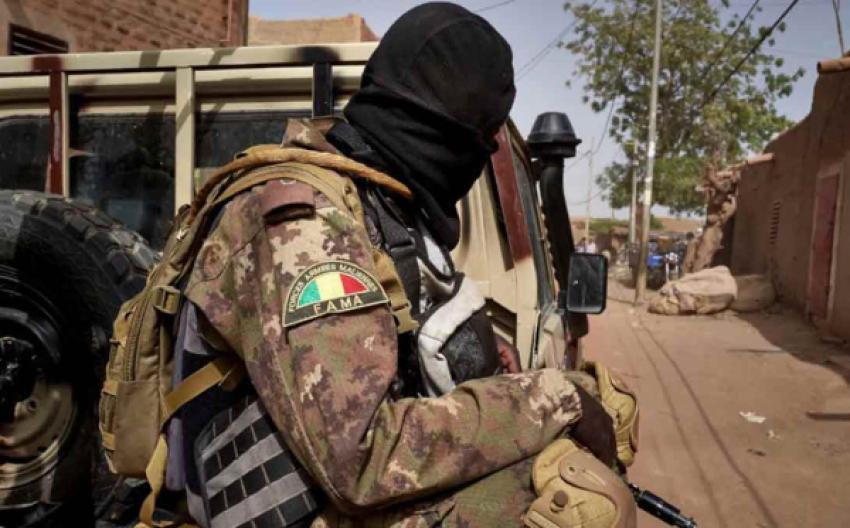
The FAMa (Malian Armed Forces) and their partners continue to monitor and secure Malian territory, according to an announcement by the Mali General Armed Forces Staff. This falls under Operation Dougoukoloko which, through continued surveillance operations in the eastern theater and the use of precise intelligence, has enabled the detection of new gathering sites for armed terrorist groups in the Ouertédjach region. These operations will continue with rigor and professionalism to better secure the national territory.
The lifting of JNIM's blockade on Léré, a relief for the population
In northern Mali, the blockade on the town of Léré, in the Timbuktu region, was lifted on 31 August 2026, although the agreement remains only provisional. As a reminder, this JNIM blockade, in place since October 2025 and causing shortages, required intense negotiations between the population and local authorities. A monitoring committee has been set up, and the blockade is expected to be effectively lifted within three to four days, following mine clearance.
Under the AES banner, Mali more attached than ever to sovereignty
Furthermore, on 1 September 2026, at the Belgrade summit attended by Mali's Foreign Minister, the minister clearly reaffirmed the objectives of the Confederation of Sahel States — namely sovereignty, independence and the fight against terrorism, among others — in keeping with the historic principles of non-alignment, while also recalling Mali's role since 1961 and linking the Sahel crisis to the 2011 intervention in Libya.
Sacré-Coeur 3 – BP 15177 CP 10700 Dakar Fann – SENEGAL.
+221 33 827 34 91 / +221 77 637 73 15
contact@timbuktu-institute.org