 French
 Arabic
 English
 Portuguese
 Spanish
 Swahili

Sacré-Coeur 3 – BP 15177 CP 10700 Dakar Fann – SENEGAL.
+221 33 827 34 91 / +221 77 637 73 15
contact@timbuktu-institute.org

 © DR
© DR
Timbuktu Institute Week 1, September 2026
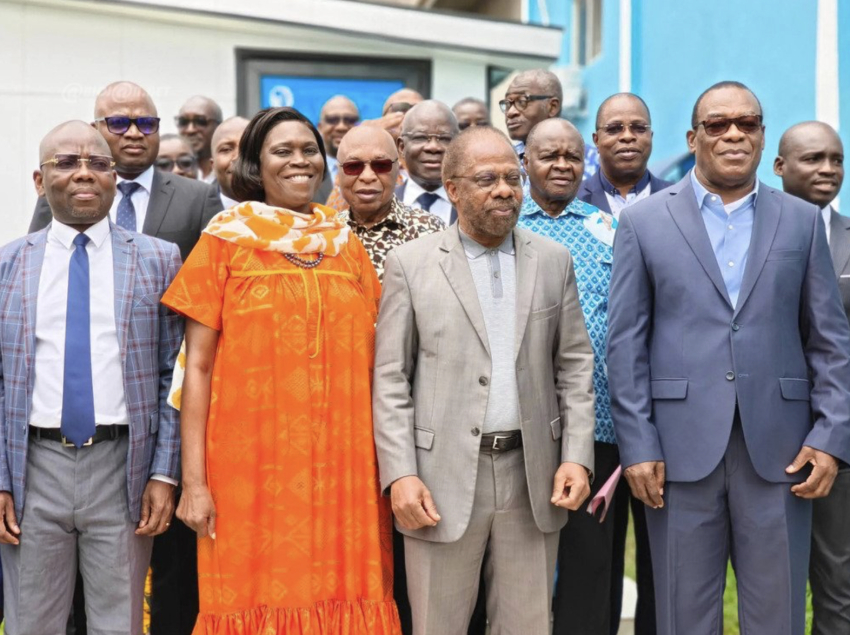
In Côte d'Ivoire, the political system's ability to prevent and manage electoral conflicts remains one of its greatest challenges. Since the dissolution of the Independent Electoral Commission (CEI), this issue has been at the heart of the country's news. In this national debate, the opposition is seeking to speak with one voice to better safeguard its interests. Pascal Affi N'Guessan's FPI, Simone Ehivet Gbagbo's MGC, Assalé Tiémoko's ADCI, Charles Blé's COJEP and Laurent Gbagbo's PPA-CI thus held talks to unify their positions on electoral governance.
Electoral reform in Côte d'Ivoire: the opposition seeks a unified front against the government
Through this unified framework, these political leaders aim to submit their demands to the government in a single document, in order to harmonize their positions and be more effective. They met on 1 September at PPA-CI headquarters to agree on a common stance regarding the shape of the next electoral architecture. This institutional void, created by the dissolution of the CEI on 6 May, raises concerns in a country where political crises have repeatedly undermined unity and caused heavy losses. As a reminder, on 18 June, Simone Ehivet Gbagbo proposed the creation of an independent “High Electoral Council,” excluding the government and political parties. The government, for its part, proposes an electoral architecture split into three separate bodies: “one for material organization, one for vote counting, and a third dedicated to overall oversight of the process.” At stake, therefore, is the opposition's lack of confidence regarding the organization of free and transparent future elections.
Côte d'Ivoire-Xinyi Glass partnership: a stake in integration into global value chains
Meanwhile, the Ivorian state is working to strengthen its economic appeal. Discussions are underway to establish a strategic partnership with the Chinese group Xinyi Glass to “diversify the country's industrial fabric and promote its integration into global value chains.” This involves a major plant-construction project representing an estimated investment of $150 million, which will boost employment and expand economic opportunities. The country is continuing its drive toward modernizing and industrializing its economy in order to make it more resilient and preserve the country's stability.
Sacré-Coeur 3 – BP 15177 CP 10700 Dakar Fann – SENEGAL.
+221 33 827 34 91 / +221 77 637 73 15
contact@timbuktu-institute.org