 French
 Arabic
 English
 Portuguese
 Spanish
 Swahili



Sacré-Coeur 3 – BP 15177 CP 10700 Dakar Fann – SENEGAL.
+221 33 827 34 91 / +221 77 637 73 15
contact@timbuktu-institute.org

 © APA NEWS
Timbuktu Institute Week 1, September 2026
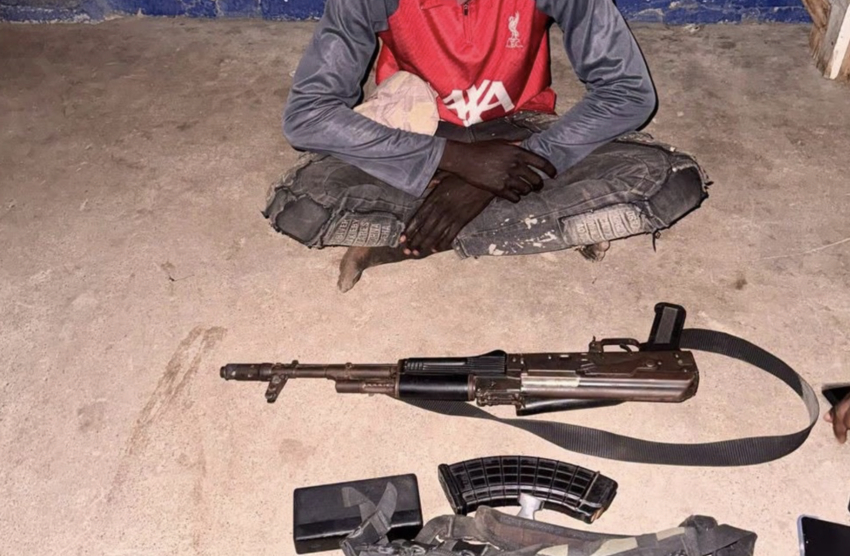
In Nigeria, the authorities are doing their utmost to regain control of the various spaces where insecurity feeds. From operations against armed groups in the northeast to the destruction of illicit weapons, and the recalibration of military cooperation with Washington, Abuja's priority logic ultimately consists of strengthening national capabilities while diversifying its levers of cooperation. Meanwhile, in the northeast, military pressure is being matched by a return of intelligence work. Operation Hadin Kai continues its effort against factions descended from Boko Haram and the Islamic State in West Africa. On 1 September, an operation conducted in the Lamusuri area, in Yobe State, neutralized one fighter and recovered an AK-47 rifle, three magazines, 90 rounds of ammunition and a body bag. Beyond the immediate results of this intervention, its method deserves attention: the operation reportedly relied on intelligence that enabled Nigerian forces and the Civilian Joint Task Force to spot a group of fighters along a suspicious route.
This link between military intelligence and local actors' knowledge of the terrain appears all the more important given that armed groups retain a mobility and adaptability that limits the effectiveness of a purely offensive approach. It also seems to fit into a broader strategy. In July and August, Nigerian armed forces claim 7,062 security operations across the country, which, according to their own figures, led to the neutralization of 1,487 terrorists and insurgents, the arrest of 487 people and the rescue of 777 kidnap victims. In the northeast, Operation Hadin Kai alone reportedly neutralized 309 fighters and led to the arrest of several logistics facilitators. However, the army also highlights so-called “non-kinetic” initiatives, with nine dialogue actions and fifteen consultations with traditional and religious leaders. A welcome combination reflecting an acknowledgment that military pressure unsupported by sustained work on the social and territorial networks of bandits and terrorists will remain unable to curb armed groups' capacity for action.
Abuja regains control of its security
This drive for control does not appear confined to counterterrorism operations alone. The fight against the proliferation of small arms and light weapons is another front on which Abuja is seeking to act further upstream. Authorities report 5,449 weapons recovered and 1,419 others destroyed in operations carried out across the country. Since 2022, more than 19,000 weapons are said to have been destroyed. The volume of seizures gives a sense of a problem that extends well beyond the northeast. Among recent operations is the interception, at Onne Port, of a container holding 844 automatic weapons and 112,500 rounds of ammunition, which led to the arrest of eleven suspects. Securing legally held stockpiles and improving traceability are meant to complement this policy, as a new national survey on small arms and light weapons is being planned to update data dating back to 2016. Here, one can observe an interesting evolution in Nigeria's security approach. By targeting not only those who carry weapons but also the networks that supply them, Abuja is attempting to address one of the causes common to terrorism, kidnapping and banditry — in short, to control the flows that fuel violence.
Furthermore, with Washington, Abuja intends to preserve a security partnership set to evolve without calling into question its strategic depth. Hence the upcoming withdrawal of more than 200 American troops. Nigeria's military leadership is working to separate the reduction of the American physical presence from the continuation of the strategic partnership between the two countries. Intelligence sharing, training, information exchange and technical assistance are meant to continue, with the possibility of joint operations when circumstances warrant. As the Nigerian army claims an intensification of its own operations, this withdrawal could thus be read as a recalibration of the arrangement rather than a strategic disengagement.
Against corruption, the Chinese model
In Nigeria, persistent difficulties in the fight against corruption are pushing authorities to take a closer look at the Chinese experience. Cooperation with China is thus now extending into the field of governance, particularly the fight against corruption. Abuja and Beijing are seeking to strengthen exchanges on prevention, institutional reform and asset recovery. The interest shown by the Independent Corrupt Practices Commission in Chinese mechanisms reflects a desire to diversify sources of expertise, following similar exchanges with Kenya and Indonesia. This move comes as Nigeria remains poorly ranked in Transparency International's 2025 Corruption Perceptions Index, with a score of 26 out of 100 and 142nd place out of 182 countries, despite the existence of specialized institutions such as the ICPC and the EFCC. For Abuja, the challenge appears to lie less in the absence of legal mechanisms than in their effectiveness, in a context marked by weaknesses in law enforcement, lengthy procedures and limited institutional capacity. China, which scores 43 and ranks 76th, has for its part a more centralized system built around the National Supervisory Commission and the Central Commission for Discipline Inspection. While this experience interests Nigerian authorities, adapting it remains difficult given the deep differences between the two political systems. The rapprochement nonetheless illustrates Abuja's determination to explore new institutional levers to strengthen the effectiveness of its anti-corruption policy.
Ultimately, ahead of the 2027 presidential election, Nigeria appears engaged both in stepping up its security response and in a broader attempt to consolidate the machinery of the state. It remains to be seen whether this momentum will durably narrow the gap between Abuja's capacity to conduct operations and its capacity to address the social, economic and institutional fragilities that continue to fuel insecurity.
Sacré-Coeur 3 – BP 15177 CP 10700 Dakar Fann – SENEGAL.
+221 33 827 34 91 / +221 77 637 73 15
contact@timbuktu-institute.org