 French
 Arabic
 English
 Portuguese
 Spanish
 Swahili


Sacré-Coeur 3 – BP 15177 CP 10700 Dakar Fann – SENEGAL.
+221 33 827 34 91 / +221 77 637 73 15
contact@timbuktu-institute.org

 © TDR
© TDR
Timbuktu Institute - Week 3, September 2026
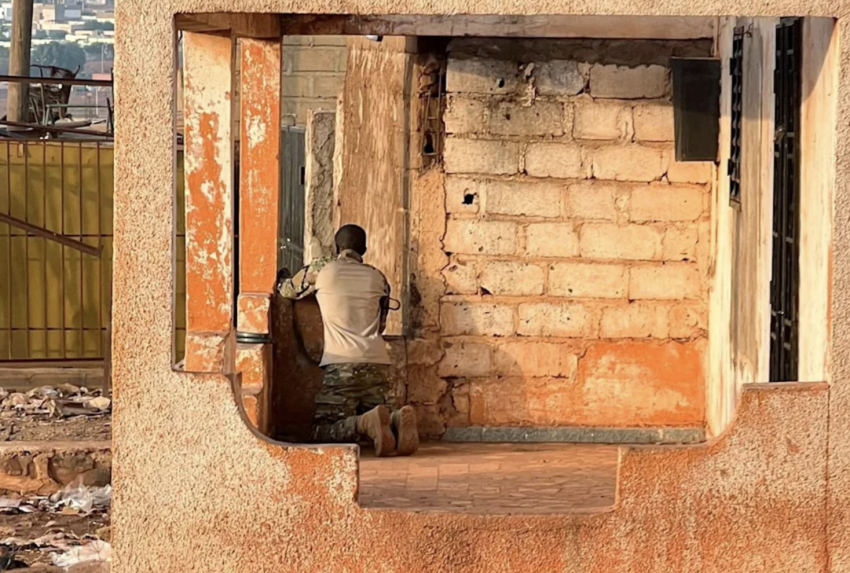
On 10 September, JNIM overran the Dioura military camp, in the Mopti region, inflicting on the FAMa one of their heaviest losses since 2012: according to sources, between 50 and 150 Malian soldiers were reportedly killed, alongside Russian paramilitaries from Africa Corps. Amid Bamako’s silence on the toll, the army retaliated as early as 15 September with strikes against jihadist logistics bases. But this attack revives questions about the vulnerability of the Malian army and the effectiveness of Russian support.
The Mopti region (Dioura), target of a deadly attack
Targeted several times in recent years, the Dioura military camp, located in the Mopti region in central Mali, faced a massive attack launched by JNIM. It is considered one of the deadliest attacks suffered by the Malian army since the security crisis began in 2012. The events took place at dawn on 10 September 2026, when the assault, using various means of transport including motorbikes, armed vehicles and even on foot, allowed the jihadists to quickly overrun the military camp and occupy the premises. After filming the site and seizing weapons, ammunition and vehicles, the jihadists reportedly withdrew before the FAMa abandoned the site.
The toll is heavy, with figures revised upwards. While some sources report a death toll of more than fifty Malian soldiers and five Russian paramilitaries from Africa Corps killed, in addition to several dozen prisoners, other sources estimate at least 100 Malian soldiers killed, double the initial estimates. According to AFP and Reuters, the number of Malian soldiers killed may have reached 150. Meanwhile, the Al-Qaeda-affiliated JNIM, which claimed the attack, reports 150 dead and more than 90 captured. The Malian armed forces and their families have chosen not to communicate about this attack, leaving the international community somewhat sceptical, insofar as this silence could be seen as confirmation of the figures announced.
A disproportionate military response
On the Malian army’s side, the response was swift. In the days that followed, specifically on 15 September 2026, the FAMa, supported by their mainly Russian partners, struck terrorist logistics bases as part of Operation Dougoukoloko. They first targeted the area north of Dioura, considered a fallback point with war materiel, motorbikes and kamikaze drones, then an area 35 km south-east of Mondoro marked by a heavy concentration of armed groups with vehicles and weapons. According to the General Staff, these operations were successful. It also announced the continuation of its reconnaissance missions in order to assess their effects and eradicate the remaining threats.
A partnership with Russia lacking effectiveness?
These attacks point to several structural trends. First, they highlight the vulnerability of the Malian army despite Africa Corps’ support. Hence the questioning of the effectiveness of Africa Corps and of the partnership with Russia more generally, which continues to show its limits.
Moreover, the fact that Bamako’s communication on terrorist attacks, particularly on casualty figures, remains perfunctory may be seen by the public as an admission of failure, especially as there is a considerable gap between the information given by local military sources and the international press, as well as JNIM’s propaganda. The latter, through its recent rather targeted attacks, is inflicting growing casualties on the FAMa and thus giving them a hard time. For example, the Dioura attack caused many casualties despite the presence of Russian paramilitaries and follows a long series of attacks carried out by JNIM as part of coordinated operations that cost the life of the Malian defence minister.
Sacré-Coeur 3 – BP 15177 CP 10700 Dakar Fann – SENEGAL.
+221 33 827 34 91 / +221 77 637 73 15
contact@timbuktu-institute.org