 French
 Arabic
 English
 Portuguese
 Spanish
 Swahili



Sacré-Coeur 3 – BP 15177 CP 10700 Dakar Fann – SENEGAL.
+221 33 827 34 91 / +221 77 637 73 15
contact@timbuktu-institute.org

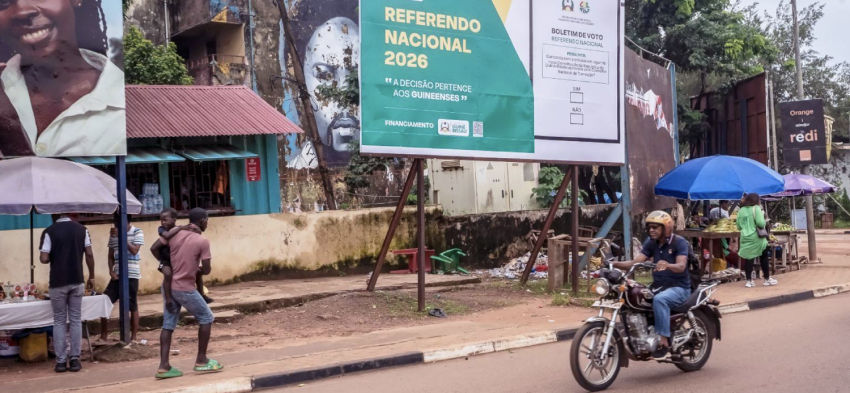 © AFP/Samba Balde
Timbuktu Institute - Week 3, September 2026
Less than three months before the presidential and legislative elections to be held jointly on 6 December, the spokesperson of the African Party for the Independence of Guinea and Cape Verde (PAIGC) has criticised the conditions under which the political transition is taking place in Guinea-Bissau. Muniro Conté thus called into question the creation of the Guinean People’s Party (PPG), led by the Prime Minister and the Minister of Finance, arguing that the participation of members of the transitional government in the electoral contest couldcompromise the fairness and transparency of the vote.
The main political party denounces the conditions of the democratic transition ahead of the general elections
The spokesperson also recalled that the PAIGC does not recognise the result of the 30 August referendum, which it described as “fraudulent” and likened to “another coup d’état”. As a reminder, the vote, which proposed replacing the parliamentary system with a strengthened presidential system, resulted in a “yes” victory with 70% of votes cast and a 55% turnout, according to the National Electoral Commission. Muniro Conté claims that voters massively boycotted the referendum and that the official results “do not match the atmosphere felt on voting day”. Beyond contesting the referendum, Muniro Conté denounces the restrictions imposed on political activity in the country. On 9 January, the transitional authorities banned public meetings and press conferences by political parties on the grounds that these had enabled their organisers “to incite violence and disobedience”. The PAIGC spokesperson believes that these measures have placed Guinea-Bissau “in the orbit of dictatorial regimes”.
This week, the High Military Command for the Restoration of Security and Public Order also ordered political parties to relocate, within seven days, their headquarters located less than 500 metres from sovereign institutions, hospitals, diplomatic missions and military or paramilitary units. The measure appears to target the PAIGC directly, as its headquarters is located right next to a hospital in central Bissau. A further tightening of the screws, while Muniro Conté regrets the ineffectiveness of the mediation missions led by ECOWAS and the African Union to help restore political freedoms.
The Prime Minister seeks to dispel suspicions surrounding his new party
Responding to criticism from the opposition, the transitional Prime Minister and leader of the Guinean People’s Party (PPG), Ilídio Vieira Té, gave assurances that he would not use his government position to build up his political party. He said he wished to maintain a separation between the exercise of power and partisan activity. Despite the restrictions on political activity in Guinea-Bissau, the Prime Minister said he upholds the neutrality of institutions, equal treatment of candidates and the freedom to campaign. Finally, he dismissed rumours that the PPG is a tool of former President Umaro Sissoco Embaló, stating that there would be “neither hidden presidents nor parallel decision-making centres”.
Cooperation with China: a strategy to develop the mining sector
Guinea-Bissau took part in the 28th international mining conference “China Mining 2026”, held from 10 to 12 September in Tianjin. Bringing together representatives from some sixty countries and international organisations, the event was devoted to developing “win-win, green and smart” mining. While the Minister of Natural Resources highlighted the country’s bauxite and phosphate potential, the Bissau-Guinean delegation also said it wanted to improve knowledge of the national mining potential. Strengthening the country’s technical capacity is to be achieved through training national staff, technology transfer and developing technical cooperation with China. Minister Júlio Mamadú Baldé presented a mining development strategy based on the local processing of resources, in order to promote job creation and the capture of added value.
Sacré-Coeur 3 – BP 15177 CP 10700 Dakar Fann – SENEGAL.
+221 33 827 34 91 / +221 77 637 73 15
contact@timbuktu-institute.org