 French
 Arabic
 English
 Portuguese
 Spanish
 Swahili


Sacré-Coeur 3 – BP 15177 CP 10700 Dakar Fann – SENEGAL.
+221 33 827 34 91 / +221 77 637 73 15
contact@timbuktu-institute.org

 ©TDR
©TDR
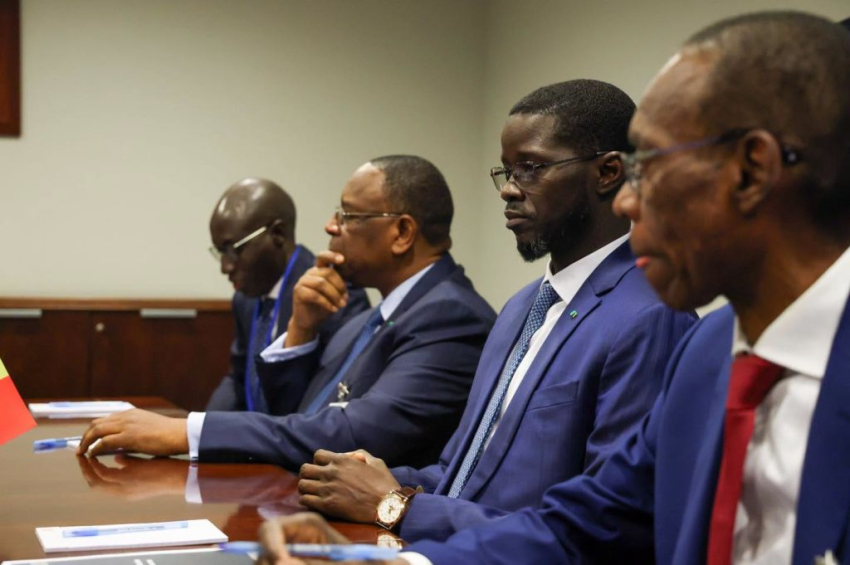
“The die is cast, come what may”: this phrase could well sum up the political line followed by President Diomaye Faye since his split with his former Prime Minister and former party comrade, Ousmane Sonko. With his new party, Kiiraay, the Senegalese head of state appears determined to pull out all the stops to build a territorial base, even if it means attracting some of those close to the regime of former President Macky Sall. Already, seven mayors from the department of Fatick – the stronghold of former President Macky Sall – have joined the presidential party, preceded by the vice-president of the Senegalese Football Federation and former senior figure of the Alliance for the Republic (APR), Abdoulaye Seydou Sow. The same holds true for several hundred of the party’s mayors. The APR had nevertheless denounced, as early as the end of July, a “poaching of local elected officials”.
It is common knowledge that this transfer window for elected officials is tied to the upcoming local elections. Initially expected in January 2027, they will be the first major vote since the split between Faye and Sonko and, as such, a first territorial test of the new political configuration. Yet the authorities seem keen to maintain a degree of uncertainty about this deadline. At present, the ambiguity persists even as the terms of local officials are expiring, and the absence of a decree convening the vote is fuelling questions. Within the president’s inner circle, a postponement until the end of 2027 is defended as legally conceivable, while the opposition and part of civil society see it above all as a way of giving Kiiraay time to consolidate its foothold before facing voters. In fact, these elections could become the first moment when the political effects of the separation between the Sonko and Faye camps are measured at the ballot box.
For his part, in an interview with RFI and France 24 on the sidelines of the United Nations General Assembly in New York, the Senegalese president insisted: “(…) there is nothing that [is] urgent, in reality. And I would not want us to be in a state of permanent electoral obsession.” Moreover, according to statements by some of his supporters, President Diomaye Faye does not rule out dissolving the National Assembly from 2 December, the date on which the Constitution will give him that option. Are we witnessing a life-size game of draughts in which the opponents are sounding each other out? In any case, it remains to be seen whether this emerging new political geography will manage to take hold without reviving the contradictions that the 2024 change of power had, precisely, promised to overcome.
Macky Sall at the UN: A Support That Does Not Go Down Well?
In the same interview, the Senegalese head of state reaffirmed his support for his predecessor’s candidacy for the post of UN Secretary-General, going so far as to ask member states to back it. President Diomaye Faye thus presents Macky Sall as a leader capable of “building bridges” between states and believes that Africa’s representation at the top of the organisation would be better defended by an African. While Dakar had long seemed lukewarm about this candidacy, Senegal’s now-official support unsurprisingly has a particular political effect at home, where the former president’s image remains, for some, associated with a period of intense political violence. Three associations representing the victims of the 2021–2024 events have thus challenged the president’s support for Macky Sall. They believe that Senegalese diplomacy should remain consistent with the country’s commitments on justice, human rights and the fight against impunity, recalling that the families are still waiting for truth, justice and reparation. The controversy is all the more sensitive given that the Senegalese judiciary has issued the first indictments in the case of the 2021–2024 political violence, two years after the complaint filed by Pastef activist Pape Abdoulaye Touré. A security guard at the UCAD campus has been placed in pre-trial detention, while three other people, including members of former minister Pape Malick Ndour’s team and the head of security at COUD, have been placed under judicial supervision. Amnesty International, which supports the families of the 65 recorded victims, welcomes these first measures but is calling for the security forces to be targeted as well. The organisation’s Director in Senegal, Seydi Gassama, regrets that “no action has yet been taken against the head of the gendarmerie”.
Debt and Security Vigilance
Meanwhile, the debt equation is, without a doubt, still very much on the agenda. President Bassirou Diomaye Faye defended the 2.2-billion-dollar agreement reached with the IMF and rejected the idea of an austerity policy, highlighting the doubling of family security grants and the recruitment of 2,000 teachers. It is on this basis that Dakar launched its second public savings offering of 2026, running from 17 September to 8 October, with a target of 200 billion CFA francs to finance the state’s budgetary needs and investments. Spread across four maturities of three to ten years, with rates ranging from 6.40% to 6.95%, the operation comes as the state’s financing needs are estimated at 6,075.2 billion CFA francs in 2026, with debt service of 5,497.9 billion and a budget deficit of 1,245.1 billion CFA francs; it also comes amid discussions with the IMF on a 2.2-billion-dollar programme. The previous public savings offering, launched in February, raised 304.15 billion CFA francs, or 152% of the initial target.
Furthermore, as Dakar hosts the Youth Olympic Games from 31 October to 13 November, the host city is entering the final stretch of preparations. This international event also serves as an implicit reminder of the need for vigilance that Senegal still faces. On the security front, the head of state acknowledges that the country remains exposed to the jihadist threat, terrorism “having no borders”, and is relying in particular on intelligence sharing and joint patrols. All of these constraints force Dakar to move forward on several fronts at once, seeking to preserve its fiscal room for manoeuvre without easing its security efforts ahead of a major international event.
Sacré-Coeur 3 – BP 15177 CP 10700 Dakar Fann – SENEGAL.
+221 33 827 34 91 / +221 77 637 73 15
contact@timbuktu-institute.org