 French
 Arabic
 English
 Portuguese
 Spanish
 Swahili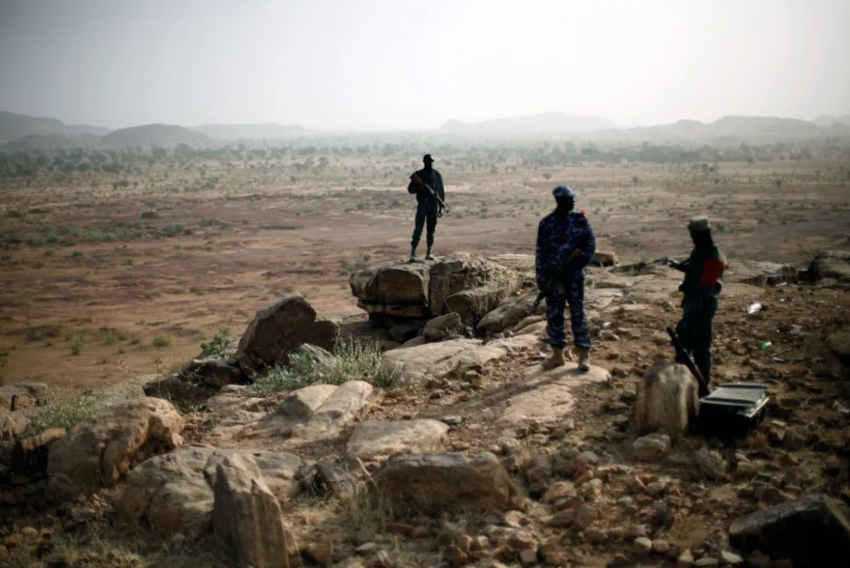


Sacré-Coeur 3 – BP 15177 CP 10700 Dakar Fann – SENEGAL.
+221 33 827 34 91 / +221 77 637 73 15
contact@timbuktu-institute.org

 © TDR
© TDR
Timbuktu Institute - Week 4 September 2026
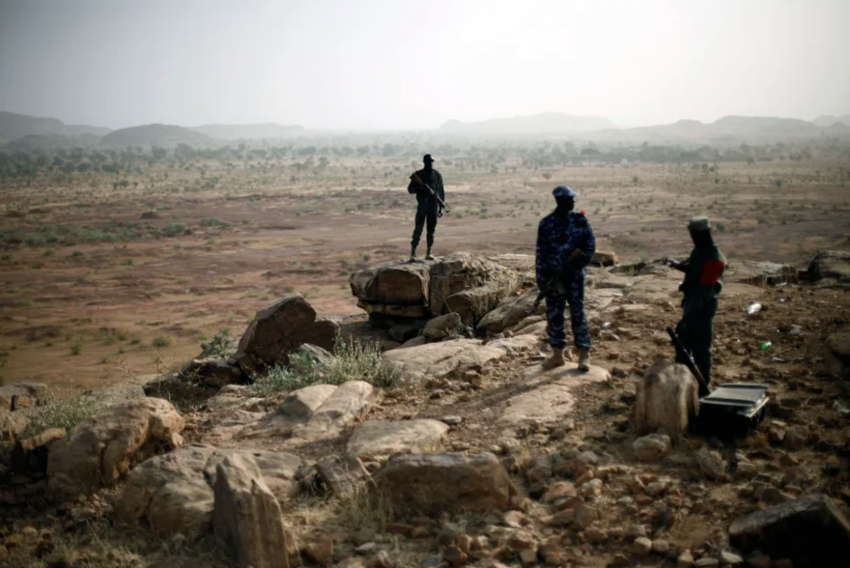
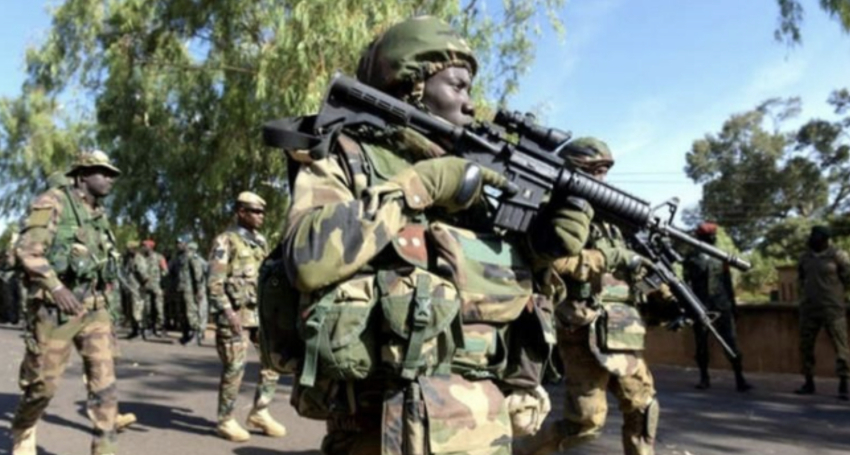
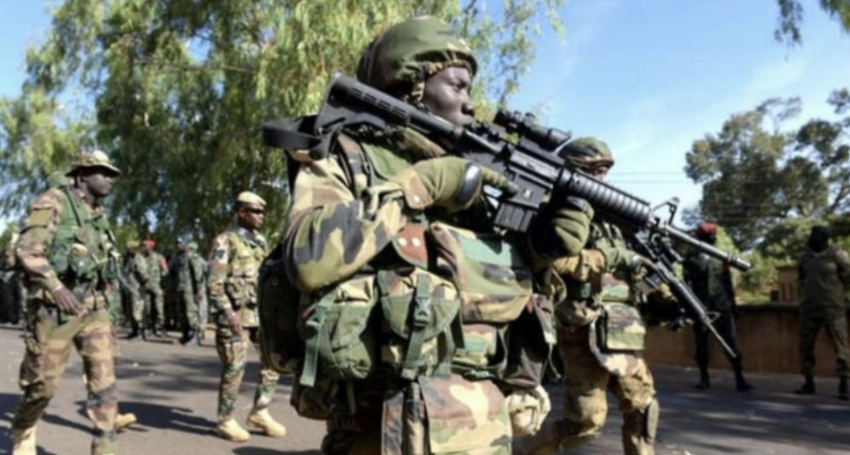
In the north-west of the country, the Nigerian army is pressing on, come what may, with a battle in which kidnappings, armed groups and crime are intertwined with the difficulties of controlling the territories concerned. For now, it is holding its course, facing up to the situation as best it can. On 20 September, forces engaged in Operation “Fansan Yamma” freed six hostages in Sabon Gari, in Sokoto State, following an attack on the community, before rescuing seventeen others on the Isa–Kwanar Isa–Shinkafi road. Another intelligence-led operation led to the interception in Illela of four individuals suspected of belonging to Lakurawa as they were moving stolen livestock from Sarma. The army says it is continuing its operations to disrupt armed groups, free kidnapped people and limit their mobility in the north-west of the country.
However, this security pressure is not limited to armed groups. It extends to organised crime, as shown by the recent stepped-up activity of the National Drug Law Enforcement Agency (NDLEA). The agency announced the seizure of more than 1.3 million tramadol tablets and other opioids as well as nearly six tonnes of cannabis, with an estimated value of 3.4 billion naira, or about 2.56 million dollars. In Lagos, 603.75 kilograms of “Canadian Loud” were seized in a container from Canada, with an estimated value of 1.81 billion naira. In Delta State, a man described as a fake police officer was arrested with 292.48 kilograms of cannabis, while other operations recovered opioids, codeine and methamphetamine.
Avalanches of Drugs
On 24 September, the NDLEA also announced the dismantling of a Nigerian–Mexican drug trafficking network and the discovery of a clandestine methamphetamine laboratory in Enugu State. Two alleged leaders of the network, Chukwu Obumneme Christopher, alias Brown, and Chukwu Georginus Monday, alias George, were arrested after several months of intelligence gathering and surveillance. According to the agency, they ran the Obeagu laboratory with Rodriguez Villanueva, described as a member of a Mexican cartel based in Mexico City. Three other people are still wanted. The site notably housed improvised reactors and distillation equipment as well as chemicals and precursors intended for the production of methamphetamine. The trial of the two arrested suspects has been set for 21 October 2026.
The proliferation of these operations thus outlines a security front whose contours are broader than the fight against jihadist groups alone. In addition to the violence and kidnappings in the North-West, there are trafficking networks capable of mobilising international circuits, clandestine infrastructure and products transiting through several countries. For Abuja, the challenge is therefore also to prevent these criminal economies from consolidating their own networks within the country. The NDLEA also intends to extend its operations through awareness-raising activities in schools, places of worship, businesses and communities.
The Subsoil as a Lever
While the security forces seek to regain ground against clandestine economies, the Nigerian government intends to make greater use of resources likely to support growth. On 23 September, TotalEnergies announced a final investment decision of 800 million dollars to develop the Ima gas field, off Bonny Island. The project includes the construction of a 22-kilometre pipeline linking the field to the Nigeria LNG liquefaction plant in Bonny, with production expected to start in 2028 and a plateau of 350 million cubic feet per day. TotalEnergies, which holds 40% of the project alongside the Nigerian company Amni, believes that this production could help raise the plant’s capacity from 22 to 30 million tonnes of LNG per year. Nigerian President Bola Tinubu sees it as confirmation of an environment that is now “competitive, predictable and conducive” to investors, as his government seeks to increase hydrocarbon production. Output, which had fallen below one million barrels per day when the president took office in 2023, reached 1.6 million barrels in August 2026, with a government target of two million barrels per day in 2027. The investment in gas is thus part of a broader strategy to revive the energy sector, with the aim of supporting industry, exports and employment alike.
However, the desire to make greater use of national resources goes beyond the oil sector. Also on 23 September, Abuja and Washington signed in New York a framework agreement aimed at deepening US investment in Nigeria’s mining sector. The country’s mineral resources are estimated at 700 billion dollars and include lithium, gold, tin, gemstones, iron ore and phosphate. Lithium, currently mined by Chinese companies, gives the agreement a particular dimension in the competition to secure supply chains for critical minerals. For the Nigerian government, however, this opening cannot be reduced to extraction. The Minister of Solid Minerals, Dele Alake, stressed the need to develop local processing, with more jobs, skills and opportunities for Nigerian companies. The agreement with Washington comes as relations between the two countries have experienced tensions, notably over Donald Trump’s accusations regarding violence targeting Christians, while also seeing a rapprochement on the military front.
Sacré-Coeur 3 – BP 15177 CP 10700 Dakar Fann – SENEGAL.
+221 33 827 34 91 / +221 77 637 73 15
contact@timbuktu-institute.org