 French
 Arabic
 English
 Portuguese
 Spanish
 Swahili


Sacré-Coeur 3 – BP 15177 CP 10700 Dakar Fann – SENEGAL.
+221 33 827 34 91 / +221 77 637 73 15
contact@timbuktu-institute.org

 © TDR
© TDR
Timbuktu Institute October 2026 - Week 1
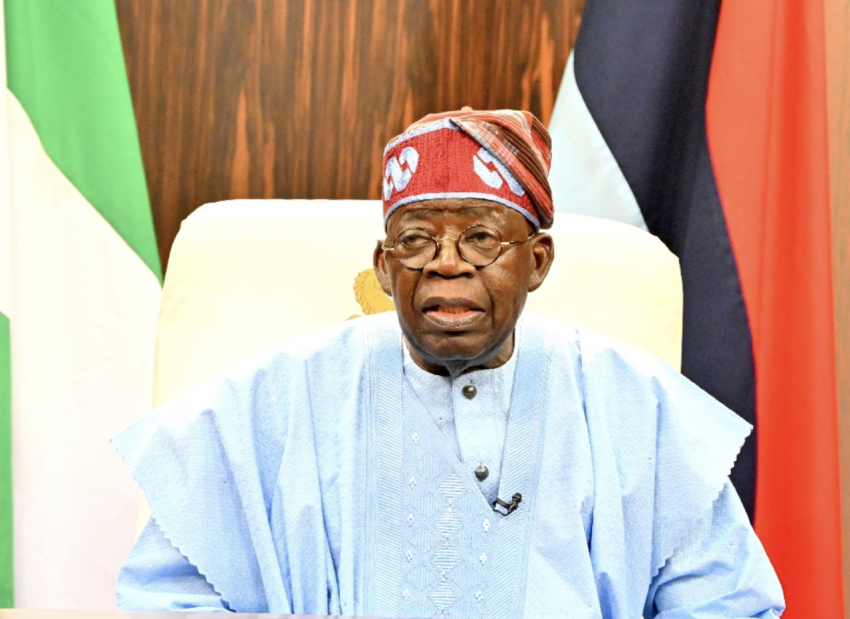
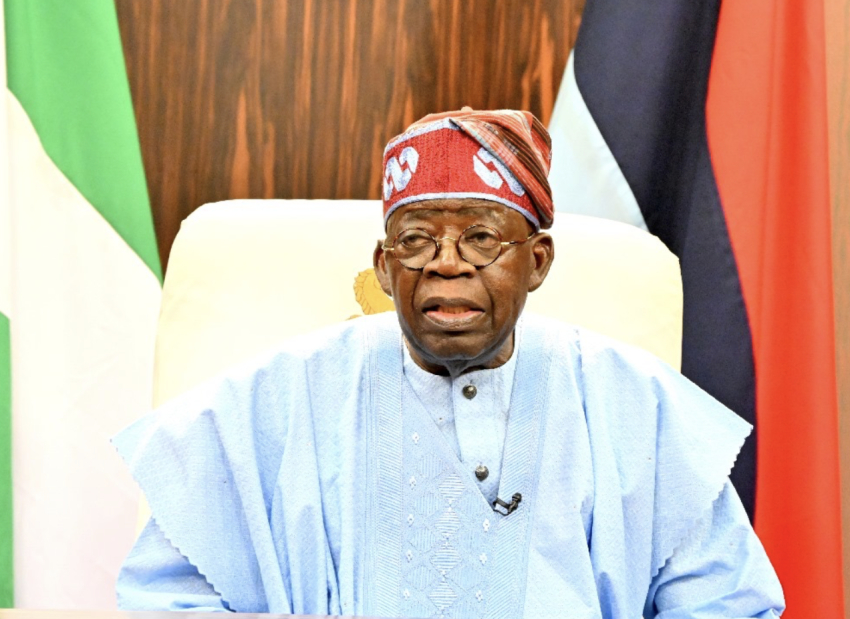
Three years after taking office and on the eve of a presidential election, President Bola Tinubu is now focused on showcasing his record as he seeks a new term. On the occasion of the 66th anniversary of Nigeria’s independence, on 1stOctober, the Head of State chose to defend the economic trajectory launched since he came to power in 2023. As his term draws to a close, Tinubu presents the first results as signs of an economy gradually being put back on track: growth above 4% expected in 2026, inflation falling after its peak, rebuilt foreign exchange reserves, a stabilised foreign exchange market and non-oil exports that exceeded 6 billion dollars in 2025. “Our reforms did not create the weaknesses in our economy. They confronted them,” he said. However, this record clearly clashes with the daily reality of the population. The removal of certain subsidies and the adjustments made since 2023 have sharply increased the cost of living, while the benefits of macroeconomic stabilisation are still unevenly felt. Tinubu himself admits it: “We cannot erase in four years what has accumulated over generations. But we can change its trajectory.” For the next phase of his programme, the Head of State therefore says he wants to shift the centre of gravity of his policy towards jobs, industrialisation and lowering the cost of living, with investment in agriculture, irrigation, fertilisers, storage and major transport networks. The aim is now to carry reform from macroeconomic indicators through to the productive base and, ultimately, to household incomes.
The industrialisation gamble
In this outlook, gas holds a special place. Indeed, it plays a particular role in this new phase. Abuja aims to increase its production from 7.5 to 10 billion cubic feet per day by 2030 and plans nearly 30 billion dollars of investment in the sector. But the challenge is not only to produce more. Above all, the government wants to improve the delivery of gas to power plants and industries so as to make it a lever for energy supply and industrialisation. The 671 billion naira mobilised through the Midstream and Downstream Gas Infrastructure Fund are notably intended to finance this intermediate infrastructure, which is still lacking. This choice is revealing of the new stage Tinubu is seeking. After trying to correct the economy’s financial imbalances, the government is now seeking to convert its resources into productive capacity. Yet the resources mobilised by the State must actually reach the sectors for which they are intended, and at this level the question of resource governance arises again with particular acuity. Hence the particular resonance of the report published on 22 September by the Platform to Protect Whistleblowers in Africa and the Anti-Corruption Data Collective. The two organisations say they have identified 284 properties in the United States linked to 61 Nigerian figures who have held political, administrative or security positions, with a combined estimated value of 271 million dollars. More than 80% of these purchases were reportedly made in cash, with funds the report’s authors suspect come from the embezzlement of public resources. While the report obviously cannot, on its own, establish the guilt of the people named, it does at least bring back into focus a contradiction that is hard to ignore. At the very moment the government is asking Nigerians to accept the costs of a profound economic overhaul, part of the country’s resources is still suspected of having been diverted from their public purpose. The authors believe the funds concerned could have helped finance hospitals, schools or rural electrification. The question of growth then joins that of its redistribution and, more fundamentally, of trust in the State’s capacity to turn its resources into public goods.
Security, a permanent ordeal
This trust is all the harder to consolidate as the State still struggles to guarantee the security of many communities. Recent kidnappings show that the problem is not confined to areas traditionally associated with insecurity. On 26 and 27 September, more than 80 people, mainly women and children, were abducted in Niger and Zamfara states by criminal groups known as “bandits”. In some rural communities, the threat has become pervasive enough to disrupt the most ordinary activities. In Maigama Mairake, one resident said that “half the inhabitants” were in the hands of armed groups. According to SBM Intelligence, some 7.78 billion naira were reportedly paid in ransoms between July 2025 and June 2026. The phenomenon takes a different, though similar, form in the South-East, where some twenty young graduates of the National Youth Service Corps were kidnapped on 1 October while travelling to their posting in Imo State. Security forces tracked them to a forest camp, but the presence of improvised explosive devices further complicates their intervention. Such is the persistence of a violence that now reaches into the most ordinary acts of survival: fetching firewood, farming, fishing or collecting scrap metal can expose people to reprisals. In any case, a few months before the January 2027 presidential election, it is a safe bet that the security situation could weigh heavily for Bola Tinubu.
Sacré-Coeur 3 – BP 15177 CP 10700 Dakar Fann – SENEGAL.
+221 33 827 34 91 / +221 77 637 73 15
contact@timbuktu-institute.org