 French
 Arabic
 English
 Portuguese
 Spanish
 Swahili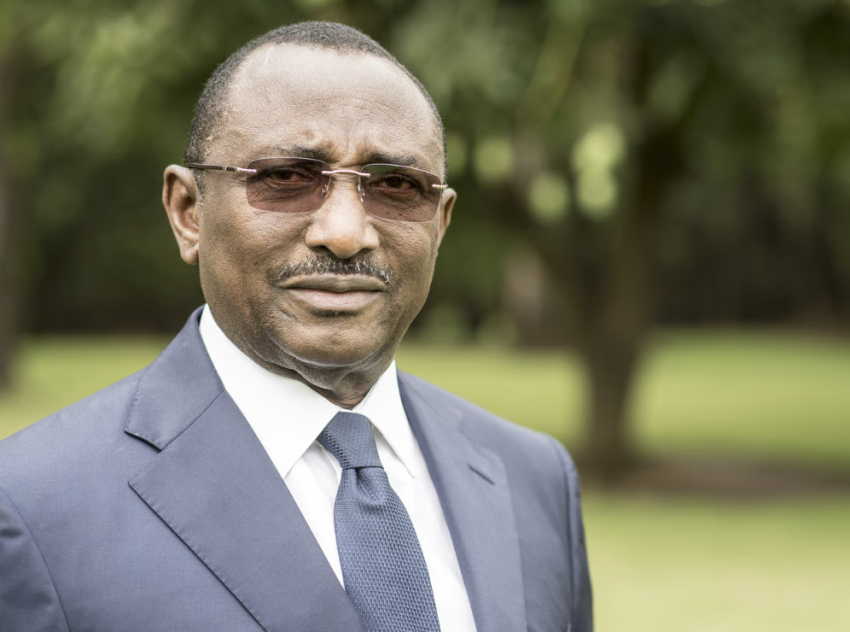



Sacré-Coeur 3 – BP 15177 CP 10700 Dakar Fann – SENEGAL.
+221 33 827 34 91 / +221 77 637 73 15
contact@timbuktu-institute.org

 © Sylvain Cherkaoui pour JA
Timbuktu Institute October 2026 - Week 1
Unanimous tributes to Sidya Touré despite the dissolution of his party, Alpha Condé’s indictment of restrictions on freedoms, NGO warnings about enforced disappearances seventeen years after the 28 September massacre: in Guinea, the question of political and human rights remains unresolved.
Death of Sidya Touré: the Guinean political class pays tribute to an opposition figure
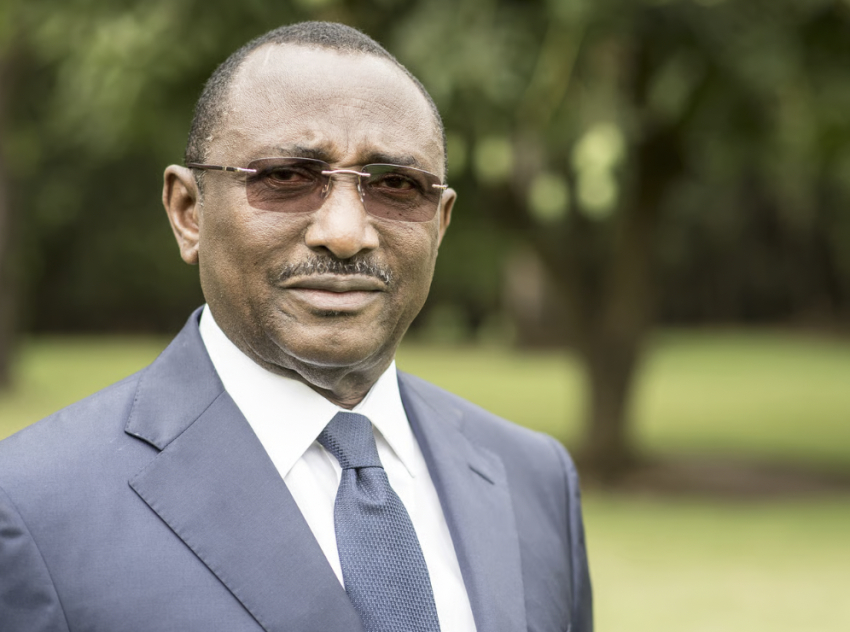
Former Prime Minister (1996-1999) and President of the Union of Republican Forces (UFR), Sidya Touré, died on 25 September in Paris at the age of 81. His death prompted many tributes across the Guinean political class, starting with that of another former Prime Minister, Cellou Dalein Diallo, who hailed a “fellow traveller and comrade in struggle”. Prime Minister Bah Oury visited the family of the deceased to offer his condolences and those of the President of the Republic. He expressed the government’s wish that “the man who wanted to lead Guinea may rest in Guinea”, while stating that he would defer to the family’s decision. This solicitude contrasts with the fate of his political party: the UFR was among the forty parties dissolved last March.
Alpha Condé defends his record and denounces restrictions on political space
In a message posted on Facebook, the former President of the Republic (2010-2021) drew up a positive assessment of his presidency, highlighting in particular economic and financial reforms as well as his achievements in energy, infrastructure, mining, education and health. Alpha Condé also acknowledged that this period had been marked by political tensions and deadly demonstrations. Going on the offensive, the former president then sharply criticised the country’s current political situation. Listing “the restriction of civic space, the banning of demonstrations, the arrests of journalists and opponents, the forced exile of some Guineans, the closure or suspension of media outlets, as well as cases of enforced disappearances outside any legal and regular procedure and the suspicious deaths of many Guineans”, he took up the grievances voiced by human rights organisations. This indictment is nonetheless marked by ambiguity, since his own regime was also subject to similar criticism.
Seventeen years after the 28 September massacre, the human rights situation remains “worrying”, according to NGOs
On the 17th anniversary of the Conakry stadium massacre, the International Federation for Human Rights (FIDH), the Guinean Organisation for the Defence of Human Rights (OGDH) and the Association of Victims, Relatives and Friends of 28 September (AVIPA) denounced the slowness of the compensation mechanism. Of the 334 victims recognised by the first-instance judgment, fewer than 200 had been compensated by last May. The FIDH president also raised the alarm about the current human rights situation in the country, describing enforced disappearances as a “major problem” for Guinea. According to him, “the authorities cannot remain silent in the face of these disappearances”. For Alexis Deswaef, it is indeed “difficult not to make the connection” between these disappearances and the discovery at the end of August of a mass grave in Forécariah, where six bodies were found with their hands tied and their eyes and mouths covered. Received by the Prosecutor General on this matter, the FIDH president regretted that the magistrate had “hidden behind the confidentiality of investigations”, while some twenty African civil society organisations are calling for an “independent, impartial and transparent” investigation.
Sacré-Coeur 3 – BP 15177 CP 10700 Dakar Fann – SENEGAL.
+221 33 827 34 91 / +221 77 637 73 15
contact@timbuktu-institute.org